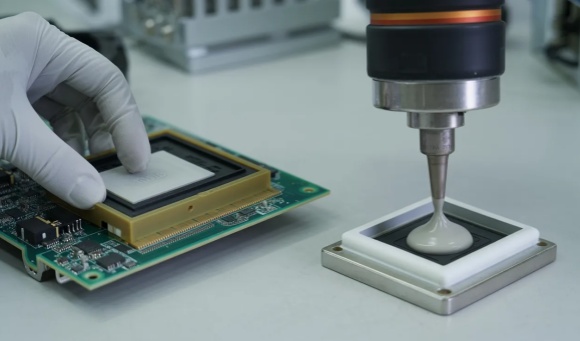
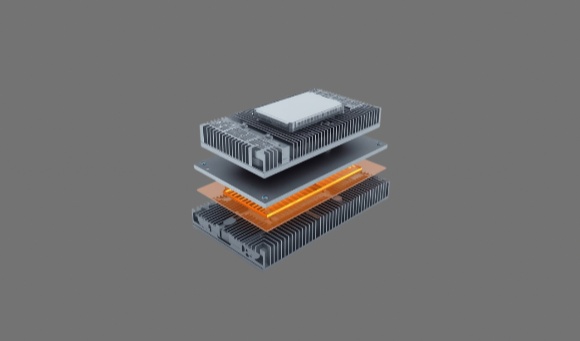
Welcome to Taxo Tape
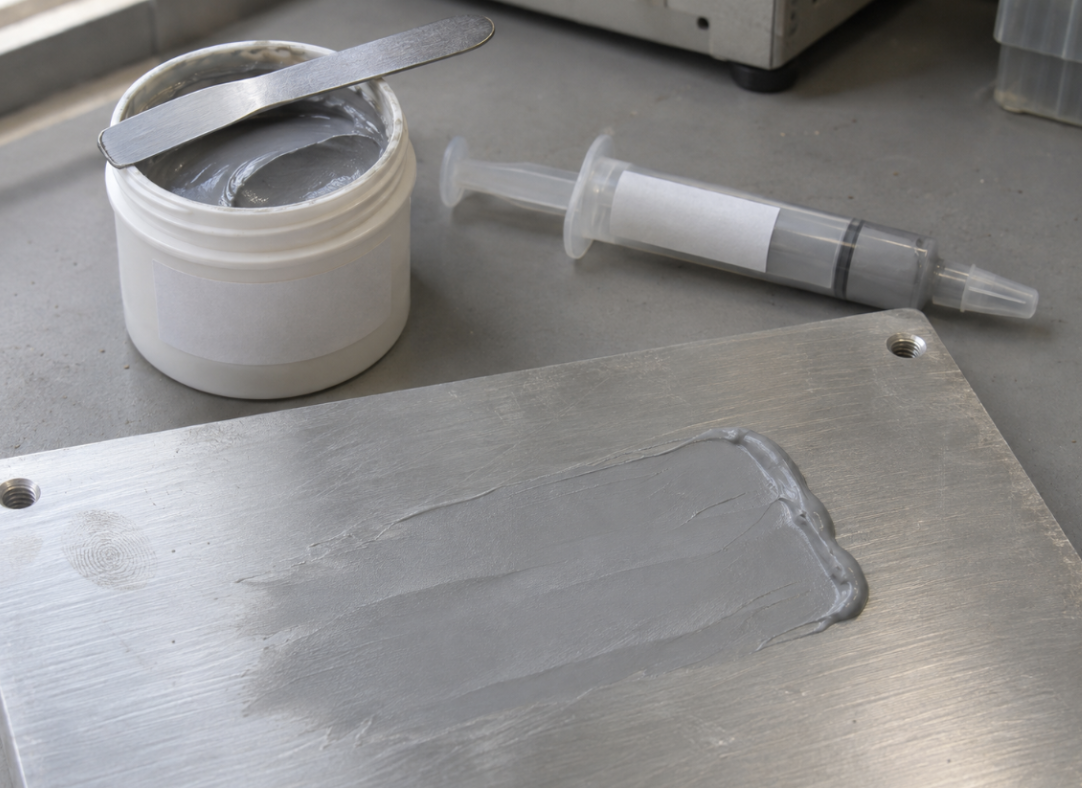
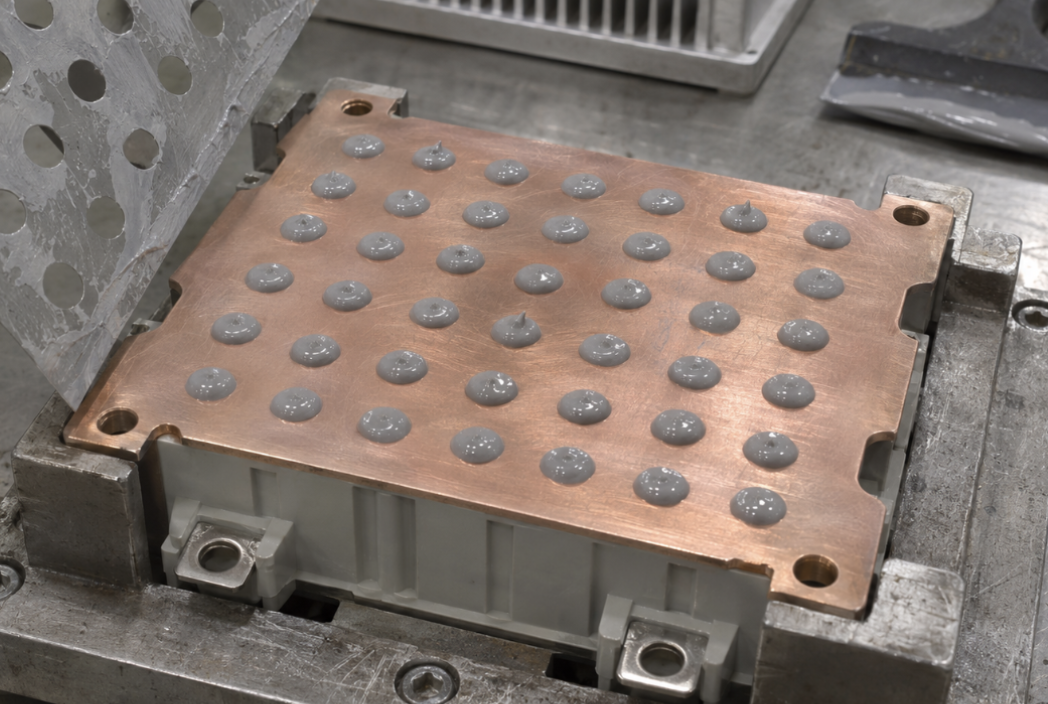
Thermal Grease / Thermal Paste | 1.0–5.2 W/m·K
- Thermal conductivity options from 1.0 to 5.2 W/m·K
- Thermal impedance as low as 0.015 °C·in²/W at 50 psi
- Very thin bond lines for flat power module and device interfaces
- Excellent surface wetting for micro-gap filling
- High thixotropy for screen printing, stencil or dispensing
- Wide operating range from -45 °C to 200 °C
- Silicone-based, non-toxic, RoHS compliant formulation
Thermal Grease for Power Electronics and Electronics Cooling
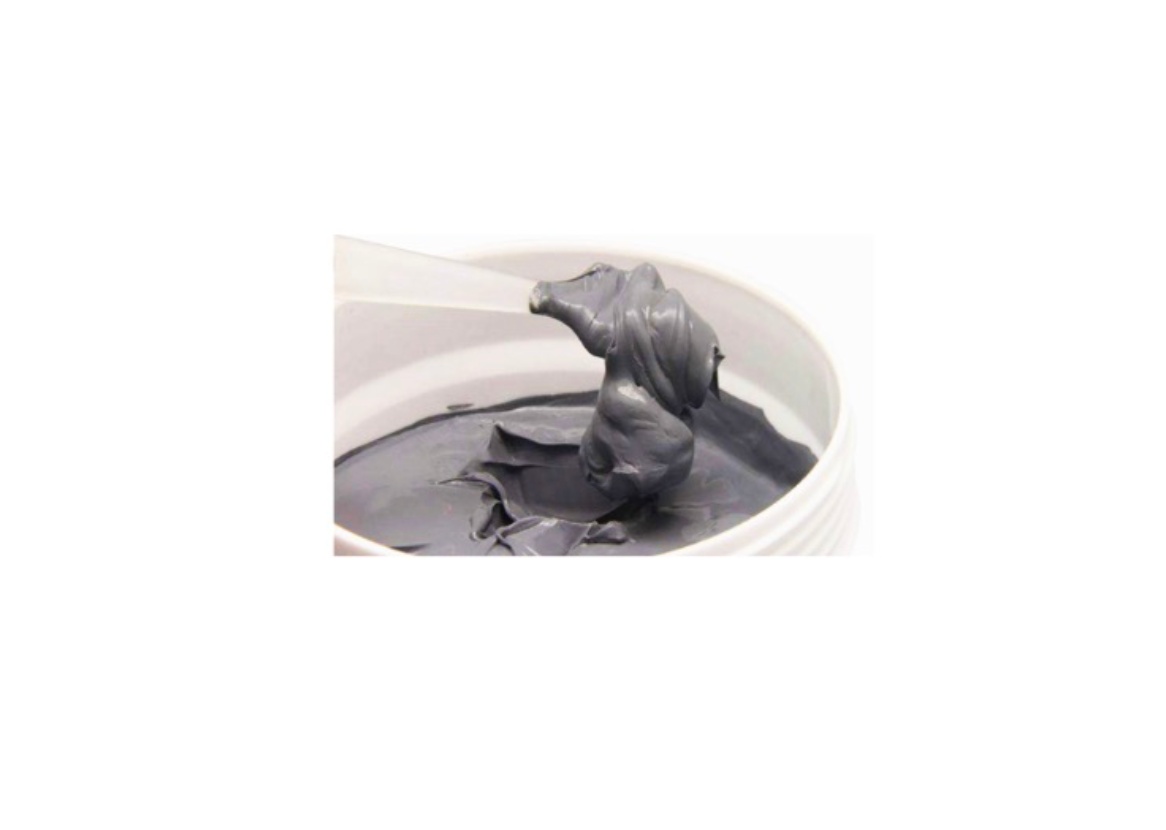
TaxoTape® TX-TGTP series thermal grease, also known as thermal paste or thermal compound, is a silicone-based thermal interface material for flat, closely mating surfaces: power module baseplates, discrete power devices, LED modules, and processor heat spreaders. Applied as a thin layer between the heat source and the heat sink, it fills microscopic surface gaps and forms one of the thinnest, lowest-resistance thermal interfaces available.
The series covers thermal conductivity from 1.0 to 5.2 W/m·K, with thermal impedance down to 0.015 °C·in²/W at 50 psi and an operating range of -45 °C to 200 °C. High thixotropy keeps the material where it is placed during assembly, while still spreading evenly under mounting pressure.
How Thermal Grease Works
No machined surface is perfectly flat. When a component is mounted to a heat sink, the two surfaces touch only at their high points, and the remaining space is filled with air — a very poor conductor of heat.
Thermal grease flows into these microscopic gaps under clamping pressure, displacing the air and wetting both surfaces. Because it can be squeezed down to a very thin layer, it adds very little thickness to the thermal path. On flat interfaces, this gives lower thermal resistance than a thermal pad of similar conductivity, which must stay thicker to work.
Where Thermal Grease Fits — and Where It Does Not
Thermal grease is the right choice in many designs, but not all. Matching it to the application avoids the most common long-term problems.
Thermal grease works well for:
Flat, high-flux interfaces where the thinnest possible bond line matters, such as power module baseplates and heat spreaders
Discrete power devices mounted with a separate insulator (mica, polyimide film, or ceramic) where electrical isolation is required
Serviceable equipment where the interface can be inspected and reapplied during maintenance
Screen-printed or stencil-printed production, where print thickness can be controlled precisely
Prototyping and thermal testing, where interfaces are assembled and taken apart often
Cost-sensitive designs with moderate service life targets
Consider another material when:
The product is sealed for a long service life with heavy thermal cycling. Repeated expansion and contraction can gradually push grease out of the interface, a process known as pump-out. For these designs, a phase change material offers similarly thin bond lines with much better long-term stability. We compare the two in PCM vs. thermal paste in high-power electronics.
The gap is large or uneven. Grease is designed for thin layers. For larger gaps or mixed component heights, use a dispensable thermal gap filler or a silicone thermal pad. See also thermal grease vs. thermal gel.
The interface itself must insulate. Thermal grease is not intended to provide electrical isolation on its own. Use it together with an insulator, or choose an insulating thermal pad.
TX-TGTP Series Specifications
| Model | Color | Thermal Conductivity (W/m·K) | Thermal Impedance (°C·in²/W) | Density (g/cm³) |
|---|---|---|---|---|
| TX-TGTP-01 | White | 1.0 | 0.15 | 2.1 |
| TX-TGTP-12 | White | 1.2 | 0.13 | 2.2 |
| TX-TGTP-18 | White | 1.8 | 0.055 | 2.6 |
| TX-TGTP-20 | White | 2.0 | 0.05 | 3.0 |
| TX-TGTP-25 | Gray | 2.5 | 0.042 | 2.46 |
| TX-TGTP-38 | Gray | 3.8 | 0.034 | 2.2 |
| TX-TGTP-50 | Gray | 5.0 | 0.018 | 2.3 |
| TX-TGTP-52 | Gray | 5.2 | 0.015 | 2.3 |
Thermal impedance: measured at 50 psi
Recommended operating temperature: -45 °C to 200 °C
Base: silicone oil with thermally conductive fillers
Values are typical. Detailed data sheets, including viscosity and bond line thickness for selected grades, are available on request.
Applications
TX-TGTP thermal grease is used wherever a thin, low-resistance interface is needed between a flat component surface and a heat sink:
Power module and IGBT interfaces in serviceable industrial equipment
Discrete power devices mounted with separate insulators
Power supply units and power control boards
Automotive electronics and power control units
LED lighting systems and LED display modules
Industrial computing and communication equipment
Heatsink interfaces for semiconductor devices, chipsets and IC modules
CPUs, GPUs, set-top boxes and consumer electronics
Application and Storage Guidelines
Application: Clean both surfaces with isopropyl alcohol before applying. Use the thinnest layer that fully covers the contact area — excess grease increases bond line thickness and thermal resistance. For production, screen printing, stencil printing, or controlled dispensing gives far more consistent results than manual application. For more on controlling these variables on a production line, see TIM application failures in power electronics production.
Storage: Store at 5–25 °C with relative humidity no higher than 70%. Do not store below 0 °C. Refer to the safety data sheet for full handling instructions.
Frequently Asked Questions
Should I use thermal grease or a phase change material on a power module?
Both give thin bond lines and low thermal resistance. Grease is easy to apply and low in cost, and works well where the interface can be serviced. For sealed products with long service life and frequent thermal cycling, PCM is usually the more stable choice because it is much less prone to pump-out.
Is TX-TGTP thermal grease electrically insulating?
It is not intended to act as an electrical insulator. Where the interface must provide isolation — for example, a TO-247 tab mounted to a grounded heat sink — use the grease together with an insulating film or ceramic insulator, or choose an insulating thermal pad instead.
Which grade should I choose?
For high-power interfaces where every degree counts, the higher-conductivity gray grades (TX-TGTP-38, -50, -52) offer the lowest thermal impedance. For less demanding positions, the white grades provide a cost-effective option. If you share the interface area, power loss, and application method, we can recommend a starting grade.
Ready to test TX-TGTP in your design? Request samples or a technical consultation. Tell us your device type, interface size, and assembly method, and we will suggest suitable grades.