Welcome to Taxo Tape
Why TIM Pump-Out Happens—and How to Prevent It
Introduction: Understanding the TIM Pump-Out Phenomenon
In thermal management design, one of the most overlooked but damaging issues is TIM pump-out — the gradual displacement of the thermal interface material (TIM) from the interface between a component and its heat sink or housing.
During normal operation, electronic devices such as power modules, EV battery packs, CPUs, and LED drivers undergo constant heating and cooling cycles. These thermal cycles cause materials to expand and contract at different rates. Over time, this movement can slowly “pump” the TIM out of the interface area, reducing its coverage and effectiveness.
Once the TIM layer thins out or shifts away from critical areas, localized hot spots begin to form. This can lead to temperature rise, premature component aging, and even system failure. For high-reliability applications — especially in automotive, industrial control, and telecom electronics — preventing TIM pump-out is essential to maintaining stable performance and long product lifetimes.
What Causes TIM Pump-Out?
Pump-out is a mechanical and thermal problem driven by several interacting factors. Understanding the root causes helps engineers choose the right material and design strategy.
Thermal Cycling and Expansion Mismatch:
Different materials in a PCBA assembly — silicon chips, metal heat spreaders, and polymer-based TIMs — have varying coefficients of thermal expansion (CTE). During repetitive heating and cooling, this mismatch generates mechanical stress at the interface, which slowly pushes the TIM away from high-stress zones.
Vibration and Shock:
In automotive or industrial equipment, vibration adds another source of mechanical movement. Continuous micro-motion can gradually displace the TIM, especially if it has low mechanical strength or poor adhesion.
Over-Compression or Improper Assembly:
When the mounting pressure is too high or uneven, it can physically squeeze out the TIM during installation. Once the unit operates and thermal expansion occurs, the displaced material has no path to return, creating voids or air gaps.
Material Degradation:
Over time, exposure to high temperatures, oxidation, or oil bleeding can alter the physical properties of certain greases or gels. The material may harden, lose viscosity, or separate, making it more prone to migration under stress.
Surface Energy and Wetting Issues:
If the surface energy of the heat sink or component is too low — for example, due to contamination, oxidation, or poor material compatibility — the TIM cannot properly wet and adhere to it. This poor bonding allows the material to move more easily under vibration or thermal cycling.

Effects of TIM Pump-Out on System Performance
When TIM pump-out occurs, thermal and mechanical performance deteriorate simultaneously.
The most immediate effect is an increase in thermal contact resistance (Rth). As parts of the interface lose TIM coverage, air gaps form, which act as thermal insulators. This leads to localized hot spots and temperature gradients across the component surface.
These thermal inconsistencies accelerate component aging, especially in power semiconductors or LEDs, where even a few degrees of temperature rise can significantly shorten device lifetime. In severe cases, solder fatigue, delamination, or even burnout can occur.
From a system perspective, pump-out not only reduces reliability but also increases maintenance and warranty costs. For mission-critical electronics, preventing pump-out is not just a performance issue — it’s a matter of long-term durability and brand reputation.
Material Strategies to Minimize Pump-Out
One of the most effective ways to prevent pump-out is to start with the right thermal interface material selection and formulation.
Selecting the Right TIM Type:
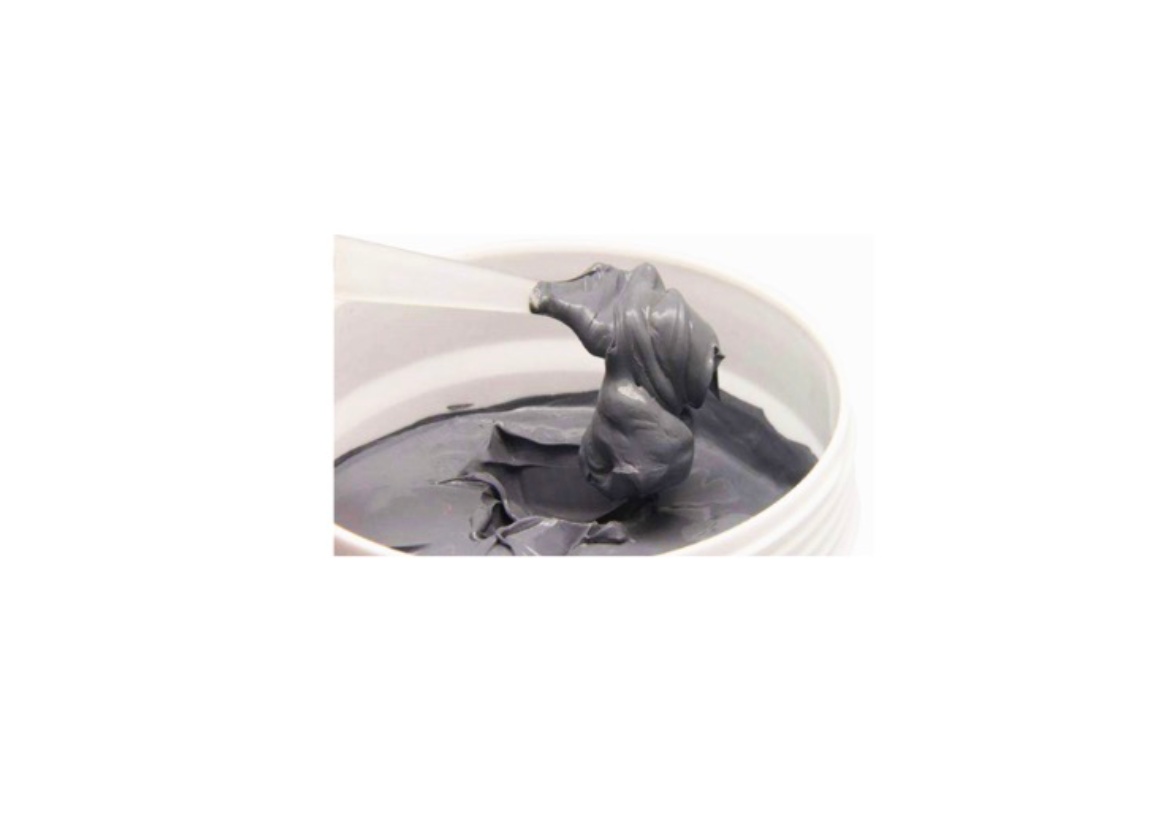
Each material family has different resistance to pump-out. Thermal grease offers excellent contact performance but can migrate over time if exposed to vibration or cycling. Gap fillers and gels have higher mechanical stability and are ideal for applications requiring flexibility. Phase change materials (PCMs) remain solid during handling and soften only when heated, naturally resisting displacement.
Enhanced Rheology Design:
Modern TIMs are engineered with thixotropic or viscoelastic properties, meaning they stay in place under normal conditions but flow slightly under pressure to fill microscopic voids. These formulations maintain coverage even under repeated stress or vibration.
High-Conformability Gap Fillers:
Soft silicone gap fillers or gels can absorb expansion mismatches and mechanical movement without losing contact. Their elasticity helps them maintain stable coverage even in high-vibration or large-gap environments such as EV battery modules.
Phase Change Materials (PCMs):
PCMs provide one of the most stable long-term solutions. They remain solid at room temperature—which prevents pump-out during shipping or assembly—and transition to a semi-liquid state only at operating temperature, ensuring intimate surface contact while resisting material migration during cycling.
Design and Assembly Solutions
Even the best material can fail if the assembly design and process are not properly controlled. Preventing TIM pump-out requires a combination of mechanical precision and process discipline.
Controlled Clamping Pressure:
Uneven or excessive pressure is one of the most common causes of TIM displacement. Over-tightening the screws or applying asymmetric torque forces the TIM to flow out from the edges. Using torque-controlled tools, spring-loaded screws, or compliant spacers helps ensure uniform compression and consistent thermal performance.
Optimized TIM Thickness:
A thick TIM layer is more prone to mechanical movement during thermal cycling. Engineers should aim for the thinnest possible layer that still ensures full surface contact. Thinner layers reduce shear stress, lower the chance of void formation, and improve long-term stability.
Surface Treatment and Cleaning:
A clean, high-energy surface promotes better adhesion and wetting of the TIM. Removing oils, oxidation, and dust particles before application ensures that the material bonds effectively. For metal heat sinks, applying a light plasma or chemical treatment can further enhance surface energy and minimize slippage.
Mechanical Fixation Design:
In applications with frequent vibration or large temperature swings, mechanical retention features can help secure the TIM in place. Examples include frame designs around the interface area, shallow grooves on the heat sink surface, or soft edge seals that prevent lateral migration. These design features provide an added layer of mechanical stability without compromising thermal performance.
Testing and Validation Methods
To confirm the long-term reliability of a TIM under real operating conditions, pump-out simulation and validation tests are essential.
Thermal Cycling and Vibration Tests:
Pump-out is primarily driven by temperature fluctuations and mechanical stress. Engineers typically run thermal cycling tests (e.g., −40°C to 125°C) for hundreds or thousands of cycles to simulate long-term operation. Vibration or shock testing can be combined with these cycles to replicate the stresses seen in automotive or industrial environments.
Microscopic Inspection and Thickness Measurement:
After testing, cross-sectional analysis and surface inspection reveal how the TIM layer has changed. Measuring the thickness before and after cycling helps quantify material movement. Microscopy or X-ray imaging can detect voids, delamination, or bleed-out areas that are not visible externally.
Evaluating Performance Retention:
Ultimately, engineers should track thermal resistance (Rth) over time. A stable Rth value after repeated thermal cycles indicates minimal pump-out. Conversely, a gradual increase signals interface degradation or partial material loss. Long-term reliability testing provides the data needed to select the most stable material for each application.
Case Example: Solving Pump-Out in Power Electronics
A practical example comes from a power inverter module used in an electric vehicle application. The system originally employed a standard thermal grease between the IGBT module and the aluminum base plate. After 500 thermal cycles, engineers observed increased junction temperatures and non-uniform heat distribution due to pump-out at the edges.
The design was later modified using a silicone-based gap filler with higher viscosity and better elasticity. The mounting torque was optimized, and a shallow retention groove was added around the interface area. After the redesign, thermal resistance decreased by 30%, and temperature rise at the hot spot dropped by 6°C. The system maintained consistent performance even after 1,000 thermal cycles.
This case highlights a key insight: preventing pump-out requires a holistic approach — not only selecting a stable TIM but also optimizing mechanical design, assembly pressure, and surface treatment.
Summary: Key Takeaways for Engineers
TIM pump-out is a subtle but critical failure mode that can silently degrade thermal performance over time. To achieve long-term reliability in PCBA, automotive, and power electronic assemblies, engineers should:
Identify and control factors such as thermal cycling, vibration, and compression.
Select TIMs with strong mechanical stability and minimal viscosity loss under heat.
Design assemblies with controlled pressure, proper surface preparation, and retention features.
Validate performance through rigorous thermal cycling and Rth monitoring.
By addressing pump-out during the early stages of product design, teams can ensure stable heat dissipation, reduced maintenance costs, and extended product lifetimes. In high-power or mission-critical systems, these small design refinements can make a significant difference in long-term reliability.