Welcome to Taxo Tape
What Is Thermal Management? The Basics Explained
Introduction
Thermal management is the practice of controlling the heat a device produces while it's running, so that heat doesn't compromise how the device performs or how long it lasts. Every electronic system generates heat during operation — the question isn't whether heat is a factor, but whether it's being handled well enough to keep components within a safe operating range.
This article covers the basics: why heat matters, how it actually moves through a system, and the general categories of materials and approaches used to manage it. If you're looking for a detailed comparison of specific thermal interface materials, or a closer look at how full thermal management systems are architected — heat sinks, fans, liquid cooling, sensors — those topics are covered in more depth elsewhere, with links throughout this article pointing you in the right direction.
Why Heat Is a Problem in Electronics
Heat degrades electronics gradually before it fails them outright. Sustained elevated temperature weakens solder joints, accelerates material degradation, and shortens the working life of sensitive components — effects that build up over time rather than announcing themselves immediately. As a general rule of thumb for many electronic components, particularly electrolytic capacitors, service life roughly halves for every 10°C rise in sustained operating temperature — a relationship that makes even a modest, chronic thermal design shortfall meaningfully more costly over a product's rated lifetime than it might initially appear.
As devices shrink while packing in more power, heat tends to build up faster within a smaller physical space, which makes effective heat control more consequential than it was in earlier, less power-dense generations of the same products. A thermal design that falls short shows up differently depending on the application: an LED that loses brightness faster than expected, a battery pack that overheats under load, a power supply that shuts down when it's needed most. Managing heat properly keeps components operating within the temperature range they were designed for, which is what allows a product to deliver consistent performance across its intended service life — not just during initial testing.
The Three Ways Heat Moves: Conduction, Convection, Radiation
Every thermal management strategy, no matter how sophisticated, ultimately relies on three basic physical mechanisms for moving heat from where it's generated to where it can safely dissipate — and knowing roughly how much each one can handle helps explain why real designs almost always combine more than one.
Conduction moves heat through solid materials in direct contact — from a hot chip into a heat sink, for instance, or from a battery cell into an adjacent cooling plate. This is typically the first step in any thermal path, since it's how heat leaves the component itself. How effectively conduction works depends heavily on the thermal resistance at that first interface — a well-designed, low-resistance path can move heat many times more efficiently than a poorly mated one, which is exactly why the material sitting at that junction matters as much as the heat sink attached to it.
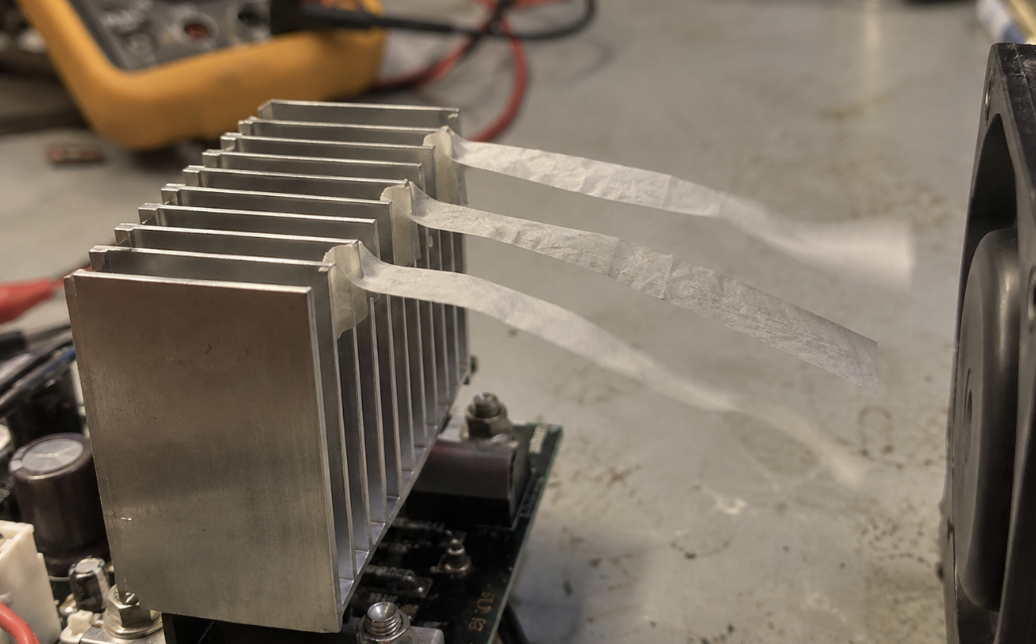
Convection carries heat away through the movement of air or liquid across a surface. Natural convection — air rising as it warms, with no external energy input — is typically sufficient for lower power densities, on the order of a few watts per square centimeter of heat sink surface in still air. Forced convection, using a fan or blower to move air more aggressively, extends that capacity considerably, and liquid cooling extends it further still — which is why natural convection alone tends to run out of headroom well before high-power electronics do.
Radiation releases heat as infrared energy directly from a surface into the surrounding environment. It plays a smaller role than conduction or convection at typical electronics operating temperatures, but its contribution grows more noticeably as surface temperature rises — becoming a more meaningful part of the total heat balance in higher-temperature applications than in a device running only modestly warm.
In practice, effective thermal designs rarely rely on just one of these mechanisms. Heat typically moves by conduction into a heat sink, then disperses into the surrounding air by convection — sometimes assisted by radiation at the margins. Understanding which mechanism is doing the work at each stage of a design is what allows an engineer to identify where a thermal bottleneck is actually occurring, rather than guessing at a fix.
Where TIMs Fit In
Conduction only works efficiently when two surfaces are in genuine, close contact — and real surfaces, even ones that look flat, have microscopic irregularities that leave tiny air gaps at any contact point. This matters more than it might seem: air's thermal conductivity is roughly 0.026 W/m·K, while common thermal interface materials range anywhere from about 1 W/m·K to well over 6 W/m·K depending on type and filler content — often 40 to over 200 times more conductive than the air it's displacing. Left unaddressed, those microscopic gaps become a disproportionate bottleneck in an otherwise well-designed thermal path.
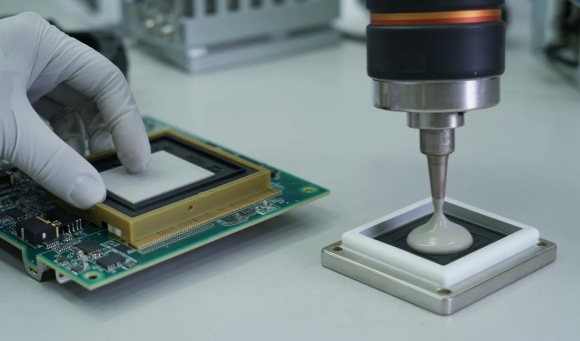
A thermal interface material (TIM) fills that gap. Placed between a component and whatever is meant to carry heat away from it — a heat sink, a cooling plate — a TIM displaces the trapped air and creates a more continuous path for heat to move by conduction. This makes TIM selection one of the more consequential, and most frequently underestimated, decisions in a thermal design. For a closer look at TIM types, key selection parameters, and common material properties, see What Are Thermal Interface Materials? A Guide for Engineers.
Passive vs. Active Approaches
Thermal management strategies generally fall into two broad categories. Passive approaches rely on materials and structures — heat sinks, TIMs, natural convection — with no external power input required, making them reliable, low-cost, and effectively maintenance-free. Active approaches add powered components — fans, blowers, liquid pumps — to accelerate heat removal beyond what passive elements alone can achieve.
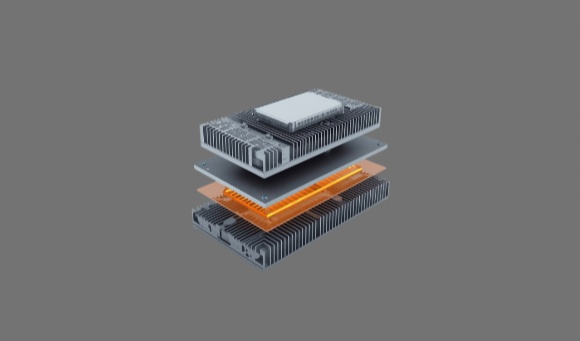
As a rough practical guide, passive cooling tends to remain viable up to moderate power densities — commonly cited in the range of a few watts per square centimeter for typical enclosure and heat sink geometries — beyond which active assistance usually becomes necessary to keep components within a safe operating range. Many designs combine both, using passive components for baseline heat removal and active cooling for peak thermal demand. The right balance depends on the device's power density, available space, and tolerance for the noise, power draw, and added complexity that active components bring. This trade-off is covered in more detail, including how to think through the decision for a specific design, in What Is a Thermal Management System? Components & Design Guide.
A Quick Look at Common Thermal Materials
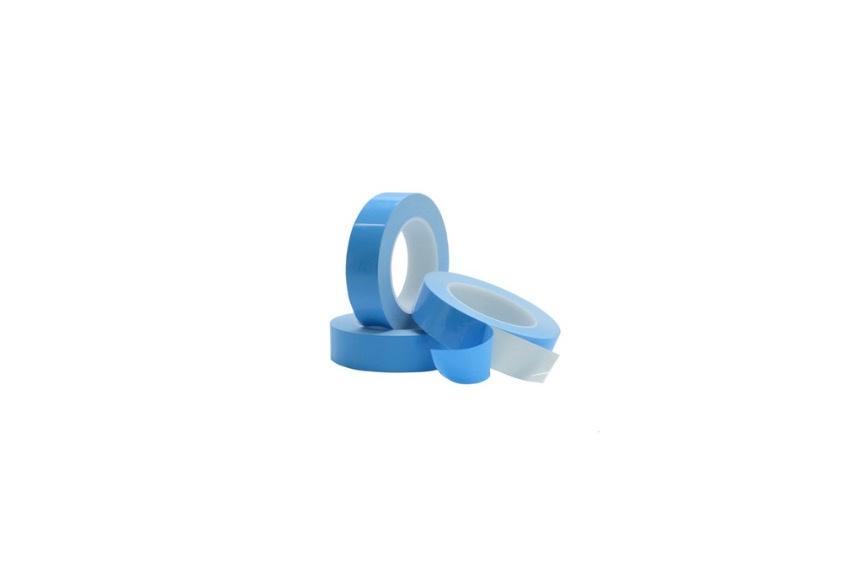
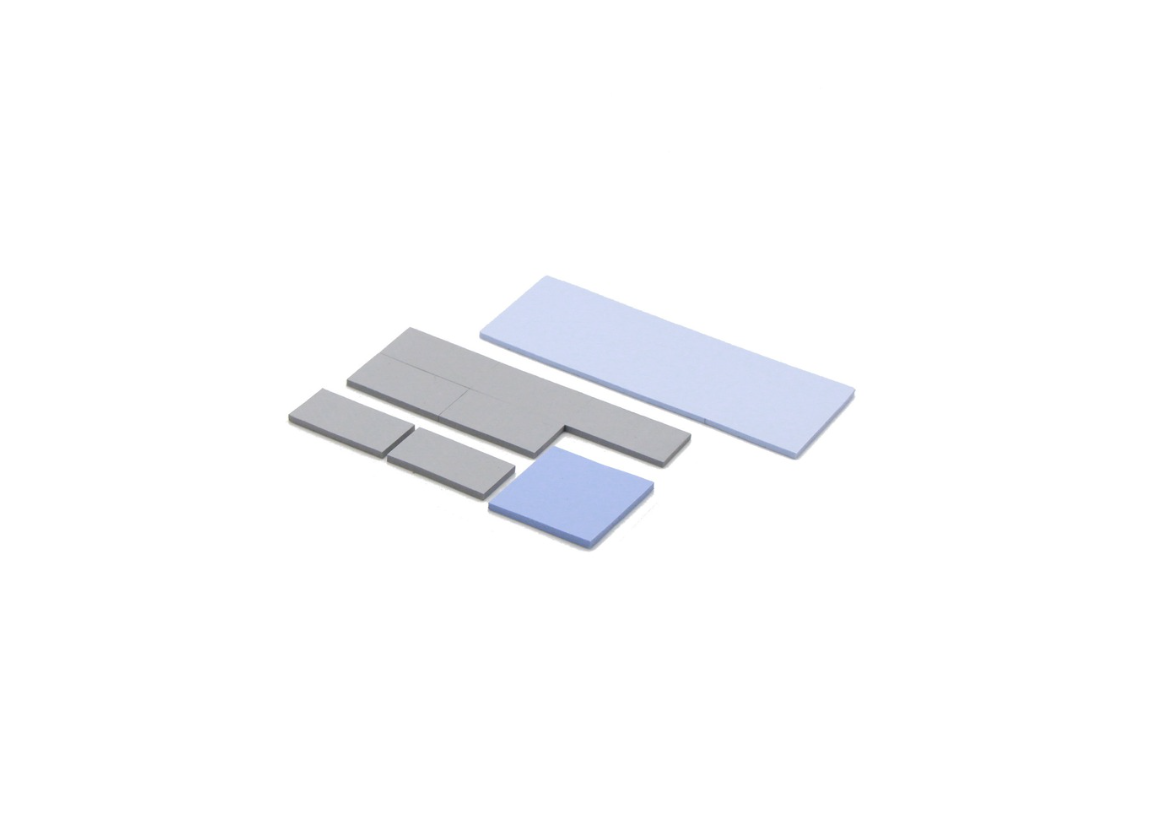
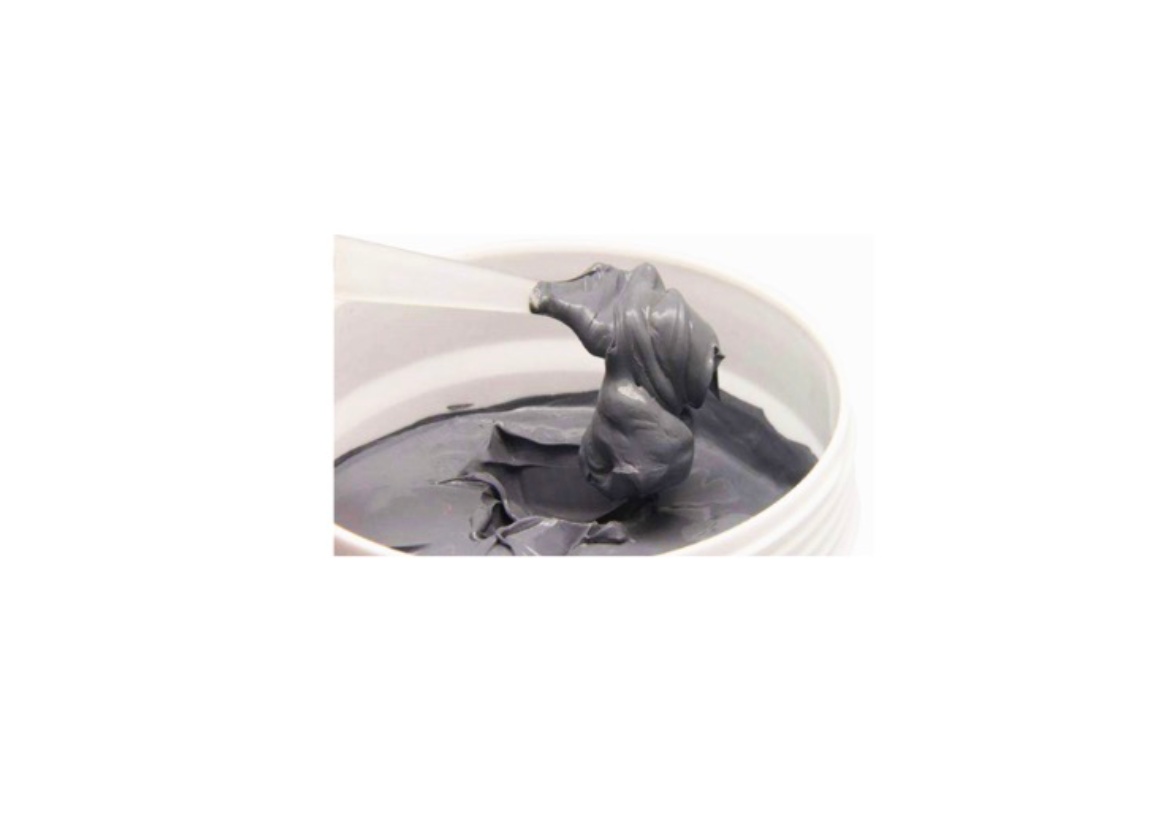
A handful of material categories cover most thermal management needs, each with a distinct performance profile worth knowing at a glance. Thermal pads and gap fillers are soft, compressible sheets that bridge uneven gaps between components and heat sinks, typically in the 1–6 W/m·K range depending on filler loading. Thermal conductive tapes bond parts together structurally while also conducting heat, generally in a somewhat lower 0.6–3 W/m·K range, trading some conductivity for the convenience of eliminating separate fasteners. Thermal grease and paste achieve very thin bond lines and strong initial contact, often reaching 3 W/m·K or higher, common in applications like CPU and GPU cooling where minimizing bond line thickness matters most. Phase change materials stay solid at room temperature but soften at operating temperature, improving surface contact once a device is running, with conductivity typically in the 3–8 W/m·K range once activated.
Each of these categories covers a range of formulations suited to different applications — a full breakdown of material types, properties, and selection criteria is available in What Are Thermal Interface Materials? A Guide for Engineers.
How to Approach Material and Component Selection
Choosing a thermal solution starts with a few basic questions, and answering them roughly in this order tends to narrow the field efficiently. How much heat does the device generate, and where does it build up? — this sets the actual thermal budget the rest of the design needs to work within, rather than defaulting to the highest-performing (and highest-cost) material available. How much physical space is available for thermal components? — a design with generous clearance can rely more on passive approaches, while a tightly packed enclosure often pushes toward thinner, higher-performance materials or active cooling sooner than expected. What operating conditions — vibration, moisture, temperature swings — does the design need to withstand? — this shapes not just material selection but also application method, since a material that performs well in a lab can behave very differently under sustained mechanical stress. What's the acceptable balance between thermal performance, assembly complexity, and cost? — the answer here often determines whether a simple pad is sufficient or whether the added performance of grease or PCM justifies its handling requirements.
These questions apply at every level of a thermal design, from choosing a single TIM to architecting a complete cooling system. For guidance specific to material selection, see What Are Thermal Interface Materials? A Guide for Engineers; for a full system-level design process — including how to weigh passive against active cooling — see What Is a Thermal Management System? Components & Design Guide.
Where This Matters: A Few Examples
Thermal management is relevant anywhere heat affects performance or safety, though the specific failure mode and design priority shift by application.
LED lighting depends on it to prevent brightness loss and shortened lifespan as junction temperature rises — and because LED drivers commonly house electrolytic capacitors as their most temperature-sensitive component, the same roughly-halved-life-per-10°C relationship covered in section 2 makes driver thermal design directly tied to how long the fixture lasts before failing, not just how bright it stays. See Thermal Interface Materials for LED Drivers for the specifics.
Power electronics, including converters and inverters, generate concentrated heat at switching devices that needs to be spread evenly away from hot spots — a poorly managed interface here can produce localized temperature spikes fast enough to damage a semiconductor before protective circuitry responds. Automotive and EV systems combine vibration, wide temperature swings, and limited space, all while needing to keep control units and batteries within safe temperature ranges over a service life measured in years rather than months. Telecom and datacom equipment manages heat buildup across densely populated circuit boards in tight enclosures, often with limited airflow and long, continuous-duty operating profiles that leave little margin for thermal design shortcuts.
Go Deeper: Materials or Systems
This article covers the fundamentals — why heat matters, how it moves, and the basic categories of materials and strategies used to manage it. Two more focused guides go further, depending on what you're actually working on.
If your question is about which specific material to use — comparing pads, greases, gels, and phase change materials, and understanding the properties that matter most for your application — see What Are Thermal Interface Materials? A Guide for Engineers.
If your question is about designing a complete thermal system — how heat sinks, fans, liquid cooling, and sensors work together, and how to choose between passive, active, and hybrid approaches — see What Is a Thermal Management System? Components & Design Guide.
FAQ
Q: What does thermal management actually involve?
It covers all the materials and methods used to control the heat a device generates during operation — moving that heat away from sensitive components so the device performs reliably and lasts as long as it's designed to.
Q: What are the three ways heat moves?
Conduction moves heat through solid materials in direct contact, convection carries it away through moving air or liquid, and radiation releases it as infrared energy from a surface. Most thermal designs rely on a combination of these mechanisms rather than just one.
Q: Do I always need active cooling, like fans?
Not necessarily. Passive approaches — heat sinks, TIMs, natural convection — handle many applications reliably without added power draw, noise, or moving parts, typically up to moderate power densities. Active cooling becomes necessary once heat generation exceeds what passive elements alone can dissipate.
Q: At what power level does a design typically need active cooling?
There's no universal threshold, since it depends heavily on enclosure size, heat sink surface area, and ambient conditions — but as a rough guide, passive cooling commonly remains viable up to a few watts per square centimeter of available heat sink surface for typical enclosure geometries. Designs pushing meaningfully beyond that generally need forced airflow or liquid cooling to stay within a safe operating temperature range.
Conclusion
Thermal management, at its core, comes down to moving heat from where it's generated to where it can safely dissipate — through conduction, convection, and radiation, supported by the right combination of materials and components. This article covers the fundamentals; the specifics of material selection and system design go further, and both are worth exploring once you have a concrete application in mind.
Contact TaxoTape® to discuss thermal management for your application →