Welcome to Taxo Tape
What Is Thermal Grease? A Quick Guide
Introduction
Thermal grease is one of the oldest and most familiar thermal interface materials, and also one of the easiest to misuse. It shows up everywhere from consumer electronics to industrial power modules precisely because it does one thing very well — filling the thinnest possible gap between two surfaces with minimal thermal resistance. But that same thinness and fluidity make it more sensitive to application technique and long-term operating conditions than a pre-formed pad or tape.
This guide covers the basics: what thermal grease is, how it works, the main formulation types, and how to apply it correctly — a starting point before diving into the specific reliability and comparison questions covered elsewhere.
What Is Thermal Grease?
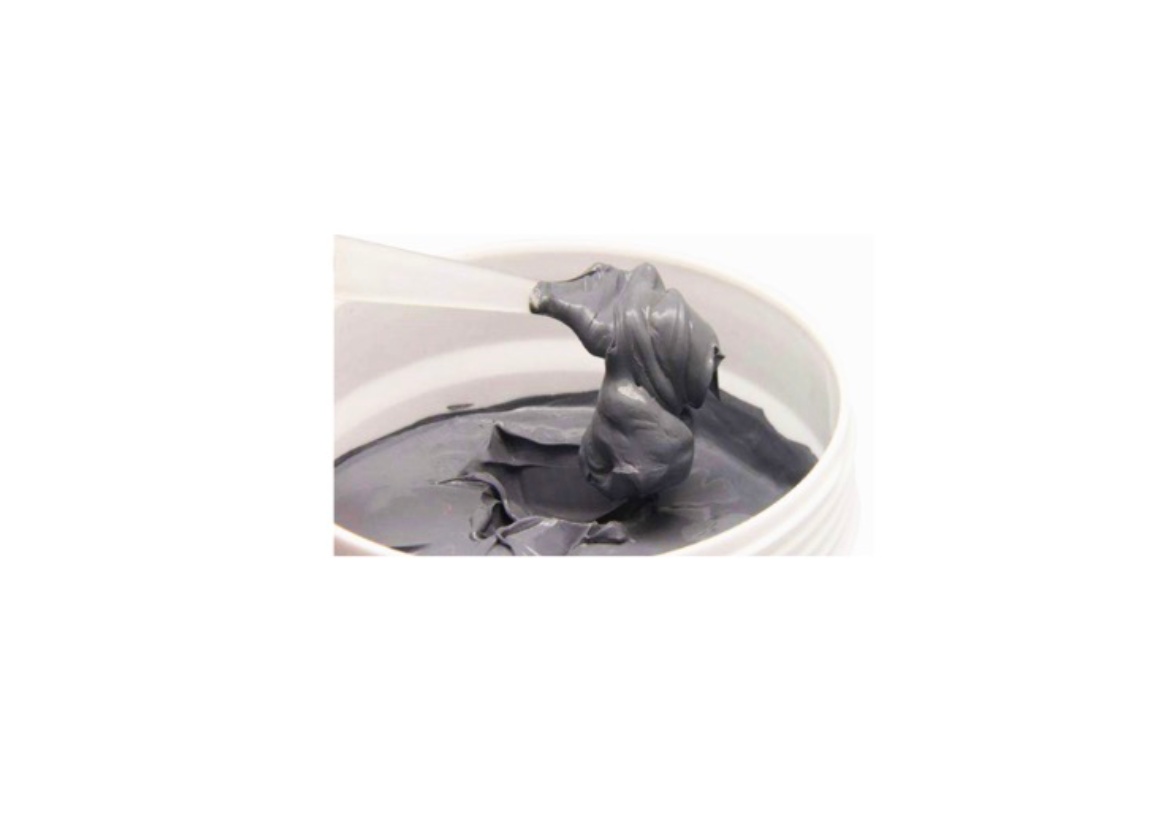
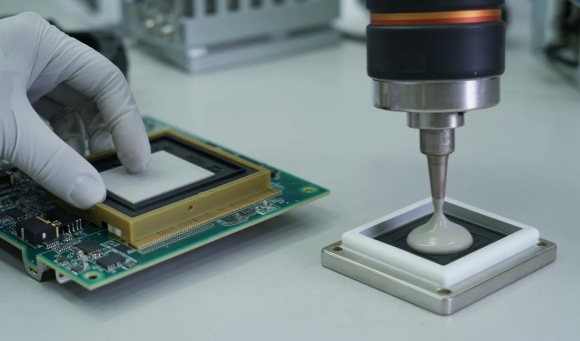
Thermal grease — also called thermal compound or thermal paste — is a soft, paste-like material applied between a heat-generating component and its heat sink or housing. It's commonly used with CPUs, power modules, and LED drivers, wherever a very thin, high-conductivity layer is needed between two mating surfaces.
Unlike a pre-formed pad, grease has no fixed thickness of its own — it flows under assembly pressure to fill whatever gap exists, which is both its main advantage and the source of most application-related problems.
How Does It Work?
Even surfaces that look perfectly smooth have microscopic pits and scratches at a closer look, and these trap air when two surfaces come together. Air is a poor thermal conductor, so without something to displace it, that trapped air becomes a barrier that blocks efficient heat transfer right at the interface.
Thermal grease fills these microscopic gaps, creating a thin conductive layer in place of the air that would otherwise be there. Compared to other TIM types like pads, gels, or phase change sheets, grease delivers high thermal conductivity at minimal thickness — which is exactly why it remains the choice for tight, flat interfaces where every fraction of a millimeter of bond line thickness matters.
Common Types of Thermal Grease
Not all thermal grease performs the same way, and the right type depends on your specific thermal and electrical requirements.
Silicone-based greases are the most common — made with silicone oil and thermally conductive fillers, easy to apply, and cost-effective for general electronics and industrial power applications. Metal-based greases use fine silver, aluminum, or other metal particles to push thermal conductivity higher, and are popular in high-performance CPU and GPU cooling where maximum heat transfer is the priority. Ceramic-based greases use non-conductive ceramic fillers instead of metal, making them the safer choice where electrical conductivity at the interface would be a risk. Specialty or custom formulations address more specific requirements — extended high-temperature resistance or particular filler systems — for demanding applications like power modules, LED drivers, and energy storage systems.
Key Advantages and Trade-Offs
Grease's core advantage is straightforward: it fills tiny surface imperfections completely, delivering excellent thermal conductivity at a bond line thinner than almost any other TIM type can achieve, which makes it well suited to tight gaps and flat, well-controlled interfaces.
The trade-off is application sensitivity and long-term behavior. Getting the quantity right takes some care — too much or too little both hurt thermal performance, which is covered in more detail in section 7. And over time, thermal grease can dry out or migrate under repeated thermal cycling, a degradation process driven by oil separation and mechanical displacement that's covered in depth in Why Thermal Grease Fails: Aging, Pump-Out & How to Prevent It. For applications with a long service life and no maintenance access, this is worth weighing against the initial thermal performance advantage grease offers.
Typical Applications
Thermal grease shows up across a range of industries wherever tight, high-conductivity contact matters. CPUs and GPUs rely on it to keep processors running at safe, stable temperatures in computing and consumer electronics. Power modules and PCBA — inverter boards, industrial power components — use it to manage significant heat generation and maintain reliable long-term operation. LED drivers and battery packs use grease to support efficient heat flow away from sensitive components, extending both service life and operational safety.
Its appeal across these applications comes down to the same basic trade-off: excellent thermal contact without complex installation, making it a practical, cost-effective choice wherever tight gaps and flat mating surfaces make it a good fit.
How to Apply Thermal Grease Correctly
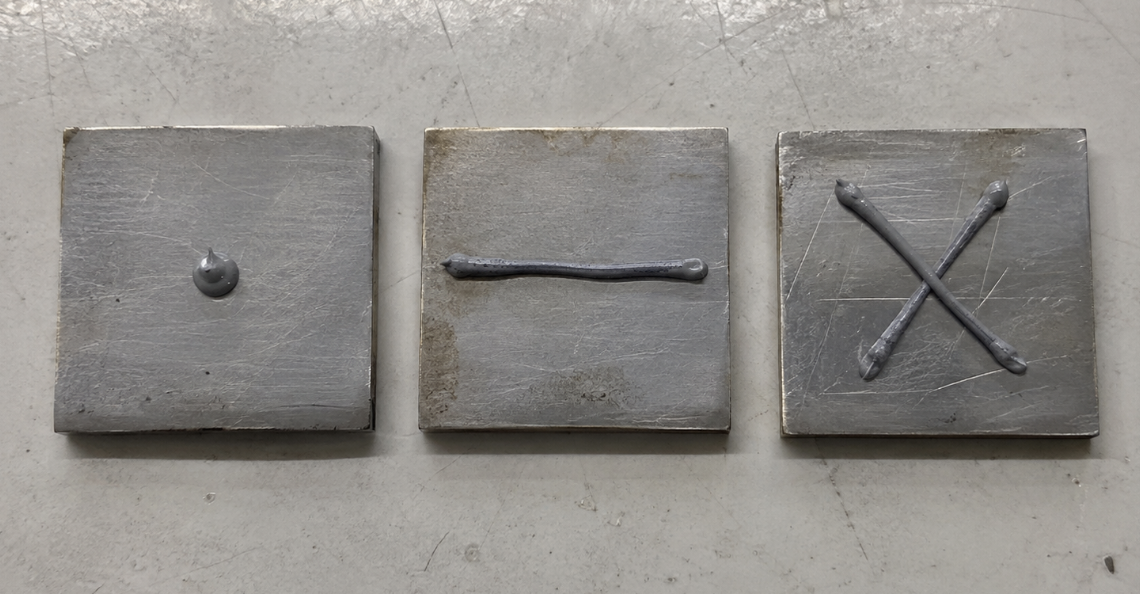
Getting good performance from thermal grease comes down to application discipline more than material choice. Apply a small dot or thin line at the center of the chip or module — just enough to fully cover the surface once compressed under assembly pressure. More is not better: excess grease migrates beyond the component footprint rather than improving thermal performance. For larger areas, a light spread with a plastic card or spatula can help, though for production volumes, controlled dispensing is far more consistent than manual spreading.
A few things to avoid: don't reuse old grease or mix different formulations at the same interface — both introduce unpredictable thermal and mechanical properties. Avoid touching the paste directly with bare hands, since skin oils can affect surface wetting and reduce contact quality. And don't leave air pockets in the applied grease; any gap in coverage blocks heat flow at exactly that spot, creating a localized hot point rather than an even thermal path.
When to Choose Grease vs. Other TIM Types
Grease is the right choice for tight gaps and high-performance components — CPUs, GPUs, compact power modules — where minimizing thermal resistance matters more than anything else, and where the mating surfaces are flat enough for grease to make full, even contact.
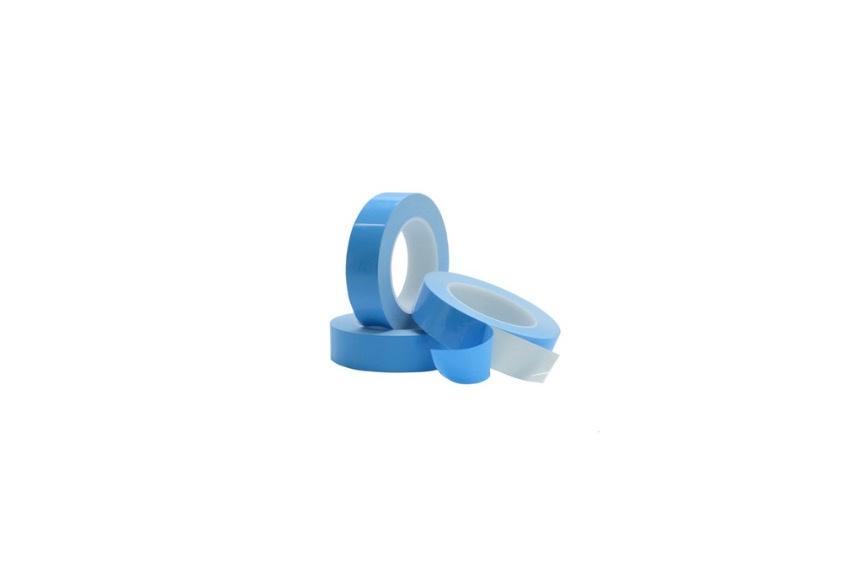
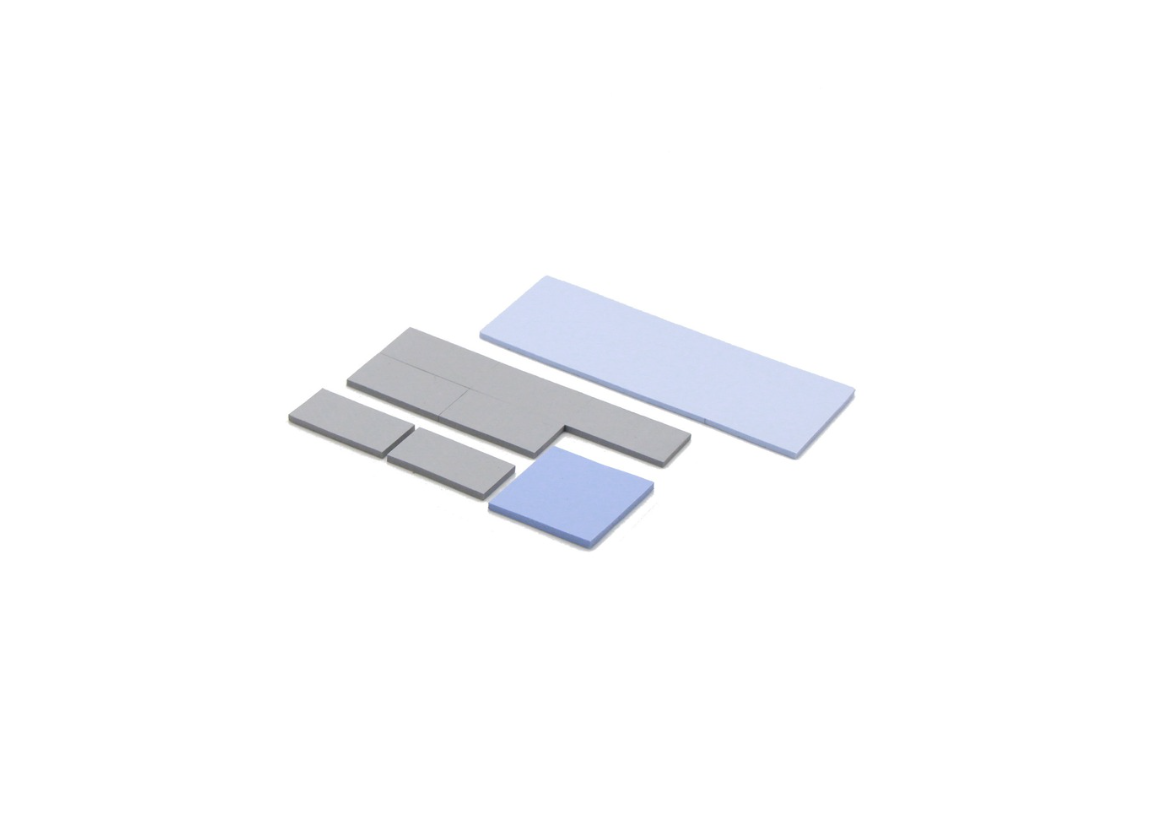
For larger gaps, uneven surfaces, or assemblies where quick, clean installation matters more than absolute minimum thermal resistance, a thermal pad or double-sided thermal tape is often the more practical choice — faster to apply consistently and without grease's pump-out risk over time. Thermal gels and phase change materials sit somewhere in between, combining much of grease's low thermal resistance with better long-term stability under thermal cycling. For a detailed side-by-side comparison of grease against gel formulations — including which one holds up better over a multi-year service life — see Thermal Grease vs. Thermal Gel: Pros and Cons.
Common Mistakes to Avoid
Reusing grease from a previous assembly. Once grease has been compressed and then separated, its properties have already changed — reapplying it doesn't reproduce the original interface. Always use fresh material for any rework or reassembly.
Mixing different grease formulations. Applying a new grease over residue from a different type produces an interface with unpredictable thermal and mechanical behavior. Fully clean the surface before applying any new material, regardless of type.
Skipping surface cleaning before application. Oils, dust, or oxidation on either mating surface prevent grease from making full contact, adding thermal resistance that no amount of correct dispensing can fix afterward.
FAQ
Q: How long does thermal grease typically last before it needs reapplication?
This varies by formulation and operating conditions, but grease in continuous high-load applications — power modules, LED drivers — should be checked during routine maintenance rather than assumed to last indefinitely. Dry, cracked, or visibly migrated grease should be replaced. For a deeper look at the specific aging and pump-out mechanisms that drive this degradation, see Why Thermal Grease Fails: Aging, Pump-Out & How to Prevent It.
Q: Is thermal grease better than a thermal pad?
Neither is universally better — it depends on the interface. Grease delivers lower thermal resistance at very thin bond lines on flat surfaces, while pads handle larger or uneven gaps more predictably and avoid grease's long-term pump-out risk. The right choice depends on your specific gap size, surface flatness, and service life requirements.
Q: Can I use CPU-grade thermal grease in an industrial power application?
Not necessarily without verification. Consumer-grade greases are formulated and tested for consumer electronics duty cycles and service life expectations, which are often shorter and less demanding than industrial power applications running continuous duty for a decade or more. Confirm the grease's rated temperature range and cycling stability data before assuming a consumer-grade product will hold up in an industrial setting.
Conclusion
Thermal grease remains one of the most effective ways to minimize thermal resistance at a tight, flat interface — but getting the benefit requires attention to both the formulation and the application process. Choosing the right type for your electrical and thermal requirements, applying the correct quantity without air pockets or contamination, and understanding where grease's long-term behavior might not fit your service life target are what separate a reliable thermal interface from one that degrades faster than expected.
For a closer look at how grease compares to gel formulations over the long term, see Thermal Grease vs. Thermal Gel: Pros and Cons, and for the specific mechanisms behind grease aging and pump-out, see Why Thermal Grease Fails: Aging, Pump-Out & How to Prevent It.
Contact TaxoTape® for sample evaluation or technical recommendations tailored to your application →