Welcome to Taxo Tape
Understanding Thermal Cycling Failure Modes in TIMs
Introduction
Thermal cycling is a major reliability challenge in electronic assemblies. As devices heat up during operation and cool down when powered off, every material inside the system expands and contracts at a different rate. These repeated temperature swings can create mechanical stress at the interfaces where components meet.
Thermal interface materials (TIMs) play a key role in absorbing these stresses while maintaining efficient heat transfer. A well-designed TIM helps stabilize the thermal path, fills microscopic air gaps, and compensates for movement caused by expansion and contraction. When the TIM cannot withstand cycling, overall system reliability quickly drops.

What Is Thermal Cycling?
Thermal cycling refers to the repeated transition between high and low temperatures during normal device operation. Each cycle forces materials to expand when hot and contract when cool, which gradually introduces mechanical fatigue.
The severity of cycling depends on the application.
LED modules may run at elevated temperatures for long hours and cool intermittently.
Power supplies and inverters experience rapid on/off heating.
EV battery packs face wide temperature ranges during charge, discharge, and ambient conditions.
Across all these systems, hundreds or thousands of cycles accumulate over the product’s lifetime, making the TIM’s stability crucial.
How Thermal Cycling Affects TIM Performance
During cycling, TIM performance gradually changes due to the mismatch in coefficient of thermal expansion (CTE) between components, substrates, and the TIM itself.
Mechanical stresses from CTE mismatch: Harder materials may resist deformation, while softer materials accommodate more movement. This constant push-pull action can strain the interface.
Fatigue of soft vs. firm TIMs: Soft materials such as greases and gels may shift or flow over time, while firmer pads may crack or delaminate if they cannot flex enough.
Impact on long-term thermal resistance: As the interface degrades, micro-gaps may form, compression may decrease, and the effective thermal path becomes less efficient. This leads to rising operating temperatures and reduced component lifespan.
Common Failure Modes in TIMs
Several failure modes can appear when TIMs are exposed to long-term thermal cycling:
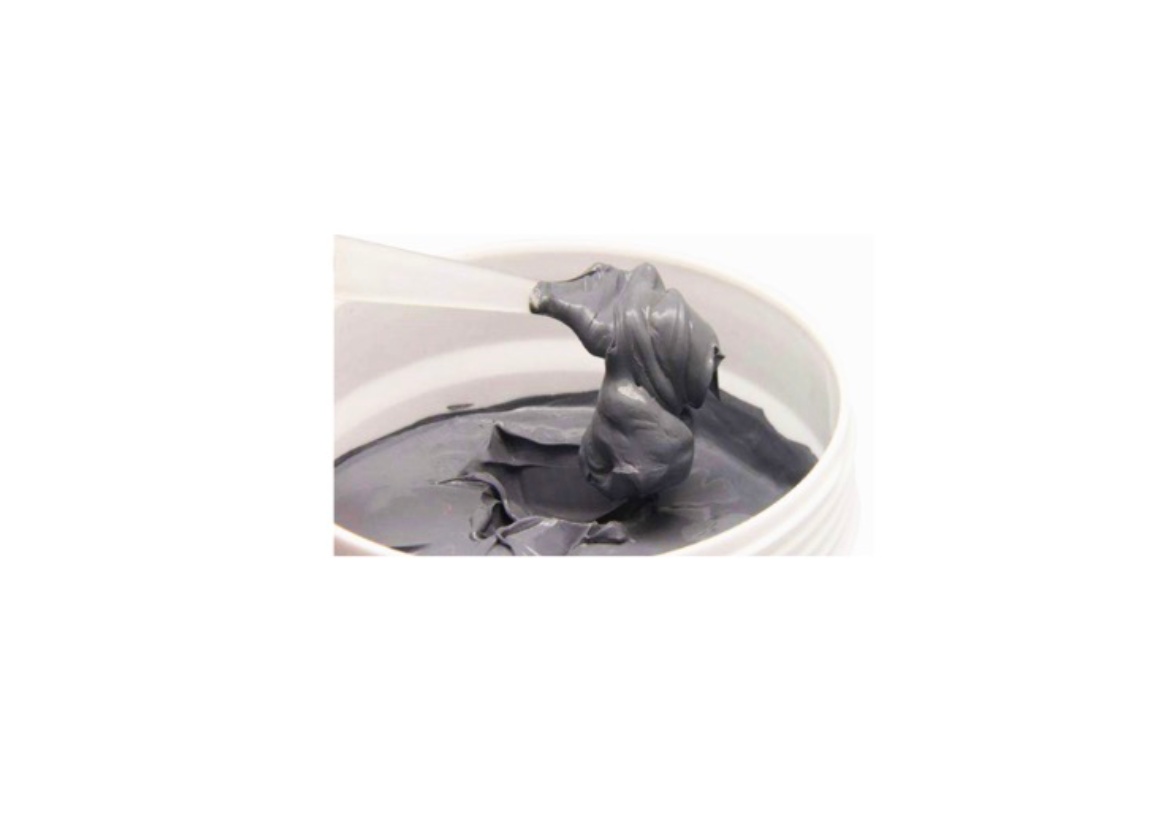
Pump-out: The TIM is slowly squeezed out of the interface due to repeated expansion and contraction. This is common in greases and low-viscosity gels.
Dry-out / Volatile loss: Loss of oils or volatiles reduces surface wetting, leading to increased thermal resistance and reduced contact area.
Cracking or delamination: Firm pads, adhesives, or cured materials may fracture or separate from the surface when they cannot absorb mechanical stress.
Thickness variation / voiding: Cycling can create uneven bond line thickness or internal voids, forming hotspots and unstable thermal paths.
Phase-change instability: For phase-change materials (PCMs), improper formulation or excessive stress may prevent the material from returning to its designed state after melting and resolidifying.
Key Factors That Influence Failure
Several variables determine how well a TIM survives long-term thermal cycling:
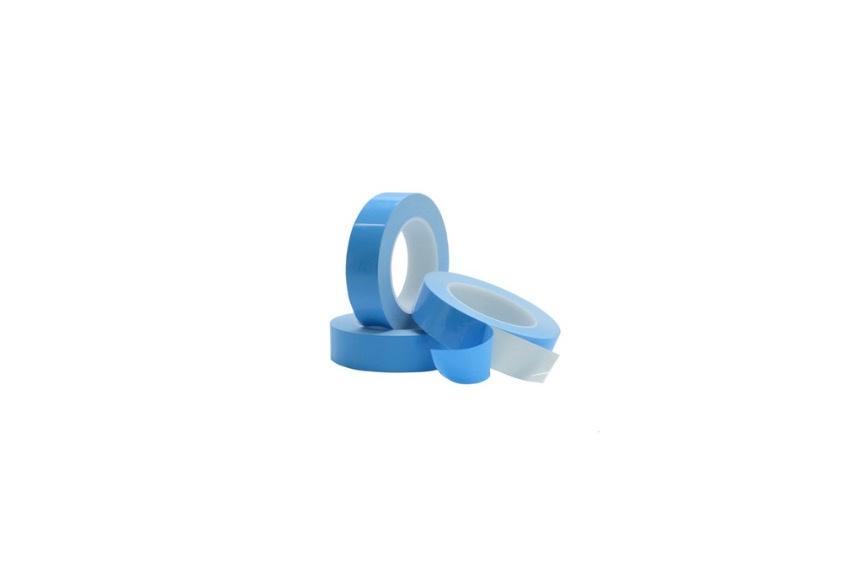
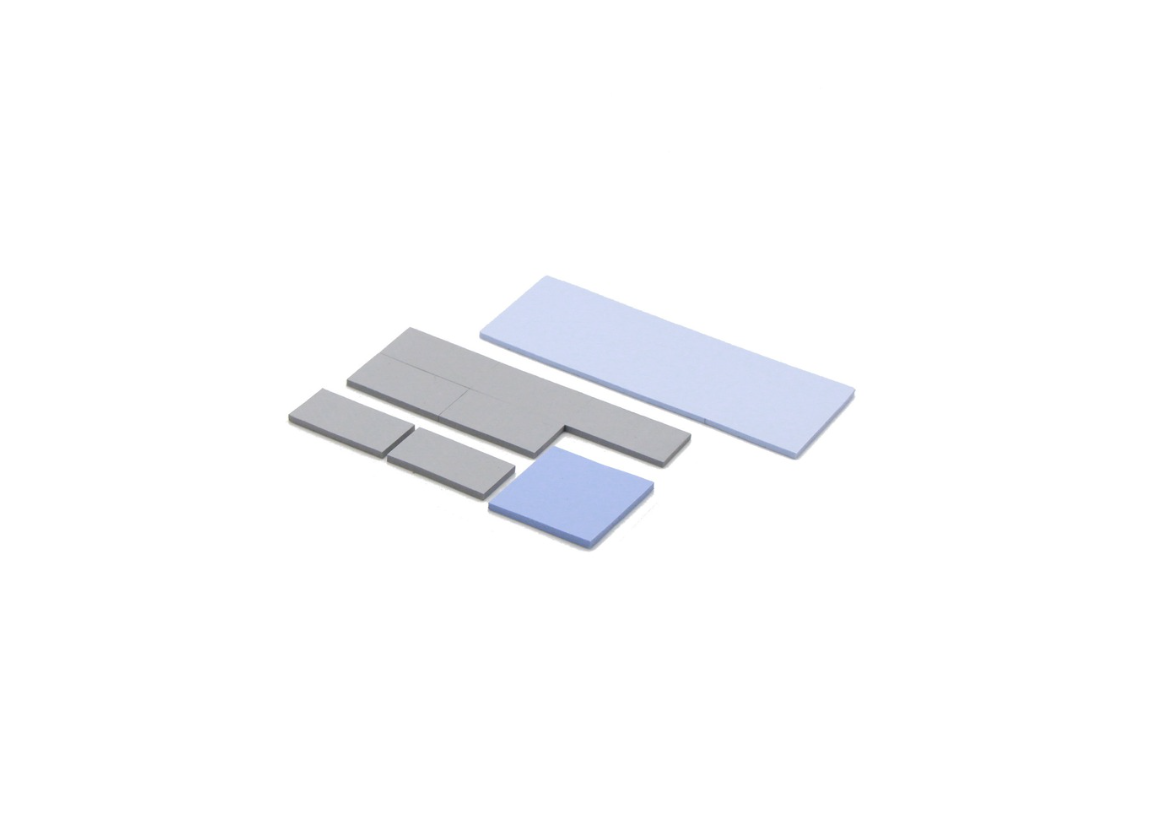
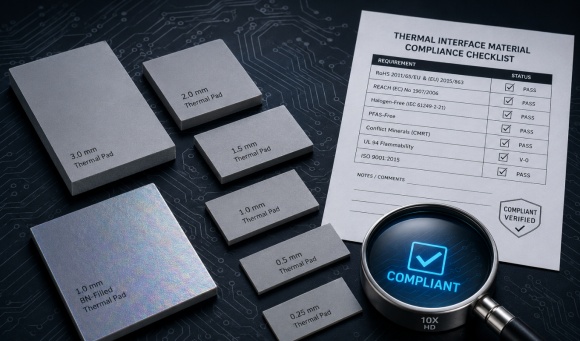
TIM material type: Greases and gels offer excellent conformability but may face pump-out; pads resist flow but can crack; PCMs may suffer from repeated melt–freeze cycles; graphite and adhesives may delaminate if CTE mismatch is high.
Compression force and assembly design: Too little pressure reduces contact; too much pressure accelerates material fatigue or squeeze-out. Stable, uniform compression significantly improves cycling endurance.
Surface roughness and cleanliness: Rough or contaminated surfaces increase gaps and reduce wetting, making the interface more vulnerable to cracking or voiding during cycling.
Power cycling pattern and ramp rate: Rapid or frequent temperature swings create higher mechanical stress. Slower ramp rates generally reduce fatigue.
How to Mitigate Thermal Cycling Failures
Improving reliability requires considering both material selection and assembly design.
Choose the right TIM for application stress: Soft greases/gels for high movement interfaces; firmer pads for consistent compression; PCMs where controlled phase change improves contact; graphite for thin, stable performance.
Ensure proper bond line thickness: An optimum BLT minimizes mechanical stress and improves heat flow. Too thin restricts movement; too thick increases thermal resistance.
Design for stable compression: Use hardware or fixtures that maintain even pressure across the lifetime of the device.
Select materials with proven fatigue resistance: Low pump-out, low volatility, and stable rheology are key to long-term thermal stability.
Application Examples
Thermal cycling plays a critical role in several common electronics applications:
LED drivers: Continuous on–off cycling increases pump-out and voiding risk.
Power modules / IGBT: High power density and rapid temperature swings demand TIMs with strong mechanical fatigue resistance.
Telecom base stations: Outdoor environments expose TIMs to wide temperature ranges and long service life requirements.
Battery modules: Large pack structures amplify CTE mismatch, making TIM stability essential for safety and performance.
Conclusion
Understanding how thermal cycling affects TIMs allows engineers to predict reliability issues before they appear in the field. Identifying common failure modes—such as pump-out, cracking, or voiding—helps guide better material selection and more robust assembly design. Choosing TIMs specifically engineered for harsh cycling conditions ensures stable thermal performance and longer product lifetimes.