Welcome to Taxo Tape
Top 5 Industrial Applications of Thermally Conductive Double-Sided Tapes
Introduction
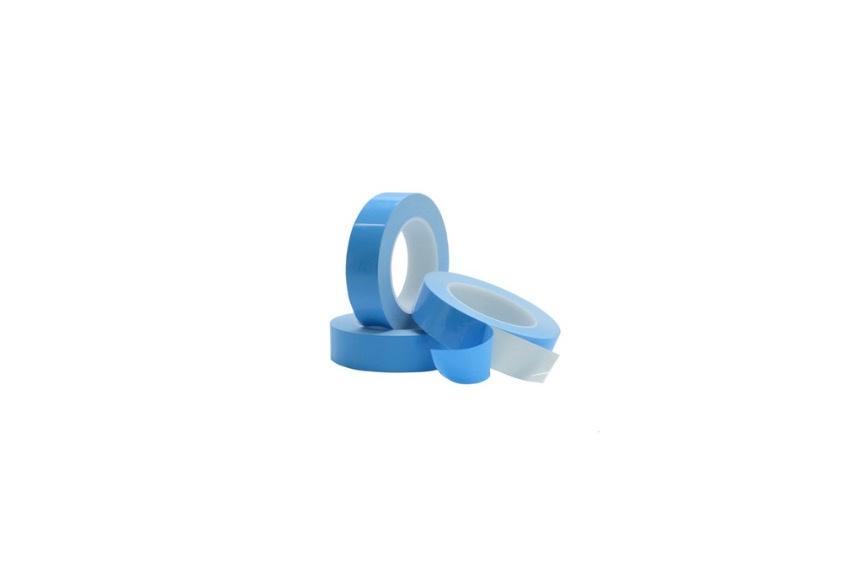
Thermally conductive double-sided tapes are becoming an essential part of modern electronic assembly. They provide both strong adhesion and efficient heat transfer, making them ideal for applications where components need to stay cool and securely bonded. Compared with traditional thermal grease or mechanical fasteners, these tapes offer a cleaner, faster, and more reliable thermal interface solution.
In this article, we explore the top five industrial applications where thermally conductive double-sided tapes deliver outstanding performance.
LED Lighting Modules
In LED lighting systems, managing heat is crucial to ensure brightness stability and extend product lifespan. Thermally conductive tapes are widely used to attach LED chips or PCBs to heat sinks.
Benefits: uniform heat transfer, long-term adhesion under high temperature, and simplified assembly process.
Example: outdoor lighting fixtures where strong bonding and weather resistance are essential.
Power Supplies and Inverters
Switching power supplies and inverters generates significant heat during operation. Using conductive double-sided tapes between MOSFETs, rectifiers, or power modules and aluminum housings helps maintain optimal thermal performance.
Advantages: enhanced heat dissipation, vibration damping, and electrical insulation.
Common sectors: telecom power modules, industrial inverters, and solar system controllers.
Battery Packs in Electric Vehicles
As battery cells and modules generate heat during charging and discharging, maintaining temperature balance is critical. Thermally conductive double-sided tapes can bond battery cells to cooling plates or graphite sheets.
Key benefits: strong bonding without mechanical stress, improved thermal uniformity, and reduced risk of hot spots.
Result: higher safety and better energy efficiency in EV battery systems.
PCBA and Semiconductor Modules
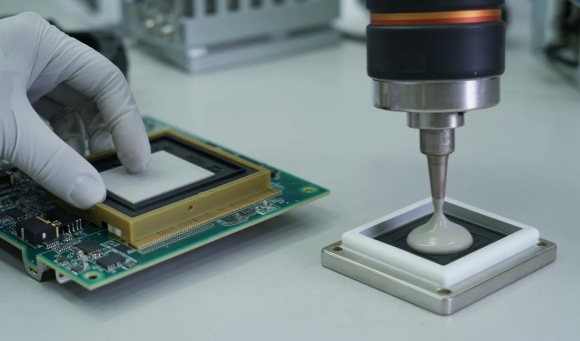
Printed circuit board assemblies often use thermally conductive tapes to attach heat spreaders or shields to components such as ICs, transistors, and power amplifiers.
Advantages: precise, clean installation—no curing or rework needed.
Why it matters: supports miniaturized electronics that demand both high power density and stable thermal control.
Consumer Electronics and Smart Devices
Thermally conductive double-sided tapes are also used in smartphones, tablets, and other compact electronics to bond heat spreaders, graphite films, and metal frames.
Benefits: lightweight, flexible bonding for thin devices.
Outcome: efficient heat dissipation and extended device lifespan.
Conclusion
From LED lighting to EV battery systems, thermally conductive double-sided tapes play a vital role in today’s electronic design. They simplify assembly, reduce production costs, and ensure efficient thermal management across multiple industries.
As electronic devices become more compact and powerful, these tapes will continue to be a preferred choice for engineers seeking reliable, high-performance heat dissipation solutions.