Welcome to Taxo Tape
The Complete Guide to Thermally Conductive Double-Sided Tapes for Electronics
Introduction
As modern electronics become smaller yet more powerful, the need for effective heat dissipation solutions is more essential than ever before. Whether in consumer electronics, LED systems, or automotive control units, the heat generated by components must be properly dissipated to maintain performance, safety, and longevity.
Among the many thermal interface materials (TIMs) available on the market, thermally conductive double-sided tapes (TCDST) have emerged as a reliable, clean, and easy-to-apply solution for heat transfer in compact designs. These tapes not only help manage thermal buildup but also provide strong adhesion between surfaces, reducing the need for mechanical fasteners or messy thermal pastes.
This comprehensive guide is designed to help electronics manufacturers, engineers, and procurement professionals understand the value and applications of thermally conductive double-sided tapes. From the basics of how these tapes work to tips for choosing the right product for your application, this guide aims to be a practical resource for optimizing your thermal management strategy.

What is Thermally Conductive Double-Sided Tape?
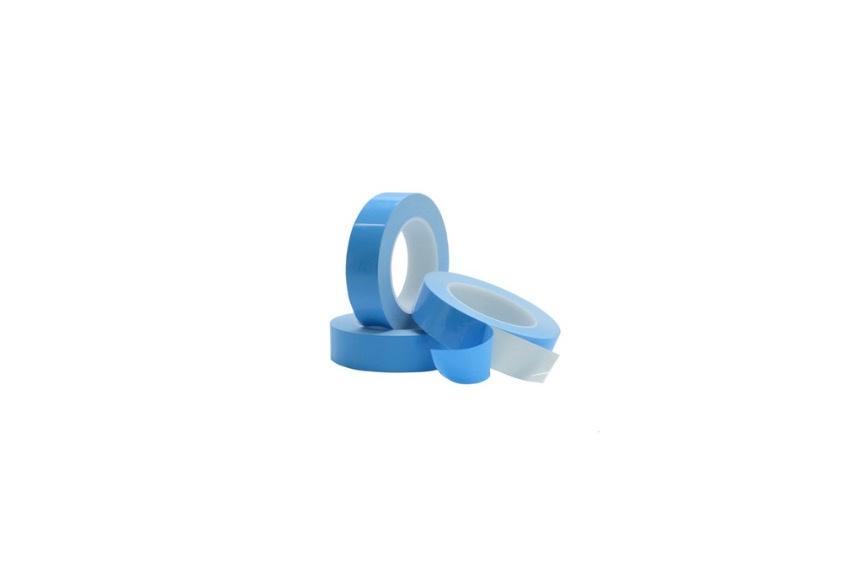
Thermally conductive double-sided tape (TCDST) is a type of pressure-sensitive adhesive (PSA) tape designed to perform two critical functions in electronic assemblies: bonding components together and transferring heat away from heat-generating parts. It serves as a thermal interface material (TIM) that simplifies assembly and improves thermal management in compact electronic devices.
Definition and Basic Structure
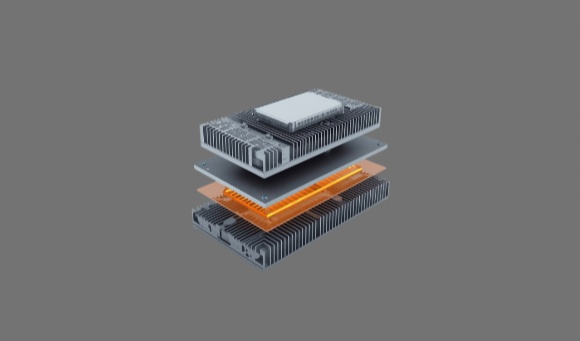
TCDST typically consists of a thermally conductive adhesive layer on both sides of a carrier substrate, such as a film or fabric. This multilayer structure allows the tape to provide mechanical adhesion while simultaneously offering a path for heat to flow from a hot component (like an IC or LED chip) to a heat sink or metal chassis.
How It Differs from Standard Double-Sided Tape
While standard double-sided tapes primarily focus on adhesive strength, TCDST is engineered with specialized fillers and resins that provide it with significant thermal conductivity, often in the range of 0.5 to 3.0 W/m·K or higher. In addition to bonding strength, TCDST must maintain stable thermal performance over a wide temperature range and under continuous electrical stress.
Key differences include:
Thermal conductivity: Standard tapes are insulators; TCDST facilitates heat flow.
Electrical insulation: TCDST often provides dielectric strength to prevent short circuits.
Application focus: TCDST is used in high-performance electronics, while regular double-sided tape is suited for general-purpose bonding.
Common Materials Used
The adhesive system and fillers used in TCDST vary depending on performance requirements:
Acrylic adhesives: Good balance of adhesion and thermal conductivity; cost-effective; moderate thermal performance.
Silicone adhesives: Excellent thermal and electrical stability at high temperatures; highly flexible; ideal for demanding environments.
Ceramic or mineral fillers: Added to the adhesive to enhance thermal conductivity without sacrificing dielectric strength.
Each material choice affects the tape’s overall performance in terms of flexibility, aging resistance, and compatibility with different substrates.
Key Performance Characteristics
When selecting a TCDST, it’s important to evaluate the following technical properties:
Thermal Conductivity (W/m·K): Indicates how efficiently the tape transfers heat.
Adhesion Strength: The ability to form a durable bond with surfaces like metals, plastics, or ceramics.
Dielectric Strength: Electrical insulation performance, especially important in high-voltage applications.
Temperature Resistance: Operational range typically from -40°C to 150°C or higher.
Compressibility and Conformability: How well the tape fills surface gaps or irregularities.
Flame Retardancy: Often required for safety compliance in regulated industries.
Understanding these features will help ensure optimal performance in your application, whether you're building a next-gen smartphone or an industrial power module.
Why Use TCDST in Electronics?
Modern electronic devices are becoming smaller, thinner, and more powerful, leading to higher heat density and more complex thermal management challenges. Thermally Conductive Double-Sided Tape (TCDST) offers a practical and efficient solution for addressing these challenges while simplifying the assembly process.
Heat Dissipation in Compact Electronic Devices
One of the main functions of TCDST is to dissipate heat from high-power components to heat sinks or enclosures. In space-constrained designs, such as smartphones, tablets, wearables, and compact industrial controllers, traditional cooling methods may not be viable. TCDST provides a thin, conformable thermal interface that efficiently transfers heat away from heat-generating components, helping to maintain safe operating temperatures and prevent thermal failure.
Replacement for Mechanical Fasteners or Liquid Adhesives
TCDST is an excellent alternative to:
Mechanical fasteners (e.g., screws, clamps) that can add weight, increase design complexity, or cause stress points
Thermal pastes or epoxies that can be messy, require curing time, and lack reworkability
With its peel-and-stick application, TCDST allows for quick, clean, and reliable installation without the need for specialized tools or curing processes. This proves especially advantageous in automated manufacturing environments, where accuracy and production speed are paramount.
Enhancing Device Reliability and Performance
By improving thermal conductivity between critical components and their heat dissipation paths, TCDST:
Helps prevent overheating and thermal throttling
Reduces the risk of component failure due to prolonged exposure to high temperatures
Enhances the overall durability, energy efficiency, and reliability of the end product
Additionally, many TCDST products offer strong dielectric properties, providing a layer of electrical insulation that improves safety and circuit integrity in high-voltage or densely packed assemblies.
Applications in Electronics
TCDST is widely used across various electronic applications, including:
PCB assembly: Placing chips, power modules, or transformers onto heat sinks or housings
LED modules: Bonding LED arrays to aluminum substrates or thermal management plates
Power supplies and converters: Securing heat-generating components like MOSFETs and inductors
Battery systems: Managing thermal buildup in lithium-ion battery packs for EVs, drones, or power tools
Displays and sensors: Providing thermal paths in compact enclosures with limited airflow
Whether for consumer devices or industrial-grade electronics, TCDST enables high-performance thermal bonding with minimal footprint and installation effort.
Key Features to Consider When Choosing TCDST
Choosing the right Thermally Conductive Double-Sided Tape (TCDST) is essential to ensure optimal performance in your electronic applications. Various technical parameters determine how well the tape will function as both a thermal interface and an adhesive solution. Here are the main characteristics to consider
Starting with thermal conductivity (W/m·K): What level best suits your specific application?
Thermal conductivity indicates how efficiently the tape conducts heat, typically measured in watts per meter per kelvin (W/m·K). For general electronic applications, a thermal conductivity range of 0.8–1.5 W/m·K is sufficient. However, high-power or high-density devices may require 2.0 W/m·K or higher.
Choose a tape that matches your thermal management needs without over-specifying and unnecessarily increasing cost.
Adhesion Strength: Surface Compatibility and Permanence
The tape must bond reliably to various surfaces such as aluminum, copper, ceramics, plastics, or PCBs. Look for:
Peel strength (N/inch) and shear strength values
Compatibility with smooth vs. rough surfaces
Long-term bonding stability under thermal cycling and vibration
Consider whether the tape needs to be permanent or removable based on your application or assembly process.
Electrical Insulation: Safety in Sensitive Components
Many electronic systems require electrically insulating yet thermally conductive materials to prevent short circuits. TCDST often provides a dielectric breakdown voltage of 1,000–6,000 volts, depending on thickness and materials used.
This is critical when bonding across high-voltage areas or near sensitive circuitry, such as in power supplies, EV battery modules, or telecom equipment.
Thickness and Compressibility
TCDST is available in thicknesses ranging from 0.1 mm to over 1.0 mm. Thicker tapes can:
Fill air gaps between uneven surfaces
Offer better vibration damping and shock absorption
However, thinner tapes may offer lower thermal resistance, which is beneficial for heat flow. Compressibility is also important when bonding surfaces that are not perfectly flat.
Operating Temperature Range and Aging Resistance
TCDST must maintain thermal and adhesive properties over time and under various environmental conditions. Typical operating ranges are:
-40°C to 120°C for standard tapes
Up to 150°C or higher for silicone-based systems
Look for data on:
Thermal aging tests
UV and humidity resistance
Thermal cycling stability
These factors ensure the tape won’t degrade or delaminate over time in demanding environments.
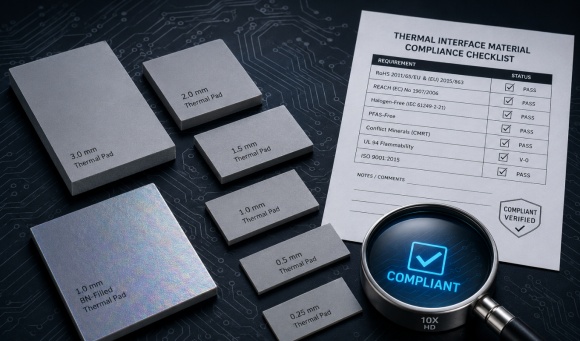
Flame Retardancy and Compliance (UL 94, RoHS, etc.)
Many industries—especially automotive, aerospace, and consumer electronics—require materials to meet flammability and environmental standards. When selecting a TCDST, check for:
UL 94 V-0 or equivalent flame retardancy certification
RoHS and REACH compliance to ensure the product is free of hazardous substances
Other relevant regional or industry-specific standards
Using certified materials not only enhances safety but also ensures compliance with global regulatory requirements.
Applications Across Industries
Thermally Conductive Double-Sided Tapes (TCDST) are versatile materials used in a wide range of industries where efficient heat dissipation and strong bonding are critical. TCDST provides engineers with a neat, space-saving, and dependable thermal interface, from common electronic devices to advanced industrial applications.
Consumer Electronics: Smartphones, Laptops, Gaming Devices
In the fast-evolving world of consumer electronics, manufacturers are constantly pushing for thinner, lighter, and more powerful devices. TCDST plays a key role in:
Dissipating heat from processors, GPUs, and batteries
Bonding heat spreaders or metal enclosures to internal components
Enhancing reliability and user comfort by keeping surface temperatures low
It is widely used in smartphones, tablets, laptops, game consoles, wearables, and other personal electronics where space is limited and performance is critical.
LED Lighting Systems
Although LEDs are known for energy efficiency, they still emit heat that must be properly dissipated to preserve their brightness and durability. TCDST is used in:
Mounting LED chips to aluminum substrates or heat sinks
Ensuring consistent thermal transfer without screws or messy adhesives
Reducing thermal stress that can cause color shifting or early LED failure
It provides a thin, uniform bond line and excellent insulation, making it ideal for compact or modular LED systems used in commercial lighting, automotive headlights, and display panels.
Automotive Electronics: EV Batteries, Sensors, ADAS
The shift toward electric vehicles and advanced driver-assistance systems (ADAS) has increased the thermal management demands within vehicles. TCDST is commonly used in:
EV battery packs to manage thermal load and prevent overheating
LiDAR and radar sensors, where size and precision matter
ECUs and power modules that require vibration-resistant bonding and electrical insulation
With excellent aging resistance and wide operating temperature tolerance, TCDST performs reliably in harsh automotive environments.
Telecommunication Equipment
In telecom applications, heat buildup can impair the performance of high-speed network equipment. TCDST is used for:
Mounting transceivers, amplifiers, and antennas to heat sinks
Managing thermal loads in base stations, 5G modules, and servers
Providing insulation in high-frequency, high-voltage systems
Its low outgassing and stable thermal performance make it suitable for cleanroom or sensitive signal environments.
Industrial Control Systems
In industrial settings, TCDST is essential for maintaining the reliability of electronic control units and automation systems. Applications include:
Mounting IGBTs, transformers, and power converters
Thermal bonding in PLC, robotics, and motor control units
Enabling fast assembly in environments with mechanical shock or vibration
TCDST supports the miniaturization and ruggedization of industrial devices, helping manufacturers meet demanding thermal, electrical, and mechanical specifications.
Comparison with Other Thermal Interface Materials (TIMs)
When it comes to managing heat in electronic devices, Thermally Conductive Double-Sided Tape (TCDST) is just one of several types of thermal interface materials (TIMs) available. Yet, it delivers distinct benefits such as clean application, strong mechanical adhesion, and high process efficiency. Here's how TCDST stacks up against other common TIMs.
TCDST vs. Thermal Pastes
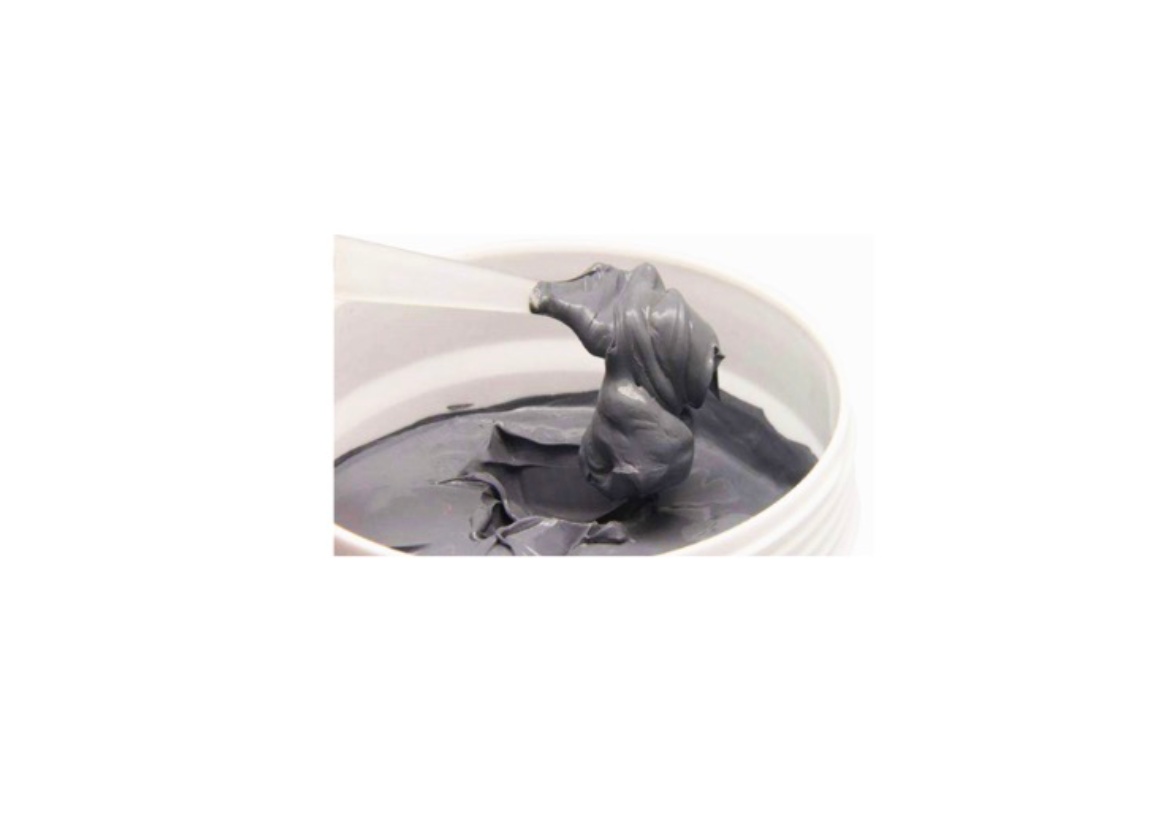
Thermal compounds—commonly referred to as greases or pastes—are frequently applied to bridge tiny air gaps between hot components and their corresponding heat sinks.
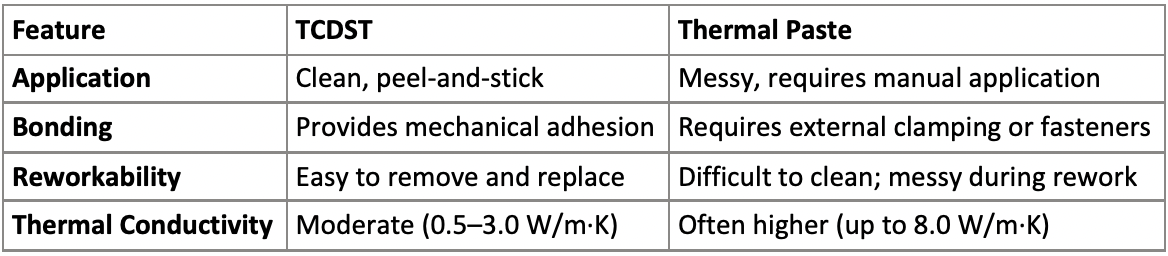
Key takeaway: TCDST offers a cleaner and more production-friendly alternative to pastes, especially for applications that don’t require ultra-high thermal conductivity.
TCDST vs. Thermal Pads
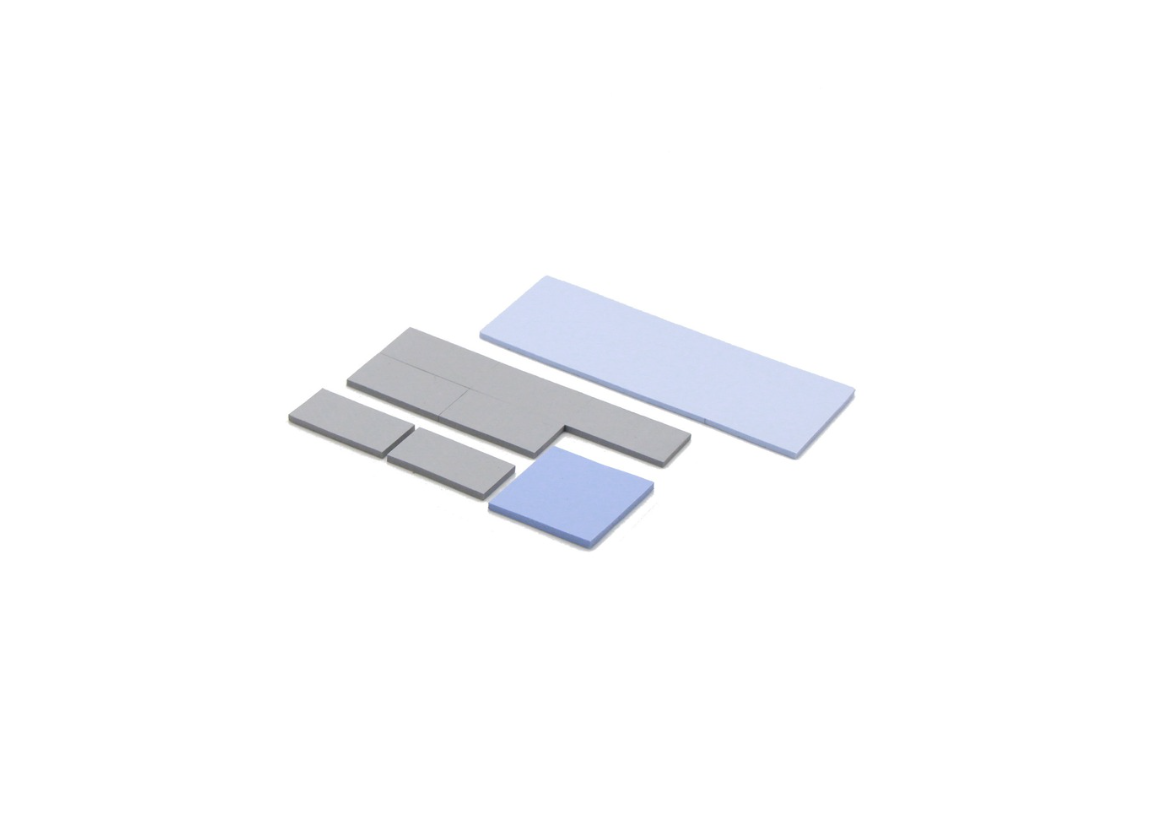
Thermal pads are solid, compressible sheets used to bridge gaps between uneven surfaces.

Key takeaway: Thermal pads are better for large or uneven gaps, while TCDST excels in thin-profile designs that also require strong adhesion.
TCDST vs. Liquid Gap Fillers
Liquid gap fillers are dispensable materials used in high-volume manufacturing where precision filling of thermal gaps is required.
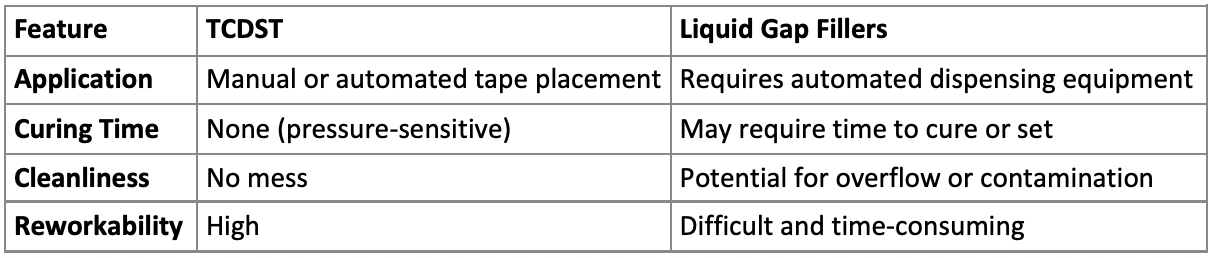
Key takeaway: TCDST is a more practical and less equipment-intensivesolution for small- to mid-size assemblies or when rework is a frequent requirement.
Installation and Usage Tips
To achieve optimal performance and long-term reliability from Thermally Conductive Double-Sided Tape (TCDST), proper installation is essential. Below are best practices and tips to help electronics manufacturers and engineers maximize adhesion, thermal performance, and process efficiency.
Surface Preparation & Cleaning
The performance of TCDST is strongly influenced by the quality of its adhesion to the application surfaces. The presence of contaminants such as oil, dust, moisture, or surface oxidation can greatly weaken the tape’s bonding capability.
Recommended steps:
Clean surfaces with isopropyl alcohol (IPA) or a compatible solvent
Ensure surfaces are dry, smooth, and free of debris
For metals like aluminum or copper, lightly abrading the surface can improve adhesion
Avoid touching cleaned areas with bare hands to prevent recontamination
Pressure-Sensitive Adhesive Handling
TCDST uses pressure-sensitive adhesive (PSA), which requires sufficient pressure to form a strong bond.
Application tips:
Apply firm, even pressure (typically 10–15 psi) during installation
Use a roller or press to ensure full surface contact, especially for larger parts
Allow dwell time (up to 72 hours) for the adhesive to reach maximum strength, depending on the application
Note: Some TCDST types offer repositionability during the initial seconds of application—take advantage of this to align components properly before final placement.
Storage and Shelf Life Considerations
Improper storage can lead to loss of tackiness, hardening, or degradation of thermal properties.
Best practices:
Store TCDST in a cool, dry environment, ideally between 15–25°C (59–77°F)
Avoid direct sunlight, moisture, and high humidity
Keep the product in its original packaging until ready to use
Most high-quality TCDST products have a shelf life of 6–12 months—always check the manufacturer’s guidelines
Common Mistakes to Avoid During Installation
Even high-performance tapes can fail if mishandled. Avoid these frequent errors:
Skipping surface prep – Dirt or oil prevents proper bonding.
Insufficient pressure – Light pressing won’t fully activate the adhesive.
Trapped air bubbles – Can reduce thermal conductivity and weaken the bond.
Wrong thickness selection – Too thin can cause poor contact; too thick may add thermal resistance.
Applying to incompatible surfaces – Low-surface-energy plastics may need surface treatment or primer.
Using expired or poorly stored tape – Always check the condition before use.
Case Studies / Success Stories
Real-world applications of Thermally Conductive Double-Sided Tape (TCDST) demonstrate its value across industries—from improving device lifespan to simplifying assembly lines. These case studies provide insight into how leading manufacturers have used TCDST to solve thermal challenges and boost product performance.
Case Study 1: Smartphone Manufacturer Optimizes Heat Management
Challenge:
A global smartphone brand was experiencing excessive device heat in its latest flagship model. Traditional thermal paste was messy and inconsistent, delaying production and causing high rework rates.
Solution:
The company switched to a custom-formulated TCDST with 2.0 W/m·K thermal conductivity and high adhesion strength. The tape was pre-cut for an automation-friendly application.
Results:
Assembly time reduced by 25%
Device surface temperature dropped by 4–6°C
Yield rate improved by 15%
Operators reported faster, cleaner production
Customer feedback: “The switch to TCDST not only solved our thermal issue, but also sped up our production line. We’re now rolling it out across multiple product lines.”
Case Study 2: LED Lighting Company Enhances Product Lifespan
Challenge:
An industrial LED lighting manufacturer faced LED discoloration and early failure due to poor heat dissipation between chips and aluminum substrates.
Solution:
They adopted a 0.5 mm-thick silicone-based TCDST with excellent dielectric strength and UL 94 V-0 flame rating.
Results:
Product lifespan increased by 40%
Failures due to overheating dropped by 90%
Compliance with safety regulations improved
Simplified production by eliminating thermal grease
Customer feedback: “Switching to TCDST was a game-changer. Our warranty claims have dropped dramatically, and customers are seeing better performance in the field.”
Case Study 3: EV Battery Pack Integration with Safety and Efficiency
Challenge:
An electric vehicle (EV) OEM needed a reliable, flame-retardant thermal interface material for bonding battery modules to heat sinks—without using screws or liquid adhesives.
Solution:
They selected a RoHS- and UL-certified TCDST with strong bonding and high-temperature resistance.
Results:
Improved thermal transfer by 30%
Reduced assembly time per module by 20 minutes
Met strict EV safety and vibration resistance standards
Enabled lightweight battery design
Customer feedback: “TCDST helped us meet our tight thermal specs and pass rigorous vibration tests. It’s now a standard in our battery production process.”
FAQs
Can TCDST be reused?
Generally, Thermally Conductive Double-Sided Tape (TCDST) is designed for single-use applications. Once applied and removed, its adhesive properties and thermal performance degrade significantly, making reuse unreliable. For removable or repositionable needs, consider tapes specifically labeled as such, but these often have lower adhesion or thermal conductivity.
How long does TCDST last?
The lifespan of TCDST depends on factors like operating temperature, environmental conditions, and surface compatibility. Typically, high-quality TCDST can last 5 to 10 years or more in stable environments without significant loss of adhesion or thermal performance. Proper installation and storage further extend its service life.
Is it safe for high-voltage applications?
Yes. Many TCDST products provide excellent electrical insulation and meet industry standards for dielectric strength, making them suitable for high-voltage electronics. Always verify the tape’s dielectric breakdown voltage and compliance certifications (e.g., UL, IEC) to ensure it matches your specific application’s safety requirements.
What’s the best way to test thermal conductivity?
Thermal conductivity is typically measured using standardized laboratory methods, such as:
Laser Flash Analysis (LFA)
Guarded Hot Plate Method
Transient Plane Source (TPS) technique
These tests provide accurate thermal conductivity values (W/m·K) for TCDST materials. For practical validation, thermal performance in your device can also be assessed using infrared thermography or temperature sensors under operating conditions.
Conclusion
Thermally Conductive Double-Sided Tape (TCDST) is a powerful, versatile solution for managing heat in today’s compact and high-performance electronic devices. By combining efficient thermal conductivity with strong adhesion, electrical insulation, and easy installation, TCDST helps manufacturers enhance product reliability, simplify assembly, and reduce costs.
Selecting the appropriate TCDST solution and a reliable supplier can have a major impact on both the efficiency of your production process and the overall performance of your device. Whether you’re working in consumer electronics, automotive, LED lighting, or industrial control systems, TCDST offers tailored solutions to meet your thermal management challenges.
Ready to improve your thermal management strategy?
Contact us today for samples, custom tape solutions, or expert consultation to find the perfect TCDST product for your application. Let’s work together to keep your electronics cool, safe, and reliable.