Welcome to Taxo Tape
Thermal Path Engineering: Reducing Interface Resistance Beyond TIMs
Introduction: Why Interface Resistance Still Limits Thermal Performance
In many electronic systems, thermal problems remain even after selecting so-called high-performance thermal interface materials (TIMs). Datasheets may show impressive thermal conductivity values, yet junction temperatures in real products often fail to improve as expected. This disconnect leads engineers to question whether the material itself is the limiting factor.
In practice, heat transfer is rarely governed by a single material layer. Instead, it depends on the continuity and quality of the entire heat flow route—from the heat source to the ambient environment. When this route is interrupted by poor contact, uneven pressure, or incompatible interfaces, thermal resistance accumulates regardless of how advanced the TIM appears on paper.
This is where the concept of the thermal path becomes more relevant than isolated material performance. A TIM does not operate independently; it functions as one element within a mechanical and process-defined system. Understanding why datasheet performance does not directly translate into system-level results requires looking beyond material properties and toward how heat actually moves through assembled hardware.
Understanding Thermal Interface Resistance in Real Assemblies
Thermal interface resistance refers to the opposition to heat flow at the boundary between two solid surfaces. Unlike bulk thermal resistance, it is dominated by microscopic and macroscopic contact imperfections rather than intrinsic material conductivity.
In real assemblies, this resistance is influenced by several factors that are often underestimated during design:
Surface flatness and roughness
Even precision-machined surfaces contain peaks, valleys, and waviness. Actual contact occurs only at discrete points, leaving air-filled gaps that significantly impede heat transfer.Contact pressure variation
Pressure is rarely uniform across an interface. Localized low-pressure zones reduce real contact area and increase thermal resistance, even when average pressure seems sufficient.Assembly tolerances and stack-up effects
Dimensional tolerances across multiple components can change gap size and pressure distribution from unit to unit, leading to inconsistent thermal performance in production.
These realities explain why bulk thermal conductivity alone is not enough. A material with high conductivity cannot compensate for insufficient contact or unstable mechanical conditions. Interface resistance is therefore a system problem, not a material specification problem.
From TIM Selection to Thermal Path Engineering
Traditional thermal design often focuses on selecting a TIM with the highest possible conductivity value. While this approach is straightforward, it assumes that the interface behaves ideally—an assumption that rarely holds true outside laboratory conditions.
Thermal Path Engineering represents a shift from a material-focused mindset to a system-focused one. Instead of asking, “Which TIM has the lowest conductivity?” the more relevant question becomes, “How can heat move reliably through this entire interface under real assembly conditions?”
In practical terms, thermal path engineering considers factors beyond the TIM itself, including:
Mechanical design
Clamping methods, stiffness of mating parts, and tolerance control all affect pressure distribution and interface stability.Material compatibility
The interaction between TIMs and adjacent materials—such as aluminum, copper, plastics, or coatings—can influence wetting behavior, aging, and long-term contact quality.Assembly process
Torque control, curing conditions, rework cycles, and production variability directly shape interface performance over time.
By integrating these elements early in the design phase, engineers can reduce interface resistance more effectively than by material upgrades alone.
The Role of Contact Mechanics in Heat Transfer
Contact mechanics plays a critical role in determining interfacial thermal resistance. As contact pressure increases, surface asperities deform, real contact area expands, and heat transfer improves. However, higher pressure is not always achievable or desirable in electronic assemblies.
Different TIM classes respond differently to mechanical conditions:
Rigid materials offer dimensional stability but require very flat surfaces and high pressure to achieve low resistance.
Semi-flexible materials balance shape retention with limited compliance, making them suitable for controlled gaps.
Compliant materials conform easily to surface irregularities and low-pressure environments, often delivering more consistent thermal performance in real assemblies.
This leads to unavoidable trade-offs. Softer materials improve contact but may introduce risks such as pump-out, material migration, or long-term degradation under thermal cycling. More robust materials improve reliability but may suffer from higher initial interface resistance. Selecting a TIM therefore involves balancing contact quality, mechanical stability, and service life, not conductivity alone.
Surface Conditions: The Hidden Thermal Bottleneck
Surface condition is one of the most overlooked contributors to thermal resistance. Roughness and waviness reduce the effective contact area, forcing TIMs to fill gaps rather than facilitate direct heat transfer. In many cases, the interface is dominated by geometry rather than material performance.
“Perfect contact” is largely theoretical in production environments. Variations in machining, coatings, oxidation, and handling ensure that every interface is slightly different. Expecting laboratory-level performance under these conditions often leads to unrealistic thermal expectations.
As a result, matching the TIM type to surface condition becomes more important than chasing the highest datasheet values. A moderate-conductivity material that conforms well to real surfaces can outperform a higher-conductivity alternative that cannot establish stable contact. Understanding surface realities allows engineers to design interfaces that perform consistently—not just ideally.
Assembly Process and Its Thermal Impact
Thermal performance is not defined at the design stage alone; it is finalized on the production line. During mass production, small variations inevitably appear, and their thermal impact can be larger than expected.
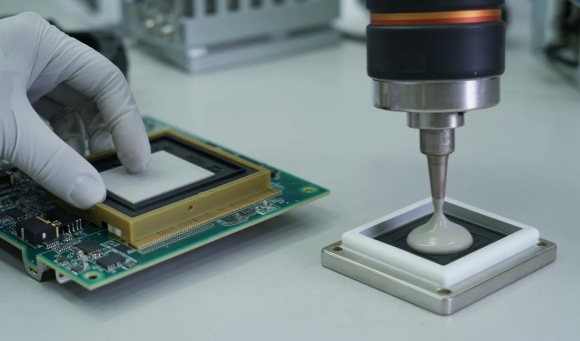
Differences in mounting torque directly affect contact pressure and pressure distribution. Even within specified torque ranges, variations between operators or tools can lead to measurable changes in interface resistance. For curable or semi-curable materials, curing conditions—such as temperature, time, and pressure during curing—further influence final thickness and contact quality.
Rework cycles introduce another layer of complexity. Disassembly and reassembly can alter surface conditions, redistribute material, or trap air at the interface. A TIM that performs well during first assembly may behave differently after rework, particularly in high-volume or serviceable products.
For these reasons, consistent thermal performance requires process-aware material selection. Materials must tolerate realistic assembly variations and still deliver stable contact under production constraints. Ignoring the assembly process often results in thermal designs that work in prototypes but fail to scale reliably.
Case-Oriented Thinking: Optimizing the Whole Thermal Path
In many thermal troubleshooting cases, replacing the TIM is the first corrective action. However, there are numerous situations where changing the material alone does not resolve overheating.
Typical examples include:
Interfaces limited by uneven pressure rather than material conductivity
Assemblies where excessive gap variation overwhelms the TIM’s ability to conform
Designs where mechanical constraints prevent sufficient compression
In such cases, small adjustments in interface design—such as modifying clamping locations, adjusting nominal gap targets, or improving surface alignment—can significantly reduce thermal resistance without changing the TIM itself.
This highlights the importance of collaborative optimization. Thermal performance improves most effectively when mechanical design, materials, and assembly considerations are evaluated together. A case-oriented approach shifts the focus from “finding a better material” to “building a better thermal path.”
When to Go Beyond Traditional TIMs
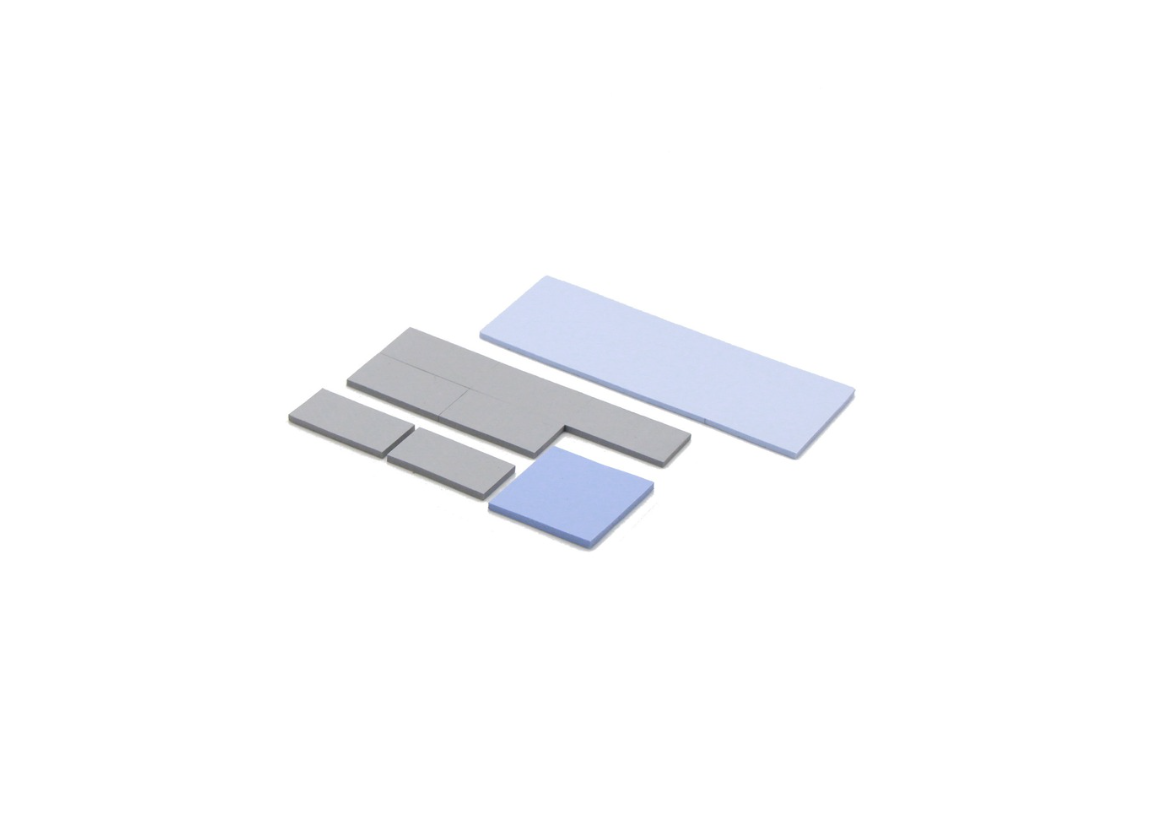
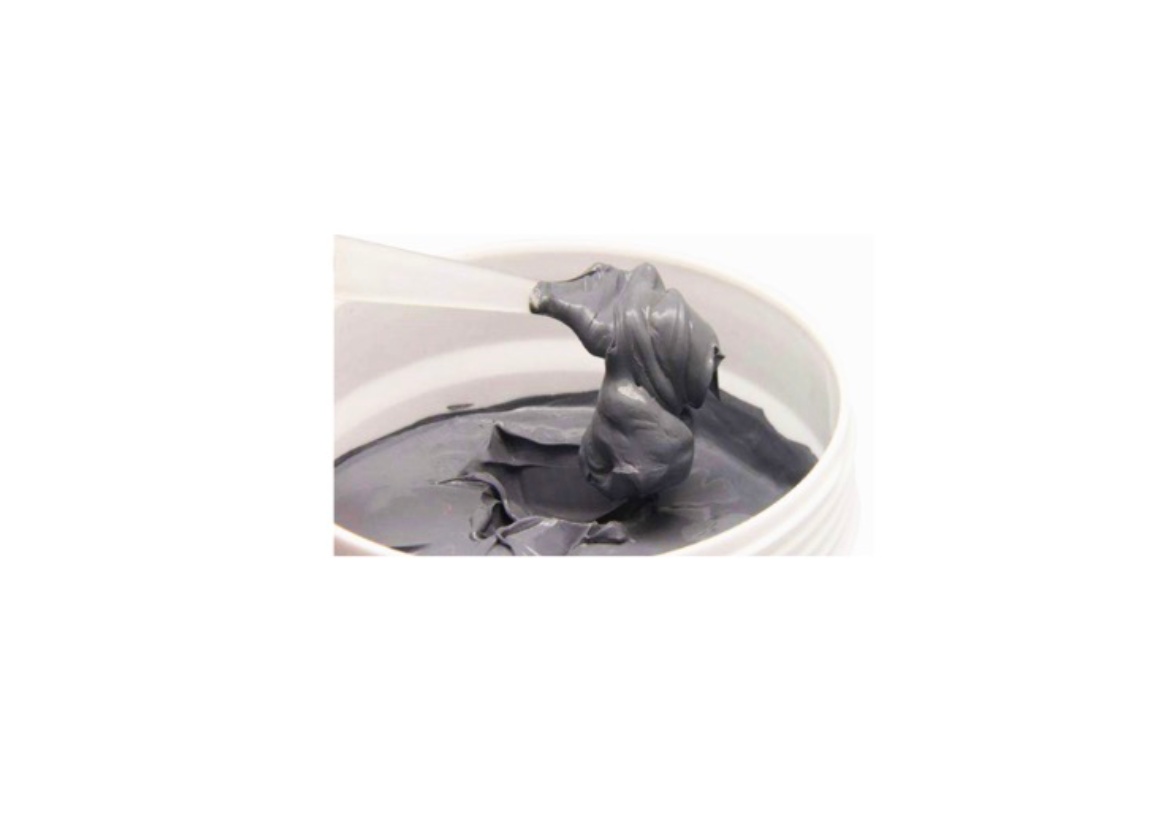
Traditional pads, greases, and gels are effective across many applications, but they also have practical limits. These limits become apparent when interfaces involve large tolerances, variable pressure, or long-term reliability demands.
Situations that may require going beyond conventional approaches include:
Wide or inconsistent gaps that cannot be controlled mechanically
Interfaces exposed to frequent thermal cycling or vibration
Designs requiring both thermal performance and structural stability
Alternative or hybrid approaches may offer advantages in these cases, such as:
Gap management strategies that prioritize predictable compression behavior
Phase change behavior to improve wetting and contact after initial assembly
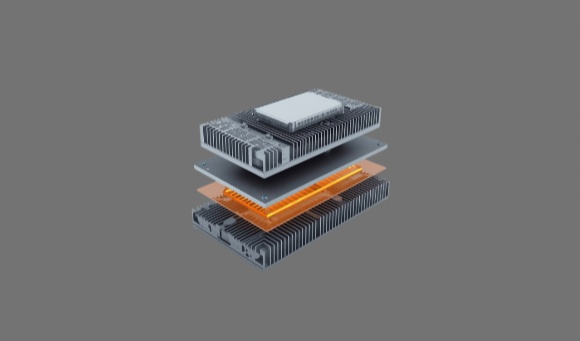
Layered interface concepts that combine different material functions within a single thermal path
The key is not the novelty of the solution, but the decision logic behind it. Selecting an approach should be driven by interface conditions and system requirements, not by material category alone.
Designing for Reliability, Not Just Initial Performance
Initial thermal performance often looks promising during early testing, but long-term behavior tells a different story. Over time, thermal cycling and mechanical stress can degrade interface quality through material fatigue, pump-out, or loss of contact pressure.
Reliable thermal design accounts for:
Changes in material properties with aging
Differential thermal expansion between mating parts
Repeated mechanical loading during operation and maintenance
Maintaining interface integrity over the product lifetime is often more challenging than achieving low thermal resistance on day one. Designs that consider reliability from the outset are more likely to deliver stable thermal performance in real operating environments.
Conclusion: Engineering the Thermal Path as a System
Reducing thermal interface resistance cannot be achieved by material selection alone. It requires a system-level understanding of how heat moves through real assemblies, under real mechanical and process constraints.
By viewing the interface as part of a continuous thermal path—and considering design, materials, and assembly together—engineers can achieve more predictable and reliable thermal outcomes. Addressing these factors early in the design process helps avoid costly revisions later and leads to more robust products.
Thermal challenges rarely have a single-variable solution. They are best addressed through informed discussion, careful evaluation, and a holistic view of the thermal path.