Welcome to Taxo Tape
Thermal Pads for Battery Module Assembly: Balancing Performance and Cost
Introduction: Why Thermal Pads Matter in Battery Modules
As battery systems become more compact and energy-dense, managing heat effectively has become a critical design challenge. In both electric vehicles (EVs) and stationary energy storage systems, uneven temperature distribution can accelerate cell aging, reduce energy efficiency, and increase safety risks.
Thermal Interface Materials (TIMs) are essential in transferring heat from individual battery cells to cooling structures such as cold plates or aluminum housings. Among various TIM options, thermal pads have become one of the most practical and reliable choices for battery module assembly.
Their growing popularity is driven by their unique combination of thermal performance, mechanical flexibility, and ease of assembly. Unlike liquid greases or curing adhesives, thermal pads offer clean handling, consistent thickness, and stable performance over time. The challenge, however, lies in achieving the right balance — selecting a pad that delivers sufficient thermal conductivity without driving up cost or complicating manufacturing.
The Role of Thermal Pads in Battery Module Design
In a battery module, thermal pads serve as a bridge between the heat-generating cells and the cooling components. They fill microscopic gaps and uneven surfaces to ensure efficient heat transfer from the cells to the cold plate, maintaining temperature uniformity across the pack.
Thermal pads are commonly used in several key areas:
Between cells and cooling plates to ensure efficient conduction and minimize temperature gradients.
Under busbars or current collectors to manage localized heating during charge/discharge cycles.
Around Battery Management Systems (BMS) where electronic components also generate heat.
The typical thermal resistance path in a battery module consists of:
cell surface → TIM layer → cold plate (or heat spreader).
Compared with thermal greases, pads provide cleaner application and less risk of pump-out under vibration. Compared with phase change materials, they require no activation temperature and perform immediately upon assembly. And compared with gap fillers, they often offer better thickness control and reworkability — making them ideal for automated or large-scale manufacturing.
Key Material Properties to Consider
Selecting the right thermal pad requires understanding how material properties impact both performance and assembly.
Thermal Conductivity (W/m·K)
This value determines how efficiently heat moves through the pad. For battery applications, materials typically range from 1.0 to 8.0 W/m·K. While higher conductivity improves thermal performance, it may come at the expense of softness or cost.Compressibility and Softness
Battery modules often have small tolerances and surface variations. A soft, compressible pad can conform to uneven surfaces, reducing contact resistance and mechanical stress on cells.Electrical Insulation and Dielectric Strength
Since many battery systems involve high voltage, insulation is essential. Silicone-based thermal pads provide excellent dielectric protection while maintaining consistent performance over time.Long-Term Stability
The pad must maintain its structure and thermal performance under prolonged compression, temperature cycling, and vibration. Materials with poor resilience may harden, crack, or lose contact over time, leading to performance degradation.
A well-balanced material ensures not only thermal efficiency but also mechanical reliability throughout the battery’s lifecycle.
Common Design Challenges
Even with high-quality materials, engineers often face practical challenges when integrating thermal pads into large-scale battery assemblies.
Uneven Cell Surfaces and Variable Gaps
Manufacturing tolerances can create small but significant gaps between cells and cooling surfaces. The TIM must compensate for these variations without excessive compression stress.Maintaining Consistent Pressure During Assembly
Battery modules can include dozens or hundreds of cells. Ensuring uniform pad compression across the entire pack is difficult but crucial for stable thermal contact.Avoiding Pump-Out or Fatigue Over the Lifecycle
In EV applications, continuous vibration and thermal cycling can cause some materials to shift or lose contact. Pads should maintain elasticity and adhesion to prevent air gaps forming over time.Compatibility with Adhesives or Structural Foams
In some designs, pads must coexist with adhesives or sealing foams. Chemical compatibility and outgassing resistance should be verified to prevent long-term reliability issues.
Understanding these mechanical and process-related challenges allows engineers to select materials that perform consistently not just in the lab, but over years of operation.
Balancing Performance and Cost
Selecting a thermal pad is rarely about chasing the highest thermal conductivity. Instead, it’s about optimizing the performance-to-cost ratio for the specific battery design.
Finding the Right k-Value Without Overengineering
For most EV battery applications, a 3–5 W/m·K pad already provides sufficient heat transfer. Beyond that, gains in temperature drop are often marginal compared to the increase in cost.Comparing Material Types
Silicone-based pads offer good flexibility, insulation, and stability — suitable for most applications.
Graphite-based pads provide extremely high conductivity but are electrically conductive and more brittle.
Non-silicone alternatives are used where silicone migration must be avoided (e.g., optical or sensor-sensitive environments).
Thickness and Filler Type Affect Cost and Performance
Thicker pads or heavy filler loading can significantly increase material cost and stiffness. Engineers should aim for the thinnest pad that still ensures full contact under normal compression.Case Example
In one EV battery pack, replacing an 8 W/m·K pad with a 4 W/m·K but softer alternative reduced the ΔT only slightly (by 1–2°C) while cutting total cost by 30%. The improved compressibility also simplified assembly and reduced stress on the cells — a practical example of engineering balance.
Ultimately, the best thermal pad is not the most expensive or the most conductive one — it’s the material that achieves reliable performance, manufacturability, and cost efficiency in harmony.
Practical Selection Guidelines for Engineers
Choosing the right thermal pad for a battery module starts with understanding the real conditions of your design — not just numbers from a datasheet.
Define Application Requirements Clearly
Begin by identifying the expected gap size, contact pressure, and thermal target. For instance, narrow gaps (≤0.3 mm) often favor stiffer, higher-conductivity pads, while larger tolerances may need softer and thicker materials to ensure contact across uneven surfaces. Always align pad thickness with the mechanical stack-up of the module.Interpret Supplier Datasheets Correctly
Thermal conductivity values in datasheets are typically measured under ideal test setups (often ASTM D5470). Real performance depends on how the pad behaves under your compression and surface conditions. Look beyond the k-value — review compressibility curves, hardness (Shore 00), dielectric strength, and long-term aging data to predict realistic outcomes.Validate In-System Performance
Always confirm material behavior under actual operating conditions. Use ΔT measurements (temperature rise across the TIM) or calculate total thermal resistance in the assembled module. In-system validation ensures your chosen pad delivers expected results after assembly, vibration, and cycling.Balance Thermal and Mechanical Reliability
A softer pad may slightly increase thermal resistance, but it can absorb vibration and prevent mechanical stress on cells. Conversely, an overly stiff pad can reduce contact under pressure variation. The goal is not the highest conductivity, but the most consistent and durable heat path.
Sustainability and Manufacturing Considerations
As EV and battery industries move toward greener production, the sustainability of thermal materials is gaining attention.
Shift Toward Recyclable or Non-Silicone Materials
Some manufacturers are developing non-silicone thermal pads to avoid volatile siloxane emissions and improve recyclability. These options are especially relevant in large-scale battery systems where environmental compliance is critical.Automation-Friendly Formats
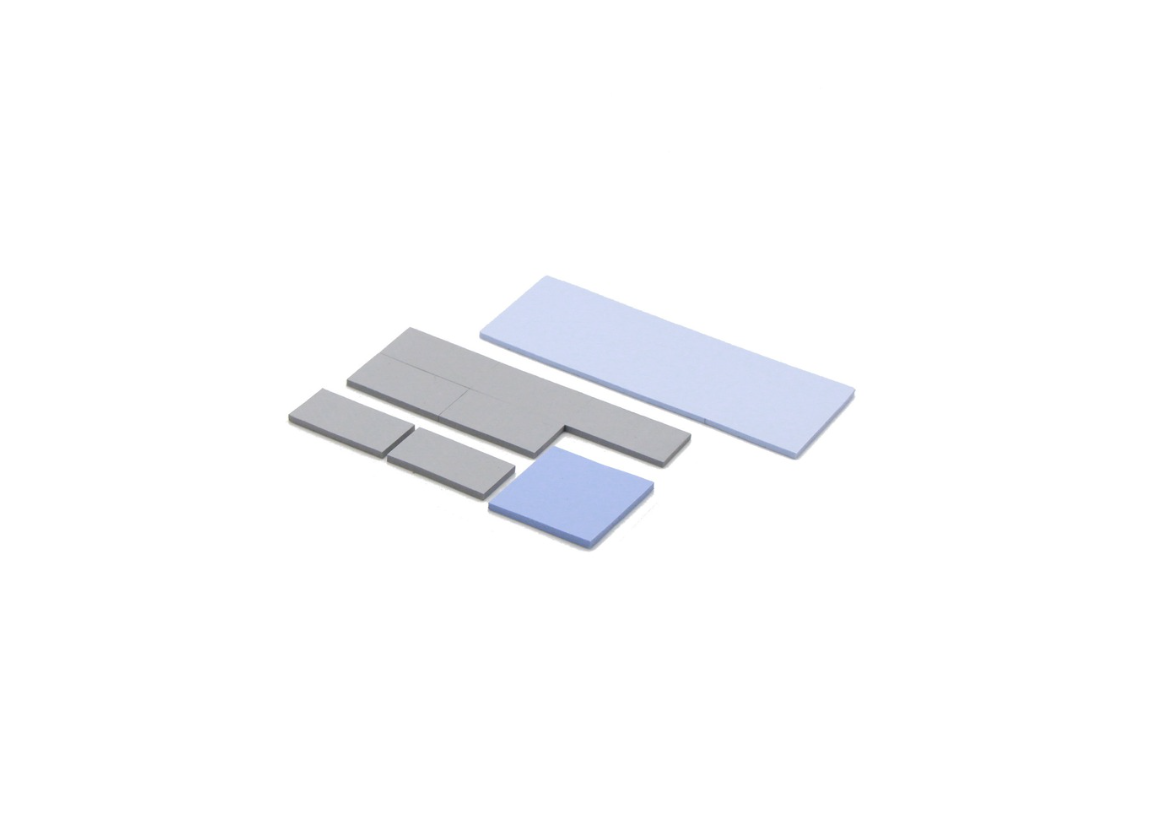
Thermal pads are now available in die-cut shapes, roll formats, or pre-applied layers, compatible with automated assembly lines. These formats help reduce manual handling, improve consistency, and shorten assembly cycles — an important advantage for mass production.Reducing Waste and Improving Yield
Pre-cut or kiss-cut designs minimize trimming during assembly, reducing both material waste and contamination risk. Engineers should consider pad layout and cut pattern early in the design stage to optimize yield and assembly efficiency.
Choosing materials that align with both sustainability goals and production realities helps manufacturers achieve cost and environmental efficiency without compromising thermal performance.
Conclusion: Optimizing the Thermal Interface for Real-World Reliability
In modern battery systems, the thermal interface plays a quiet but decisive role in performance, safety, and lifespan. Thermal pads provide an efficient, clean, and scalable solution — but their true effectiveness depends on how they are selected, validated, and integrated into the system.
Achieving an optimal balance between performance and cost requires looking beyond datasheet numbers. By considering compression behavior, assembly variation, and lifecycle durability, engineers can design a more stable and predictable thermal path.
Contact us to explore customized thermal pad solutions tailored to your battery module design — our engineering team can help evaluate materials under your actual conditions to ensure long-term reliability.
FAQ
Q1: What thermal conductivity is suitable for battery modules?
Most battery modules perform effectively with pads in the 2–5 W/m·K range. Higher conductivity materials can be used for high-power applications, but the real improvement depends on surface contact quality and pad thickness.
Q2: Can thermal pads replace thermal grease in EV batteries?
Yes, in many cases. Pads offer easier handling, no pump-out under vibration, and consistent thickness control. While grease provides slightly lower initial resistance, pads deliver better long-term reliability and manufacturability.
Q3: How thick should thermal pads be for module assembly?
Typical thicknesses range from 0.3 mm to 2.0 mm, depending on the cell-to-plate gap and compression tolerance. It’s best to select the thinnest pad that still achieves full contact under your module’s normal assembly pressure.