Welcome to Taxo Tape
Thermal Interface Thickness vs. Performance: Finding the Right Balance
Introduction: Why Thickness Matters in Thermal Interfaces
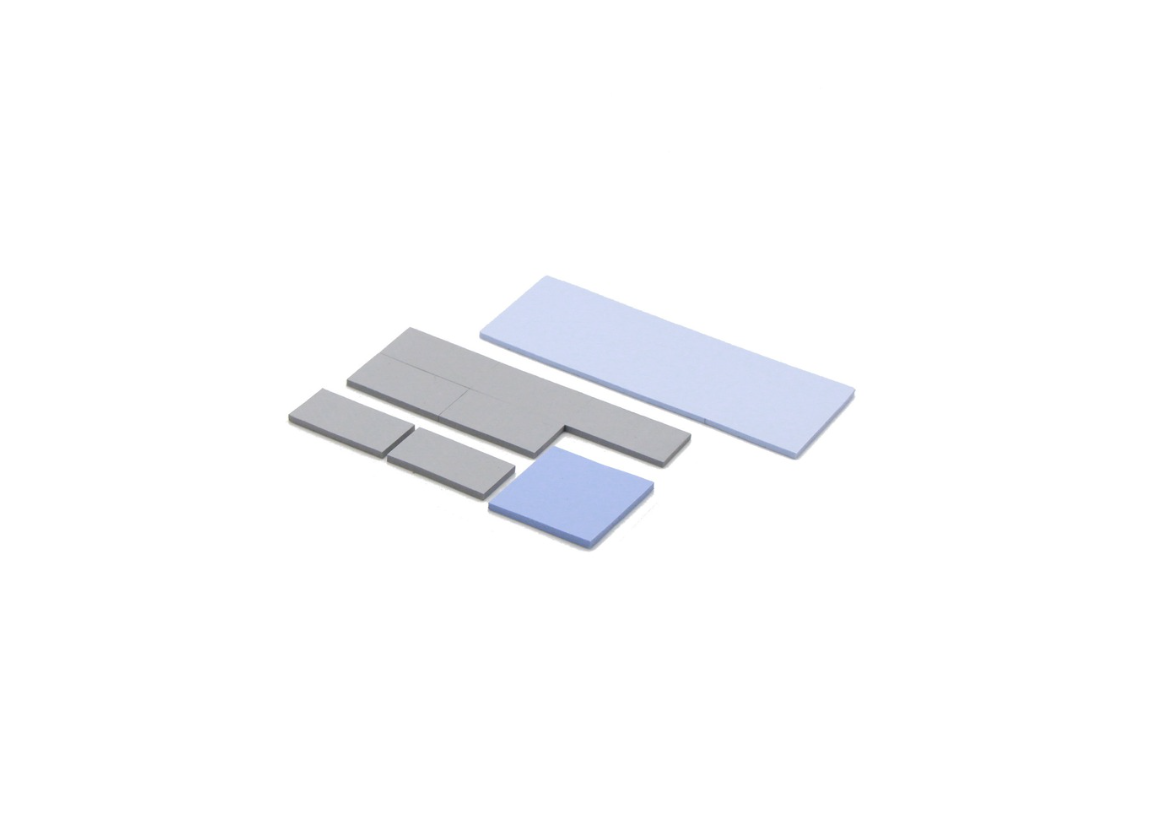
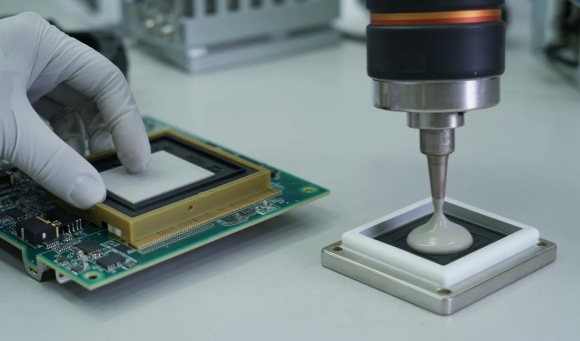
In thermal management design, the thickness of a thermal interface material (TIM) plays a more significant role than many realize. Thermal pads, gels, greases, and phase-change materials all serve one purpose — to eliminate microscopic air gaps between heat-generating components and heat sinks. These air voids act as strong thermal insulators, so the TIM must fill them effectively to ensure efficient heat transfer.
While it might seem intuitive that a thicker pad offers better cushioning and reliability, this assumption often leads to the opposite outcome in practice. As thickness increases, so does the path that heat must travel through the material — directly raising the thermal resistance. The challenge, therefore, lies in selecting a thickness that is sufficient to achieve complete surface contact without unnecessarily hindering heat flow.
The Relationship Between Thickness and Thermal Resistance
The thermal resistance of a material can be expressed by the simple equation:
where Rₜₕ is the thermal resistance, t is the material thickness, k is the thermal conductivity, and A is the contact area.
From this relationship, it’s clear that thermal resistance increases linearly with thickness. Even if a TIM has high intrinsic conductivity (for example, 6 W/m·K), doubling its thickness doubles the resistance through that layer. That’s why a thinner TIM will usually perform better thermally — provided it maintains full contact across the interface.
However, the reality is more complex. When a thin material fails to fill surface irregularities or microscopic gaps, air pockets form, drastically increasing total interface resistance. Proper compression during assembly is therefore essential: it ensures that the TIM conforms to both surfaces, reducing voids and maintaining consistent contact pressure.
The goal is not merely to minimize thickness, but to find the point where thermal conduction and mechanical compliance are both optimized.
Mechanical and Assembly Considerations
While thin TIMs excel thermally, they can be mechanically fragile in real-world assemblies. Uneven surfaces, tolerance variations, and rough substrates can all cause localized pressure points or incomplete contact when using ultra-thin layers.
This is where compressibility and deflection rate become key material parameters. A well-designed thermal pad should deform under moderate pressure, filling micro-gaps while maintaining mechanical integrity. On the other hand, overly stiff materials or excessively thin layers may fail to bridge surface variations, leading to increased interface resistance.
Conversely, thicker pads can compensate for greater mechanical tolerances or component height differences. They absorb vibration and stress, providing protection in high-shock or dynamic environments such as automotive power modules or inverter housings. The trade-off, however, is reduced heat transfer efficiency — a compromise that must be carefully managed through material selection and assembly design.
Finding the Optimal Thickness for Different Applications
Determining the right TIM thickness depends heavily on the specific application and assembly conditions. A few general guidelines include:
LED Modules:
Thin pads or gels (0.1–0.3 mm) are preferred for tight tolerances and high surface flatness. They minimize thermal resistance and improve junction temperature control.Power Inverters and IGBT Modules:
Medium-thickness pads (0.3–0.8 mm) provide a balance between conductivity and vibration resistance. Proper compression under screw mounting ensures uniform contact.EV Battery Modules:
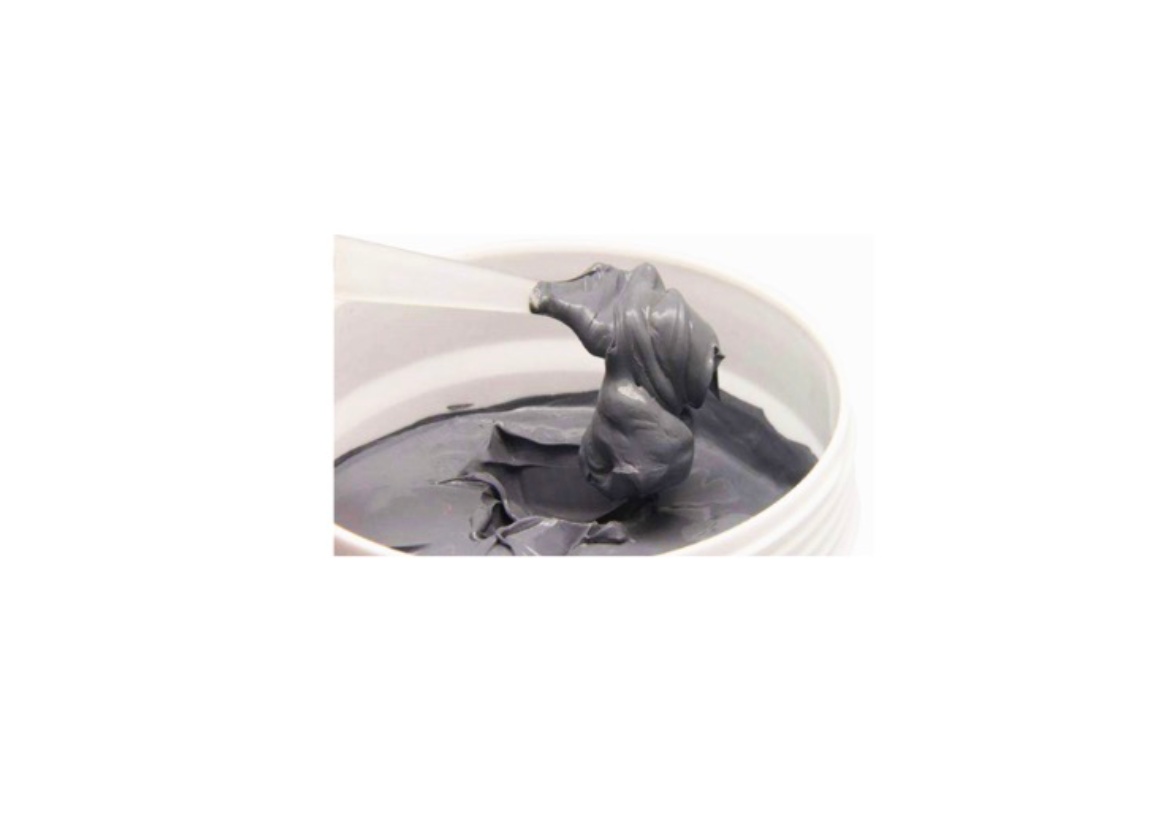
Thicker gap fillers or dispensable gels (0.5–2.0 mm) accommodate uneven surfaces and cell-to-cell tolerances while maintaining electrical isolation.Telecom / 5G Base Stations:
Depending on design, both thin pads for compact RF modules and thicker gels for power amplifier units may be used to manage hotspots and surface gaps.
In each case, engineers must weigh thermal performance, mechanical compliance, reworkability, and cost. For example, a thinner gel is ideal for precise, flat surfaces that demand low thermal resistance, whereas a thicker pad may be the better choice when mechanical vibration or gap variability is present.
Ultimately, the right solution is about balance — ensuring that the TIM is neither so thin that it loses contact nor so thick that it impedes heat flow.
Testing and Validation Methods
Evaluating thermal interface performance requires more than just reviewing datasheet values. Laboratory and in-application testing are essential to understand how thickness, pressure, and contact quality influence real-world heat transfer.
The most recognized standard for measuring thermal resistance is ASTM D5470, which determines steady-state thermal impedance under controlled pressure and temperature. This method helps quantify how different pad thicknesses or compression levels affect overall thermal performance.
For more dynamic characterization, transient thermal measurement techniques—such as laser flash or transient plane source (TPS) methods—can capture rapid temperature responses and evaluate heat flow across interfaces under changing conditions.
Validation should also replicate realistic mounting pressure and temperature cycling. In many applications, materials expand, compress, or relax over repeated heating and cooling. A TIM that performs well in static lab tests may degrade after prolonged mechanical stress or thermal aging. Verifying long-term stability ensures consistent thermal performance throughout the product’s lifetime.
Common Mistakes and Optimization Tips
Selecting the wrong TIM thickness is one of the most frequent errors in thermal design. Many engineers over-specify pad thickness “to play safe”, aiming to guarantee mechanical contact even under uncertain tolerances. Unfortunately, this often results in excessive thermal resistance and higher junction temperatures.
Another common oversight is underestimating the role of compression rate and surface flatness. Without adequate pressure, even a high-performance TIM cannot achieve intimate contact, leaving air gaps that dominate the overall resistance.
A more effective approach is to use thermal modeling or empirical testing to identify the “sweet spot” where conductivity, compression, and manufacturability intersect. By simulating or experimentally adjusting thickness under realistic conditions, designers can determine the most efficient configuration.
Finally, co-designing with material suppliers brings measurable advantages. Experienced manufacturers can recommend custom pad thicknesses or filler formulations tailored to your assembly’s mechanical stack-up and heat dissipation requirements. This collaboration not only improves performance but can also reduce total system cost and rework.
Conclusion
The thickness of a thermal interface material is more than just a dimensional specification—it defines the balance between thermal performance and mechanical reliability. Too thin, and the material may fail to compensate for surface unevenness; too thick, and heat dissipation efficiency declines.
Achieving optimal performance requires a holistic approach: evaluate both thermal resistance and mechanical compliance, validate under real assembly pressure, and consider application-specific conditions.
For engineers seeking tailored recommendations or customized gap pad and gel solutions, collaborating with a specialized supplier can simplify design decisions and maximize thermal reliability.