Welcome to Taxo Tape
Thermal Interface Materials in EV Battery Modules: Design Considerations
Introduction
As electric vehicles (EVs) continue to evolve toward higher energy density and faster charging performance, thermal management in battery systems has become a decisive factor in both safety and longevity. Within these complex assemblies, each cell and component generates heat that must be efficiently transferred away to maintain stable operating temperatures. Poor heat dissipation not only shortens battery life but also increases the risk of thermal runaway — a major safety concern for modern EVs.
To address this, Thermal Interface Materials (TIMs) play a critical role in ensuring effective heat transfer between cells, modules, and cooling plates. By filling microscopic surface gaps, TIMs minimize contact resistance and help maintain consistent temperature profiles across the battery pack. However, achieving long-term reliability in such demanding environments is not simple. Engineers must consider gap variations, mechanical vibration, aging behavior, and repeated thermal cycling, all of which can degrade TIM performance over time. This article explores how to select and design TIMs that balance thermal efficiency, durability, and manufacturability for next-generation EV battery modules.
Why Thermal Management Matters in EV Batteries
During operation, EV battery packs generate heat from multiple sources — individual lithium-ion cells, busbars, battery management systems (BMS), and power electronics such as inverters and DC/DC converters. Without effective cooling, temperature imbalances can occur, leading to uneven cell aging, capacity loss, and safety risks under extreme conditions.
The goal of battery thermal management is to maintain uniform temperature distribution, safe charging behavior, and extended cycle life. A difference of even a few degrees between cells can drastically affect performance consistency across the pack. That’s why efficient heat transfer pathways, including TIMs, have become integral to EV battery system design. TIMs help bridge imperfect contact surfaces, reducing thermal resistance and enabling the cooling system to operate at optimal efficiency.
Functions and Key Requirements of TIMs in EV Battery Modules
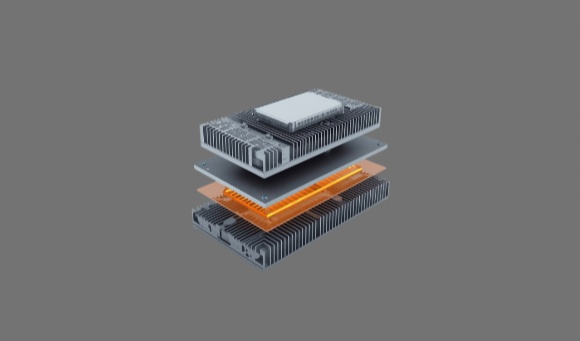
Thermal Interface Materials (TIMs) serve as a bridge between the battery module and the cooling components, filling microscopic air gaps that would otherwise act as thermal insulators. Their primary functions include:
Filling surface irregularities to ensure maximum contact area.
Reducing interfacial thermal resistance for better heat conduction.
Maintaining consistent performance under mechanical stress and temperature cycling.
For EV battery applications, TIMs must meet demanding requirements:
High thermal conductivity to efficiently transfer heat away from cells.
Electrical insulation to prevent short circuits between conductive surfaces.
Long-term stability under repeated charge/discharge and temperature cycles.
Resistance to vibration and mechanical shock, ensuring reliability in road conditions.
Material compatibility with aluminum, copper, nickel, and various cell casing materials used in battery construction.
Common TIM Types for Battery Module Integration
Thermal Gap Pads
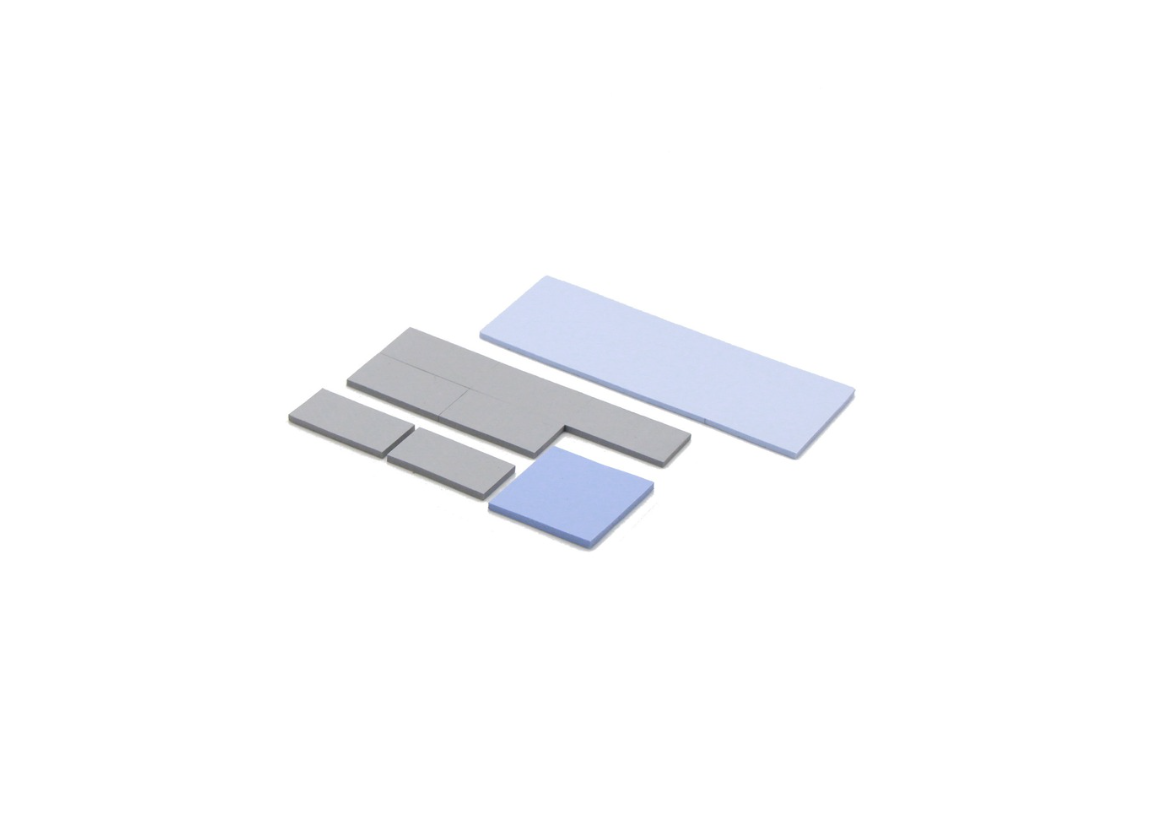
Soft and compressible, thermal gap pads are one of the most widely used TIMs in EV battery modules. They conform easily to uneven surfaces, making them ideal for large gaps between cooling plates and cell modules. Their consistent thickness allows easy assembly and rework. However, over time, they can experience compression set, and maintaining precise gap control can be challenging in high-volume production.
Thermal Gel or Gap Filler
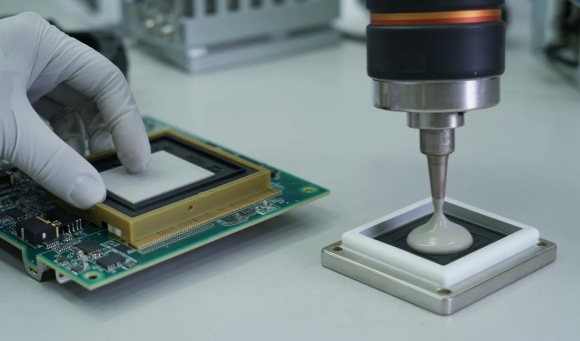
Dispensable thermal gels are excellent for automated assembly lines. They provide strong wetting and can easily adapt to complex geometries or variable surface heights. Once cured, they maintain low thermal resistance and good mechanical stability. The main challenge lies in process control—avoiding voids, trapped air, or over-dispensing that could affect reliability.
Phase-Change Materials (PCMs)
PCMs are solid at room temperature and transition to a semi-liquid state during operation, forming an extremely low-resistance thermal interface. They offer superior long-term stability, as they do not dry out or pump out over time. While highly effective in critical thermal zones, their higher cost and limited reworkability can restrict usage to premium or high-power systems.
Thermal Grease
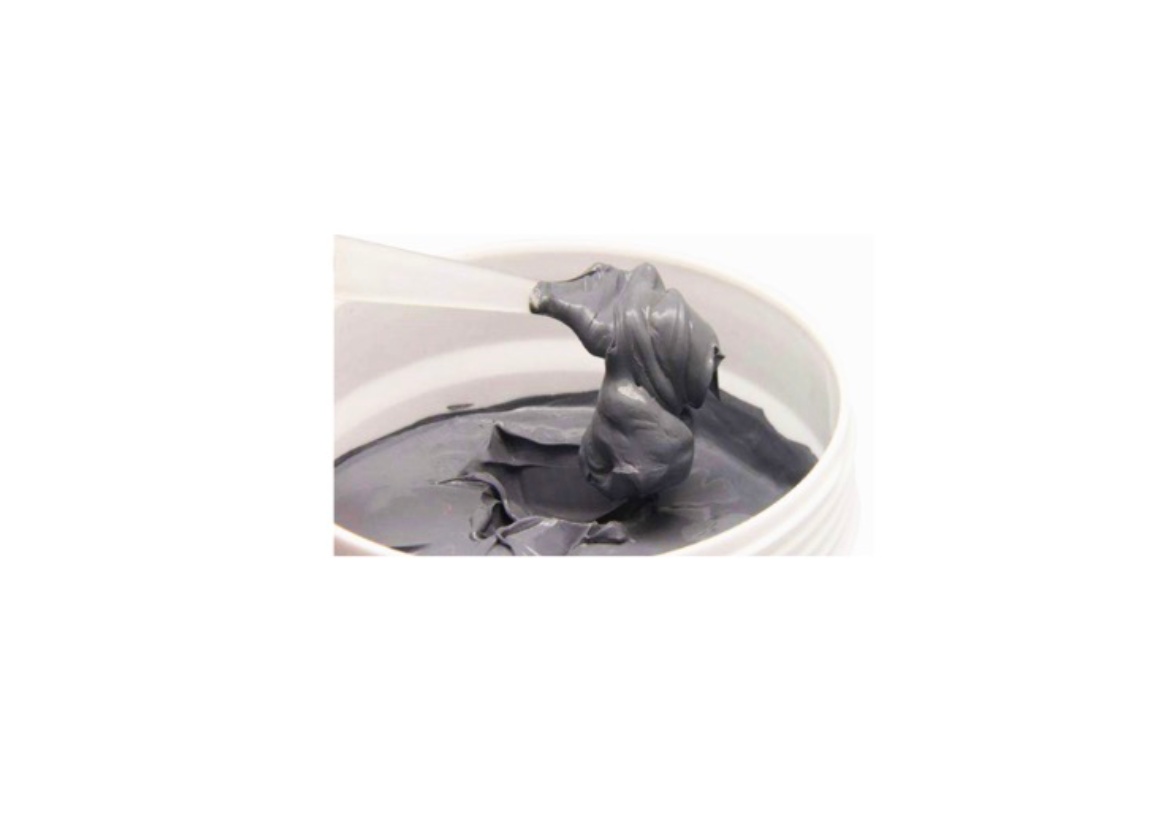
Thermal grease or paste offers very low initial thermal resistance and is easy to apply in prototypes or small-batch assemblies. However, under prolonged thermal cycling, it can pump out, migrate, or dry, reducing performance and contaminating nearby components. It remains practical for serviceable joints or testing environments where short-term performance is prioritized over lifetime stability.
Design Considerations for Effective Integration
Surface Flatness and Contact Pressure
One of the most critical factors in achieving low thermal resistance is maintaining proper surface flatness and uniform contact pressure. In EV battery modules, even small deviations in the flatness of cell surfaces or cold plates can lead to localized air gaps that significantly increase interface resistance. To minimize these effects, both the mechanical design and TIM selection must account for surface tolerances and compression characteristics of the material.
Contact pressure directly affects the bond line thickness (BLT) — the thinner the BLT, the lower the thermal resistance, but excessive pressure may damage soft materials or battery components. Engineers should aim for an optimal pressure window that achieves good wetting and contact without material extrusion or mechanical stress.
Electrical Isolation and Safety
Because EV battery modules operate under high voltage, electrical insulation is just as important as thermal performance. TIMs must possess sufficient dielectric strength and breakdown voltage to prevent electrical leakage between conductive surfaces such as busbars and cooling plates. Compliance with standards such as UL 94, IEC 60664, or IEC 62477 ensures that materials meet insulation and flame-retardant requirements.
Engineers should verify that the selected TIM provides stable insulation performance even after thermal cycling and mechanical compression, as some materials may lose dielectric properties over time due to microcracking or filler migration.
Manufacturing and Assembly Process
The choice between dispensable TIMs (gels, fillers) and pre-cut pad solutions often depends on the production scale and equipment setup. Dispensable TIMs are highly suitable for automated assembly lines, offering flexibility and excellent surface conformity. In contrast, pre-formed gap pads simplify handling and reduce process variability in smaller-scale or modular production.
During assembly, it’s critical to control parameters such as dispensing speed, pattern design, and pressure application. Air voids, material bleeding, or contamination can significantly degrade thermal performance. Implementing inline inspection and process validation ensures consistent quality and repeatability across thousands of modules.
Aging and Reliability Factors
EV battery modules experience continuous thermal cycling, vibration, and environmental exposure, which can alter a TIM’s properties over time. Common degradation mechanisms include pump-out, dry-out, silicone migration, and oxidation of conductive fillers.
To ensure long-term reliability, engineers should evaluate materials under accelerated aging tests following industry standards like ASTM D5470 (thermal impedance testing) and IEC 62660 (battery reliability). Monitoring the retention of thermal conductivity and mechanical integrity helps predict field performance. A properly selected TIM maintains stable performance even after thousands of charge–discharge cycles, contributing to overall system durability and safety.
Modeling and Simulation for Design Validation
Thermal simulation plays a vital role in optimizing TIM performance before physical testing. Using software such as ANSYS, Simcenter, or COMSOL, engineers can analyze temperature gradients and predict heat flow paths across the battery module.
Accurate modeling depends on reliable input data — particularly thermal conductivity, compressibility, and contact resistance under real assembly pressure. Comparing simulated and experimental results allows engineers to fine-tune design parameters and avoid overdesign or underperformance.
For example, in a cell-to-cold-plate interface model, a 1 °C improvement in temperature uniformity across cells can translate into a measurable gain in cycle life and energy efficiency.
Case Insight: TIM Optimization in a 400V EV Battery Pack
In a recent case study, a 400 V EV battery pack exhibited temperature variations exceeding 8 °C between cells during high-load operation. By replacing conventional grease with a high-conductivity gap filler, engineers achieved a 40% reduction in thermal impedance and significantly improved temperature uniformity across the module.
After long-term cycling, the optimized TIM maintained consistent performance without signs of pump-out or dry-out. The outcome demonstrated that careful material selection combined with precise process control directly enhances battery reliability, enabling higher energy density designs without compromising safety.
Conclusion
Effective integration of Thermal Interface Materials (TIMs) in EV battery modules requires a deep understanding of mechanical, electrical, and thermal interactions. Choosing the right TIM — and applying it correctly — directly impacts thermal uniformity, reliability, and overall safety.
Collaboration between design engineers and material suppliers is essential to balance cost, manufacturability, and performance. Looking forward, the industry is shifting toward silicone-free, recyclable, and ultra-high thermal conductivity TIMs designed for sustainable, next-generation electric vehicles.