Welcome to Taxo Tape
Thermal Gel vs. Gap Pad for EV Power Control Units: Which Works Better?
Introduction: Why Thermal Interface Choice Matters in EV PCUs
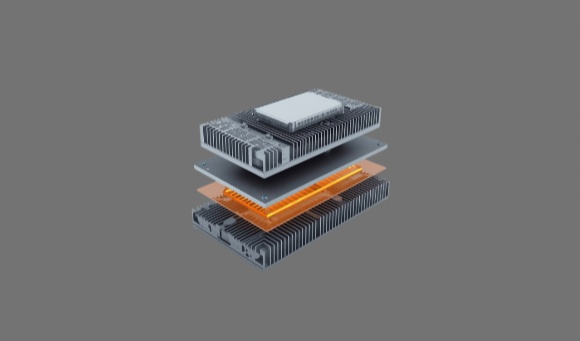
In electric vehicles, the Power Control Unit (PCU) plays a critical role in managing energy flow between the battery, motor, and auxiliary systems. It integrates key power electronics such as inverters, DC-DC converters, and control modules into a compact assembly designed for high efficiency and reliability.
As EV platforms continue to evolve, PCUs are becoming smaller while handling higher power densities. This combination creates significant thermal challenges. Power semiconductors generate large amounts of heat in confined spaces, and insufficient heat dissipation can quickly lead to efficiency loss, performance derating, or even premature failure.
This is where thermal interface materials (TIMs) become essential. Positioned between heat-generating components and heat sinks or cold plates, TIMs directly affect thermal resistance, temperature uniformity, and long-term system stability. A poorly selected thermal interface can undermine even the best heat sink design.
Among the available options, thermal gel and gap pad are two of the most commonly considered solutions for EV PCU thermal management. While both aim to improve heat transfer, their behavior, performance, and suitability can differ significantly depending on the application. This article compares thermal gel and gap pad solutions to help engineers determine which works better for specific PCU designs.

Typical Thermal Challenges Inside EV Power Control Units
Thermal management inside EV PCUs is complex due to several overlapping factors.
First, modern PCUs rely heavily on high-power semiconductors such as IGBTs and increasingly SiC MOSFETs. These devices operate at high switching frequencies and power levels, producing intense localized heat flux that must be dissipated efficiently to maintain safe junction temperatures.
Second, internal surfaces are rarely perfectly flat or uniform. Differences in component heights, PCB warpage, and machining tolerances create uneven interfaces. These gaps make direct contact between components and heat sinks difficult, increasing thermal resistance if not properly addressed.
Third, EV operating environments impose strict mechanical and environmental requirements. PCUs must withstand continuous vibration, repeated thermal cycling, and long service lifetimes, often exceeding ten years. Thermal interface materials must maintain performance without cracking, pumping out, or degrading over time.
Finally, mass production introduces its own constraints. Assembly tolerances are limited, and processes must be repeatable and scalable. A TIM that performs well in prototypes but is sensitive to pressure, placement, or thickness variation may create yield or reliability issues in volume production.
What Is Thermal Gel?
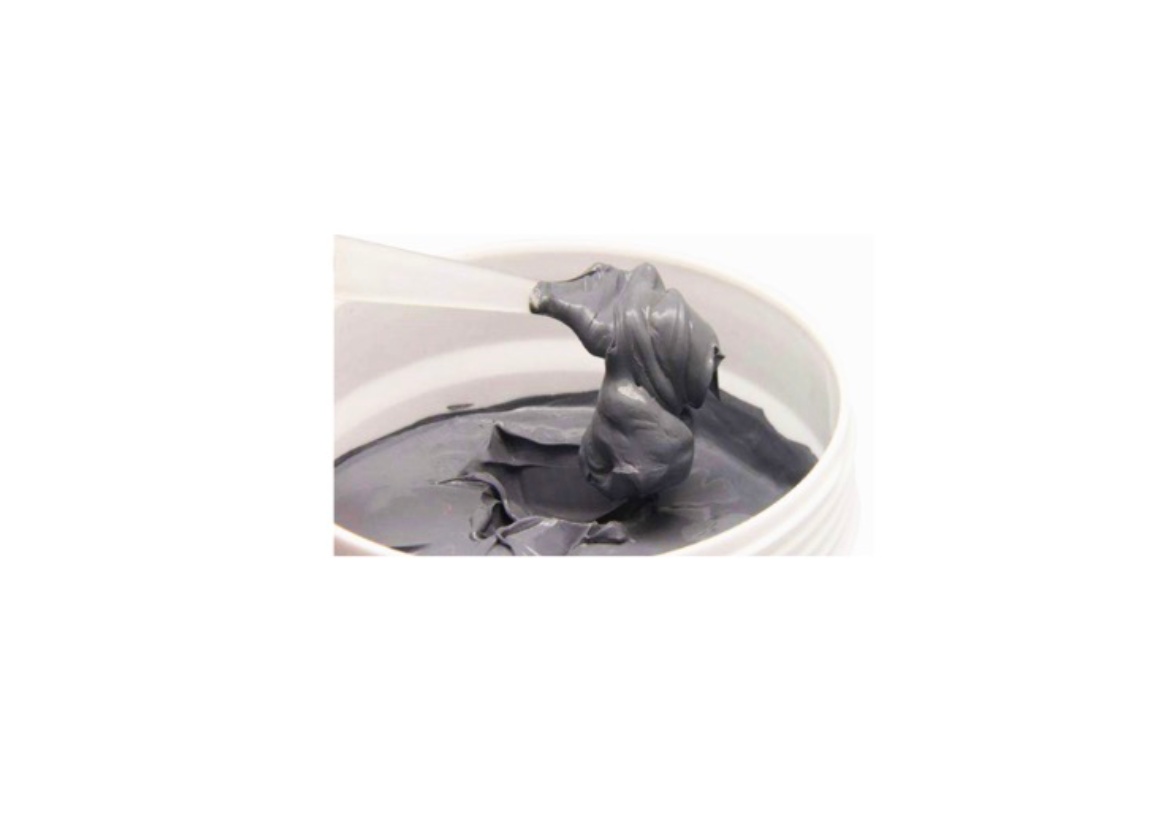
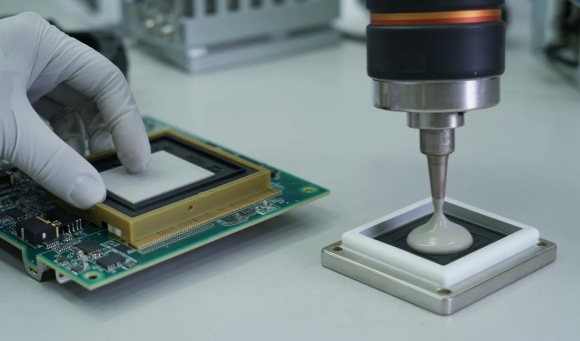
Thermal gel is a soft, paste-like thermal interface material designed to fill gaps between heat-generating components and cooling surfaces. Unlike solid pads, thermal gel flows under light pressure, allowing it to conform closely to surface irregularities.
Its working principle is straightforward: by displacing air gaps and improving surface wetting, thermal gel reduces interfacial thermal resistance and enhances heat transfer. Once applied, it forms a continuous thermal path between the component and the heat sink or cold plate.
Key characteristics of thermal gel include low hardness, excellent conformability, and strong surface wetting capability. These properties make it particularly effective for interfaces with uneven surfaces or varying gap thicknesses.
In automotive power electronics, thermal gels are commonly used in inverters, on-board chargers, and DC-DC converters, especially where tight thermal control and low contact pressure are required.
From a formulation perspective, thermal gels can be single-component or two-component systems. Single-component gels are ready to use and simplify processing, while two-component gels typically cure after mixing, offering improved mechanical stability in some designs. The choice depends on process requirements rather than thermal performance alone.
What Is a Gap Pad?
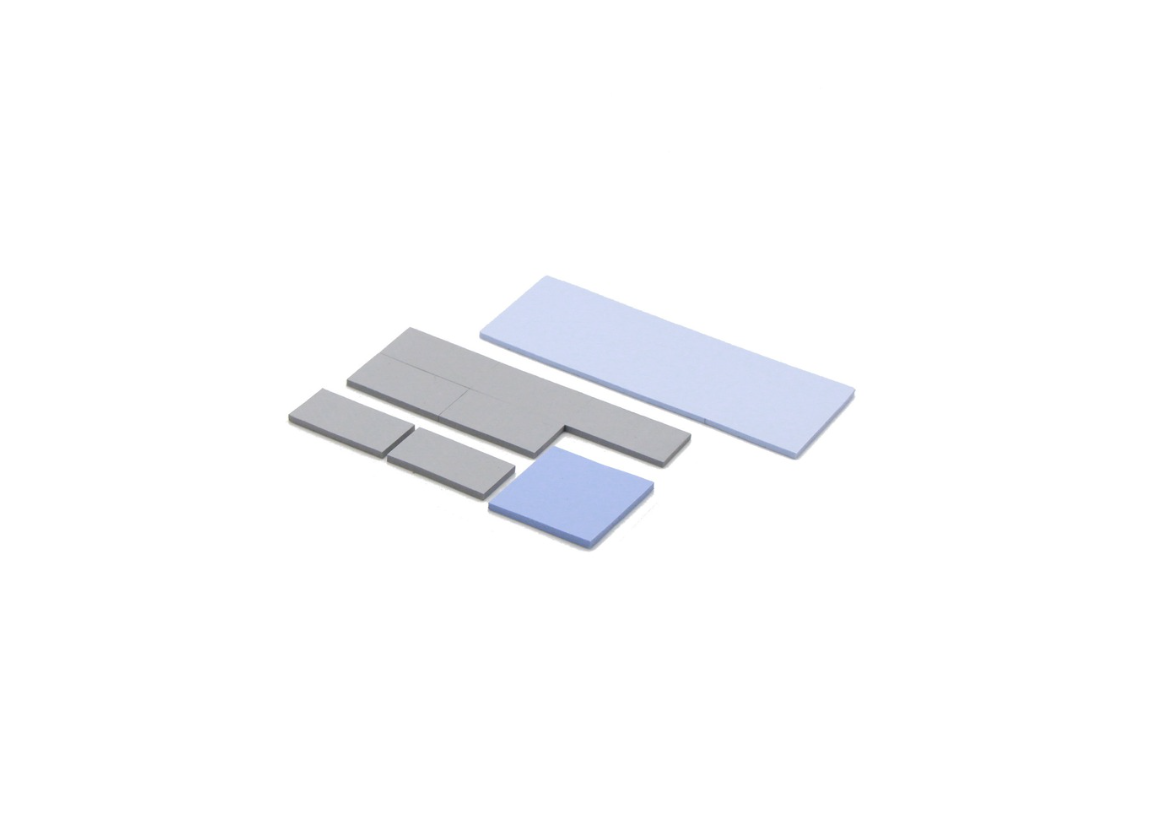
A gap pad is a pre-formed, solid thermal interface material typically made from a silicone-based matrix filled with thermally conductive fillers. It is supplied in sheets or die-cut shapes with defined thickness.
Gap pads work by compressing between components and heat sinks, filling gaps while maintaining a controlled thermal path. Their structure provides a balance between thermal conductivity, mechanical support, and electrical insulation.
Key characteristics of gap pads include fixed thickness, controlled compressibility, and consistent electrical insulation properties. These features make them easy to handle and predictable in assembly.
In EV electronics, gap pads are widely used in PCUs, battery management systems, power modules, and auxiliary control units. They are especially common where electrical isolation and mechanical robustness are critical.
Gap pads are available in different constructions. Standard gap pads focus on softness and thermal performance, while reinforced gap pads incorporate fiberglass or polymer carriers to improve tear resistance and handling during assembly. The reinforcement choice often affects compressibility and should be evaluated carefully.
Thermal Performance Comparison: Gel vs. Gap Pad
When comparing thermal gel and gap pad, interface contact quality is one of the most important factors. Thermal gel excels at surface wetting, allowing it to minimize interfacial voids and achieve low thermal resistance even on uneven surfaces. Gap pads rely more on applied pressure to conform, which may limit contact quality if pressure is uneven or restricted.
In terms of handling uneven gaps, thermal gel generally offers greater flexibility. It can adapt to varying gap heights without requiring multiple pad thicknesses. Gap pads, by contrast, must be selected with a specific thickness and compression range in mind.
Thickness control is another key difference. Gap pads provide a well-defined thermal path thickness, which can be beneficial for mechanical design and stack-up control. Thermal gels, while highly conformable, rely on process control to achieve consistent bond-line thickness.
Finally, it is important to distinguish between datasheet thermal conductivity values and real-world performance. A higher conductivity number does not always translate into better system-level cooling. Interface quality, contact resistance, and long-term stability often have a greater impact on actual operating temperatures than nominal material properties alone.
Mechanical and Assembly Considerations
Assembly pressure plays a critical role in TIM performance. Thermal gels typically require low contact pressure, making them suitable for delicate components or designs with limited clamping force. Gap pads usually need sufficient compression to perform as intended, which may increase mechanical stress on components.
From a manufacturing perspective, thermal gel is often applied using automated dispensing systems, enabling precise placement and scalability for high-volume production. Gap pads are usually placed manually or by pick-and-place systems, which can simplify handling but may limit flexibility in complex geometries.
Each material also carries specific mechanical risks. Thermal gels may experience pump-out or migration under extreme thermal cycling if not properly selected. Gap pads can crack, tear, or delaminate if over-compressed or subjected to excessive vibration.
Rework and maintenance should also be considered. Thermal gels can be more difficult to clean and reapply during servicing, while gap pads are easier to remove and replace but may lose performance after multiple compression cycles.
Reliability Under Automotive Operating Conditions
Reliability is a critical factor for thermal interface materials used in EV PCUs, as these systems operate under demanding automotive conditions for extended periods.
Under vibration and mechanical shock, material integrity becomes essential. Thermal gels, due to their soft and compliant nature, can absorb micro-movements between components, reducing localized stress. However, if the formulation is not optimized, excessive softness may increase the risk of material displacement over time. Gap pads, especially reinforced versions, offer better mechanical stability and resistance to tearing, but may transfer more stress to components if over-compressed.
Thermal cycling is another major concern. Repeated expansion and contraction can degrade interface contact. Thermal gels generally maintain good surface wetting during cycling, helping to preserve low thermal resistance. Gap pads, on the other hand, may experience gradual compression set or loss of elasticity, particularly in high-temperature environments.
Long-term aging behavior also differs. Some thermal gels may dry, harden, or bleed low-molecular components if exposed to elevated temperatures for long durations. High-quality automotive-grade gels are designed to minimize these effects, but material selection is critical. Gap pads tend to offer better dimensional stability, though filler settling or carrier fatigue can still occur over extended lifetimes.
Contamination and migration risks must also be evaluated. Thermal gels can migrate if not properly contained, potentially contaminating nearby connectors or sensitive electronics. Gap pads, being solid and fixed in place, generally present lower migration risk, making them preferable in designs with strict cleanliness requirements.
Cost and Production Impact
When evaluating thermal gel versus gap pad, material cost alone does not provide a complete picture. While gap pads often appear more expensive on a per-unit basis, system-level cost can shift depending on assembly efficiency and reliability outcomes.
Thermal gels can reduce overall thermal resistance, potentially allowing for smaller heat sinks or simplified cooling structures. In such cases, higher material cost may be offset by savings elsewhere in the system. Gap pads, with predefined thickness and insulation properties, can simplify mechanical design and reduce validation effort.
Assembly time and production yield are also important considerations. Automated dispensing of thermal gel supports high-volume manufacturing and flexible designs, but requires process control and equipment investment. Gap pads are easier to handle and place, but manual placement may introduce variability or slow down assembly in complex layouts.
Scrap and rework implications differ as well. Excess or misapplied thermal gel can be difficult to clean, increasing rework time. Gap pads are easier to remove and replace, but repeated compression during rework may degrade performance, leading to scrap in some cases.
For large-scale EV production, scalability and process robustness often become decisive factors. Materials that offer consistent performance across thousands of units are generally favored, even if initial material cost is higher.
Which One Works Better for EV PCUs? (Application-Based Guidance)
There is no single “better” thermal interface material for all EV PCU designs. The optimal choice depends heavily on application-specific requirements.
Thermal gel is often the better choice when:
Surface flatness is poor or gap variation is large
Low contact pressure is required
Maximum interface conformity and low thermal resistance are critical
Design flexibility is needed during early development stages
Gap pads are more suitable when:
Electrical insulation is mandatory
Mechanical stability and cleanliness are high priorities
Gap thickness is well-defined and consistent
Ease of handling and rework is important
EV OEMs and Tier 1 suppliers typically follow a decision logic that starts with mechanical constraints and reliability requirements, rather than thermal conductivity values alone. Materials are screened based on assembly feasibility, lifetime performance, and risk, and only then optimized for thermal performance.
This application-driven approach reflects real-world engineering priorities, where robustness and repeatability often outweigh theoretical advantages.
Practical Selection Tips for Engineers
Before selecting a thermal interface material for an EV PCU, engineers should ask a few key questions:
What is the actual gap range under worst-case tolerance conditions?
How much assembly pressure is available and controllable?
Are vibration and thermal cycling dominant failure risks?
Is electrical insulation required at the interface?
Common mistakes include selecting materials based solely on datasheet thermal conductivity, ignoring long-term aging behavior, or underestimating assembly variability. Another frequent issue is choosing overly stiff gap pads or overly soft gels without considering mechanical interaction with surrounding components.
Prototype testing and validation are essential. Lab measurements and real assembly trials help reveal issues such as pump-out, compression set, or unexpected thermal resistance increases. Early testing reduces costly design changes later in the development cycle.
Conclusion: No Universal Winner, Only the Right Fit
Thermal gel and gap pad solutions each offer distinct advantages and limitations in EV PCU applications. Thermal gels excel in conformability and low thermal resistance, while gap pads provide structural stability and predictable handling.
Ultimately, thermal performance is not determined by material type alone. It depends on interface design, assembly conditions, operating environment, and long-term reliability requirements. Understanding these factors leads to better material decisions and more robust PCU designs.
Call to Action
Selecting the right thermal interface material for an EV PCU often requires balancing multiple constraints rather than following a single rule. Engineers facing complex thermal challenges may benefit from discussing their specific design conditions, tolerance ranges, and reliability targets.
Support in material selection, testing guidance, and evaluation samples can help accelerate development while reducing technical risk—especially in early design and validation phases.