Welcome to Taxo Tape
Understanding Thermal Contact Resistance: Why It Matters in Power Electronics
Introduction
In modern power electronics, managing heat effectively is one of the biggest engineering challenges. As power density continues to increase in systems such as inverters, power modules, and LED drivers, even small inefficiencies in heat transfer can lead to overheating, performance degradation, and shortened device lifespan.
One often overlooked contributor to poor thermal performance is Thermal Contact Resistance (TCR) — the resistance to heat flow that occurs at the interface between two surfaces, such as between a power device and a heat sink.
Although TCR may seem minor compared to bulk material resistance, it can dominate the overall thermal path when surface imperfections and microscopic air gaps prevent efficient contact. Even a thin layer of trapped air — one of the worst thermal conductors — can significantly raise junction temperatures, affecting reliability and safety.
What Is Thermal Contact Resistance (TCR)?
Thermal Contact Resistance refers to the temperature drop that occurs at the interface of two materials when heat passes through them. In theory, two perfectly flat and smooth surfaces would have negligible resistance. In reality, however, all surfaces have microscopic roughness. These tiny peaks and valleys create air gaps, drastically reducing the real contact area compared to the apparent area.
The basic expression for TCR is:
where R is the thermal resistance (K/W), ΔT is the temperature difference across the interface, and Q is the heat flow rate (W).
It’s important to distinguish bulk thermal resistance (within a material) from interface thermal resistance (between materials). Even materials with excellent conductivity, such as aluminum or copper, can experience significant heat transfer loss at their interfaces if contact conditions are poor.
Key Factors That Affect Thermal Contact Resistance
Several engineering parameters influence the level of TCR in a system:
Surface Roughness and Flatness – The smoother and flatter the surfaces, the larger the real contact area and the lower the contact resistance. Machining quality and surface treatment directly impact TCR.
Contact Pressure (Clamping Force) – Increasing the pressure between two surfaces helps close air gaps and improves conduction paths. However, excessive pressure can deform components or squeeze out interface materials.
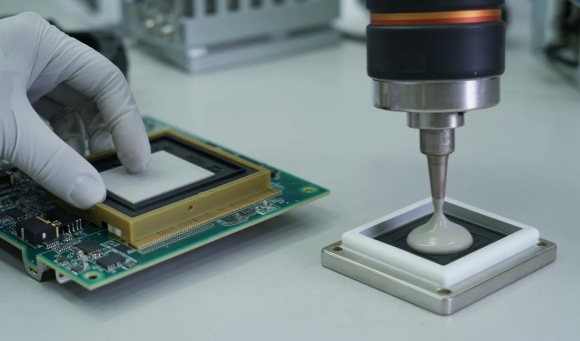
Type and Thickness of Thermal Interface Material (TIM) – Thermal pads, greases, gels, and phase-change materials all play a role in filling micro-voids. The optimal thickness ensures minimal TCR without compromising mechanical stability.
Aging, Pump-Out, or Material Degradation – Over time, thermal materials can dry out, migrate, or lose conformity due to thermal cycling, leading to increased resistance.
Assembly Conditions – Temperature during assembly, rework processes, and surface cleanliness can all influence how effectively two surfaces bond thermally.
Impact of TCR in Power Electronics Applications
In power electronics, TCR is a silent efficiency killer. Even a small increase in contact resistance can result in significant temperature rises, which reduce component life and stability. Some typical examples include:
Power Modules (IGBTs, MOSFETs): Poor thermal interfaces can cause uneven temperature distribution across chips, increasing the risk of thermal runaway.
LED Drivers and Lighting Systems: High TCR reduces lumen output and accelerates LED degradation.
EV Battery Modules and Inverters: In high-current environments, excess TCR can cause localized heating, affecting both electrical performance and battery safety.
The consequences of excessive TCR are serious:
Formation of hot spots leading to component failure.
Reduced reliability due to accelerated thermal aging.
Lower energy efficiency, as more power is dissipated as heat instead of being effectively transferred away.
Reducing Thermal Contact Resistance: Engineering Strategies
Mitigating TCR requires a combination of material selection, mechanical design, and surface preparation. Below are several proven strategies:
Select the Right Thermal Interface Material (TIM):
Choose materials that conform well to surfaces and have high intrinsic conductivity. Common options include thermal pads, thermal grease, thermal gels, and phase-change materials. Each has specific advantages depending on the assembly process and reworkability requirements.Improve Surface Preparation:
Ensure surfaces are clean, smooth, and free of contaminants. Applying consistent finishes or coatings can help improve contact quality.Optimize Clamping Design:
Uniform pressure distribution ensures consistent thermal contact across the entire interface. Uneven pressure can leave voids or over-compress TIM layers.Perform Reliability Testing:
Simulate real-world conditions — thermal cycling, vibration, and mechanical stress — to verify long-term performance and prevent degradation over time.
By implementing these measures, engineers can achieve lower TCR values, improved junction temperature stability, and longer system lifetimes.
How to Choose the Right TIM for Low Contact Resistance
Selecting the appropriate Thermal Interface Material (TIM) is one of the most effective ways to minimize Thermal Contact Resistance (TCR). Each TIM type offers different advantages in terms of performance, manufacturability, and long-term stability. The choice depends on factors such as interface flatness, assembly method, and rework requirements.
| TIM Type | Advantages | Limitations | Typical Applications |
|---|---|---|---|
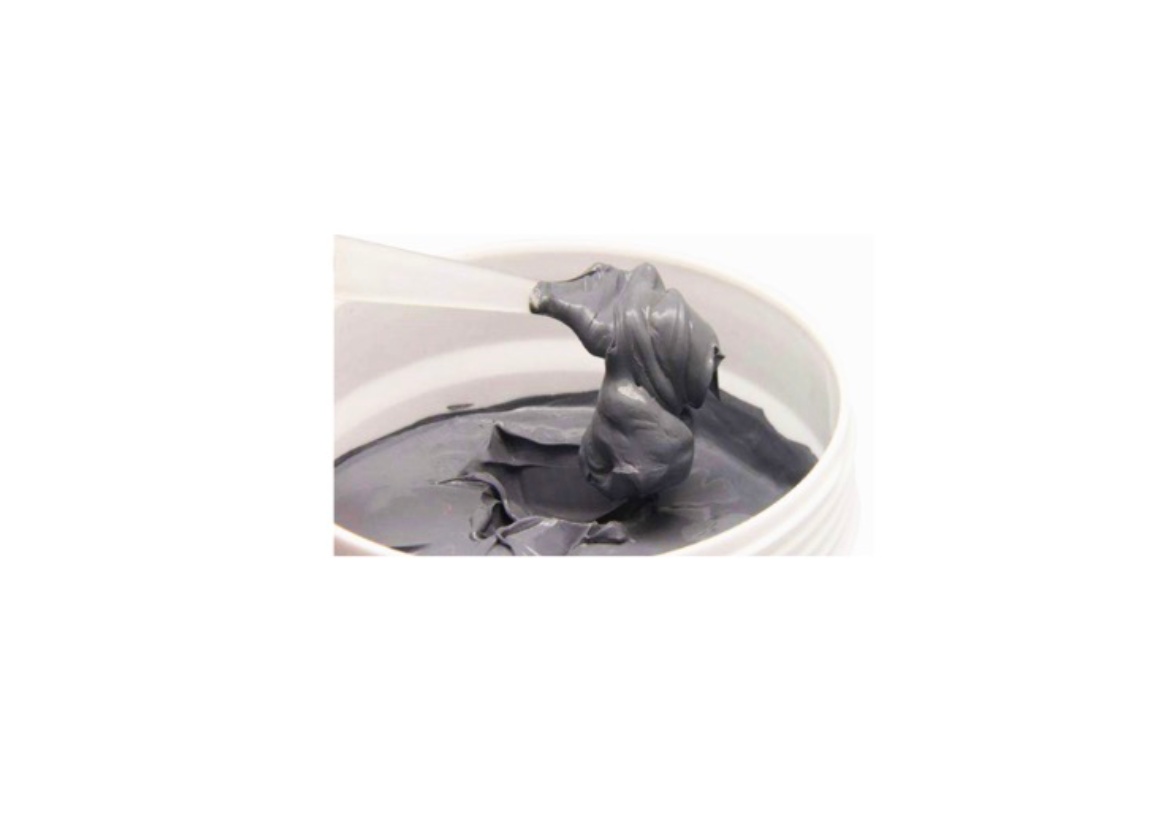
| Thermal Grease | Excellent surface wetting and low initial TCR. Suitable for high-performance cooling. | Can pump-out or dry over time; requires controlled application. | Power modules, CPUs, LED drivers. |
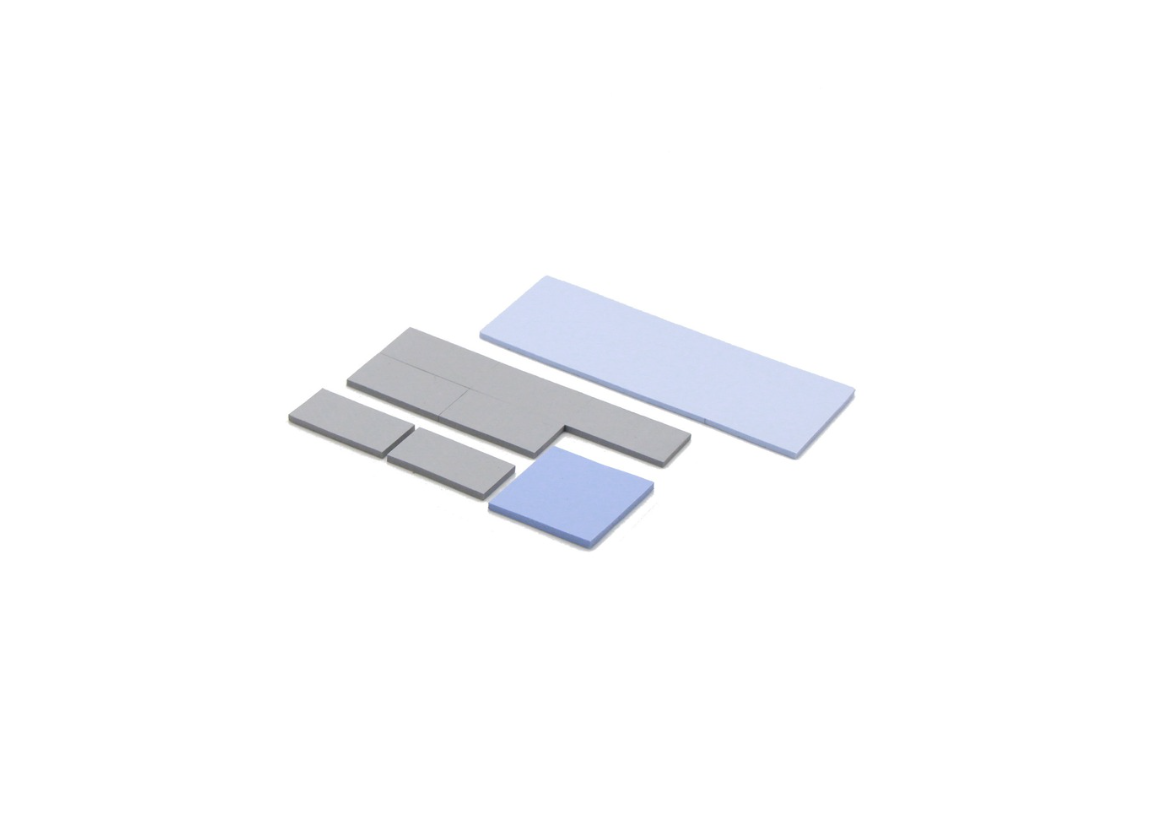
| Thermal Pads (Soft-Gap Pads) | Easy to apply, reworkable, and provides electrical isolation. Good for uneven surfaces. | Slightly higher TCR compared to greases. Compression-dependent. | Power supplies, battery modules, automotive ECUs. |
| Thermal Gels | Combines softness of grease with stability of pad. Maintains low TCR under vibration and thermal cycling. | Dispensing process required; not ideal for very thin gaps. | EV inverters, telecom base stations. |
| Phase-Change Materials (PCM) | Transforms from solid to viscous state at operating temperature, filling micro-gaps efficiently. | Needs heat activation; limited reusability. | IGBT modules, DC-DC converters. |
| Graphite Sheets | High in-plane conductivity, excellent for spreading heat laterally. | Requires good compression; less effective at filling microvoids. | LED boards, smartphones, compact electronics. |
When to use which TIM:
Soft-gap pads are ideal when surfaces are uneven or when assembly simplicity is important.
Greases or gels work best when ultra-low TCR is required and reapplication is manageable.
Phase-change materials provide a stable long-term solution where controlled pressure and temperature cycles are expected.
Engineers should always balance thermal performance, mechanical compliance, and reworkability. For example, a TIM with very high conductivity may not always yield the lowest TCR if it fails to conform to microscopic surface irregularities. A holistic approach—considering surface condition, mounting pressure, and expected service life—ensures reliable and repeatable results.
Case Study Example: Reducing Junction Temperature Through TCR Optimization
A power electronics manufacturer faced overheating issues in a 2 kW inverter module, where the junction temperature exceeded 115 °C during continuous operation. Initial analysis showed that the interface between the MOSFET baseplate and the heat sink had excessive thermal contact resistance due to inconsistent TIM application.
After replacing the standard thermal pad (3 W/m·K) with a high-conformability thermal gel (4.5 W/m·K) and optimizing the clamping force, the measured TCR dropped by approximately 25%. As a result, the junction temperature decreased by nearly 10 °C under the same power load.
This improvement not only enhanced system efficiency but also extended component life expectancy by over 20%, according to accelerated thermal cycling tests.
Such data-driven optimization highlights that even small improvements at the interface level can produce measurable gains in power density, reliability, and lifetime performance.
Conclusion
Thermal Contact Resistance (TCR) is a critical yet often underestimated factor in thermal design. As power density continues to rise across modern electronics, understanding and minimizing TCR has become essential for achieving reliable performance.
By choosing the right Thermal Interface Material, ensuring proper surface preparation, and applying optimal pressure, engineers can dramatically reduce interface resistance and maintain stable junction temperatures over long operation periods.
If you’re exploring ways to reduce TCR in your system, our team provides customized thermal interface material solutions for power electronics, automotive systems, and energy applications — helping you achieve better heat dissipation, reliability, and cost efficiency.