Welcome to Taxo Tape
Why Thermal Grease Fails: Aging, Pump-Out & How to Prevent It
Introduction
A power module running fine at qualification testing sometimes shows rising junction temperatures eighteen months into field deployment, with no change to the load profile or ambient conditions. The usual suspects get checked first — fan performance, heat sink fouling, load creep — and often none of them explain the shift. In many of these cases, the actual cause is sitting quietly at the interface: the thermal grease has changed.
Thermal grease remains one of the most widely used TIMs precisely because it offers very low initial thermal resistance and is easy to apply in production. But grease is fundamentally a viscous fluid held in place by surface tension and mechanical clamping, not a solid material with structural integrity. Over months or years of thermal exposure and cycling, it changes — and that change shows up as gradually rising interface resistance, often long after initial qualification testing has passed.
Two distinct mechanisms account for most of these field failures. Thermal aging is a chemical process that alters the grease's composition over time at elevated temperature. Pump-out is a mechanical process that physically displaces the material from the interface during thermal cycling. They frequently occur together and compound each other, but they have different root causes, different test methods, and different countermeasures — which matters because the fix for one doesn't necessarily address the other.
Understanding Thermal Aging
Thermal aging is the gradual degradation of grease properties from prolonged exposure to elevated temperature. Four mechanisms drive this process, often in combination.
Oil separation (bleed). Thermal grease consists of a base oil — typically silicone or synthetic hydrocarbon — combined with a thickener and thermally conductive filler. At elevated temperature, the oil phase can gradually separate from the filler network and migrate outward, leaving a drier, less conductive residue at the original interface. This is a physical separation process driven by capillary action and thermal expansion, and it accelerates with higher temperature and longer exposure duration.
Oxidation. Silicone and hydrocarbon base oils are susceptible to oxidative degradation at sustained high temperature, particularly in the presence of oxygen. Oxidation increases viscosity and reduces the oil's ability to flow and maintain surface wetting — the grease effectively stiffens and loses its ability to conform to the interface over time.
Polymer crosslinking. Some formulations undergo slow crosslinking reactions in the base polymer at elevated temperature, causing gradual hardening. A grease that hardens loses its ability to reflow and re-wet the interface during subsequent thermal cycles, which compounds any existing pump-out tendency rather than acting independently of it.
Filler network breakdown. The thermally conductive filler particles form a network of contact points that contributes to heat transfer. Thermal cycling and prolonged high-temperature exposure can disrupt this network, increasing the effective thermal path length between particles and raising bulk thermal resistance independent of any oil migration.
Temperature drives the rate of all four mechanisms. As a general rule for many silicone-based greases, each 10°C increase in sustained operating temperature roughly doubles the rate of chemical aging reactions — the same Arrhenius-type relationship that governs most polymer degradation processes. This is why a grease that performs adequately at 85°C junction temperature can degrade meaningfully faster at 105°C, even when the datasheet lists the same maximum operating temperature for both conditions.
The Pump-Out Phenomenon
Pump-out is a mechanical displacement process, distinct from the chemical changes of thermal aging, though the two often interact and accelerate each other in practice.
Thermal expansion mismatch. The component and heat sink expand and contract at different rates during thermal cycling, since they're typically different materials with different coefficients of thermal expansion. This differential movement creates shear stress at the grease layer with every heating and cooling cycle. Over hundreds or thousands of cycles, this repeated shear progressively displaces grease from the high-stress central region toward the lower-stress perimeter.
Viscosity reduction at elevated temperature. As operating temperature rises, grease viscosity decreases — a normal, reversible physical property, but one that means the material flows more readily under the same mechanical stress at higher temperature. Combined with thermal cycling, reduced viscosity at peak temperature accelerates the rate of lateral migration.
Mechanical vibration. In applications subject to sustained vibration — automotive electronics, industrial machinery-adjacent equipment, transportation systems — cyclic mechanical stress adds to the thermal cycling effect, accelerating lateral displacement independent of any temperature change.
The characteristic signature of pump-out is grease accumulation at the perimeter of the interface footprint, with a thinning or dry area developing at the center — typically the highest heat flux region. In advanced cases, direct metal-to-metal contact can occur at the center where grease has been fully displaced, producing a sharp, localized jump in thermal resistance rather than a gradual drift.
Pump-out is generally irreversible under normal operating conditions. Once grease has migrated away from a contact zone, it does not flow back on its own — which is why pump-out failures tend to progress rather than stabilize once they begin.
How Aging and Pump-Out Interact
These two mechanisms aren't independent failure modes running on separate tracks — they influence each other, which is part of why isolating a single root cause in a field failure can be difficult.
Oxidation-driven viscosity increase can actually reduce pump-out rate at a given temperature, since stiffer grease resists lateral flow. But oil separation works in the opposite direction: it can locally reduce viscosity at the point of separation, accelerating displacement in that specific area even as the bulk material stiffens elsewhere. A grease sample can show signs of both stiffening and localized thinning at the same time, depending on where you look at the interface.
This interaction is why evaluating grease reliability needs to account for both mechanisms together. A formulation that tests well for aging resistance in an isothermal oven test can still show poor pump-out performance under thermal cycling, and vice versa — the two test conditions stress fundamentally different failure pathways, and a passing result on one doesn't predict performance on the other.
Testing and Evaluation Methods
Characterizing grease reliability requires accelerated testing that replicates the thermal and mechanical stresses the material will experience in service, compressed into a practical evaluation timeframe.
Thermal aging tests. Samples are typically stored at elevated temperature — commonly in the 125–150°C range — for extended durations, often up to 1,000 hours or more for higher-reliability applications. Thermal resistance and physical appearance are measured before and after aging to quantify the degradation rate at that temperature.
Thermal cycling tests. To evaluate pump-out resistance specifically, samples are cycled between temperature extremes — a common reference range is −40°C to +125°C — for several hundred cycles. This reveals whether the grease migrates under the differential expansion stress that cycling produces, independent of pure thermal aging at constant temperature.
Vibration testing. For automotive and industrial applications where mechanical vibration is a factor, dedicated vibration testing — often referenced to relevant industry standards for the target application — helps isolate the mechanical contribution to pump-out from the purely thermal contribution.
Two ASTM standards are the common reference points for this work. ASTM D5470 is the standard method for measuring thermal resistance (Rth) of thermal interface materials under controlled pressure and temperature conditions, used both for initial characterization and for measuring the change in Rth after aging or cycling exposure. ASTM D6184 addresses oil separation testing specifically, providing a standardized method for quantifying bleed from grease and similar materials under heat exposure.
Change in thermal resistance (ΔRth) before and after aging or cycling is the primary performance metric, but it shouldn't be the only one. Visual inspection for displacement patterns, mass or weight loss measurement (indicating oil evaporation or migration), and microscopic examination for void formation together give a fuller picture than ΔRth alone. A material can show acceptable ΔRth on paper while visible pump-out patterns on physical inspection point to a reliability risk that the resistance measurement alone didn't fully capture.
Engineering Solutions to Reduce Failure Risk
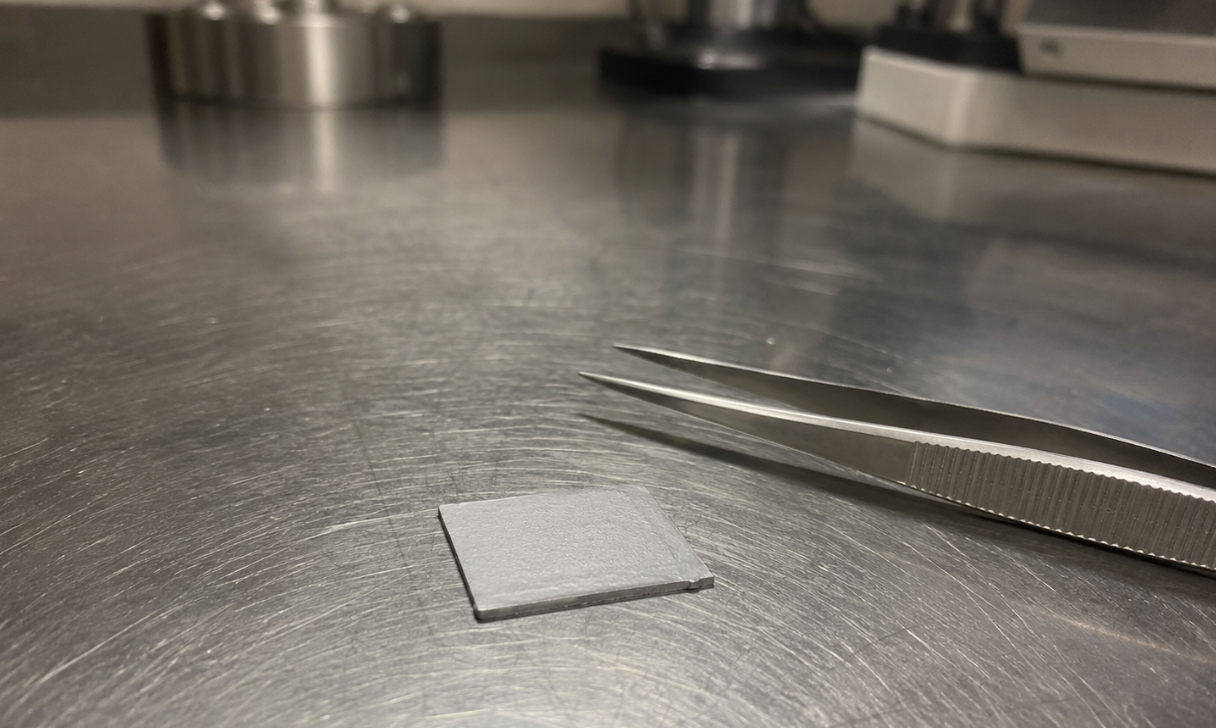
Reducing aging and pump-out risk generally requires action at three levels: formulation, application process, and — where the application demands it — material selection.
Formulation-level improvements. Controlled filler particle size distribution improves particle packing density, which helps maintain a stable thermal conduction network and reduces the tendency for oil to separate from the filler structure under thermal stress. Low-volatility base oils and higher-consistency thickener systems generally improve pump-out resistance, though often at the cost of higher initial viscosity and correspondingly higher application force during assembly. Anti-bleed and anti-pump-out additives — specialized polymers or surface treatments designed to improve oil retention within the thickener structure — are available in higher-performance formulations specifically to address these failure modes, typically at a cost premium over standard grease.
Application process control. A grease layer applied too thick tends to bleed and migrate more readily under thermal stress, since there's more material available to flow. A layer applied too thin can't adequately fill surface irregularities, increasing air gap resistance independent of any aging or pump-out mechanism. Correct bond line thickness — matched to the specific surface flatness and grease viscosity — is a meaningful factor in both initial performance and long-term stability. Uneven mating surfaces also create localized stress concentrations where grease is more prone to displacement under compression, so consistent, adequately distributed contact pressure matters as much as the grease specification itself.
Thermal cycling amplitude and frequency are largely design constraints rather than material choices, but they're worth flagging during TIM selection: applications with wider temperature swings between operating extremes produce greater differential expansion between mating materials, accelerating pump-out regardless of formulation quality. An application with frequent power cycling accumulates cycle count faster than one operating continuously at steady state, even at similar total operating hours — which changes how aggressively pump-out resistance should be weighted in material selection.
Validation before production release. The most reliable way to confirm grease performance for a specific application is testing under conditions that represent actual end use — realistic mounting pressure, a representative thermal cycling profile, and where relevant, vibration exposure matched to the deployment environment — rather than relying solely on datasheet values generated under standardized lab conditions that may not reflect your specific assembly.
Standard vs. Enhanced Grease Formulations
Grease formulations vary considerably in their resistance to aging and pump-out, and this variation isn't always reflected clearly in headline thermal conductivity specifications.
Standard commodity greases are formulated primarily for initial thermal performance and cost efficiency, without significant investment in anti-pump-out additive systems. These are generally adequate for consumer electronics and other applications with shorter service life expectations, or where periodic maintenance access allows reapplication. Enhanced or premium formulations — incorporating optimized filler distribution, anti-bleed additives, and higher-consistency thickener systems — are designed specifically to resist oil separation and lateral migration under sustained stress, and typically show substantially improved pump-out resistance and lower ΔRth after equivalent aging exposure in supplier characterization data.
For applications where grease's inherent migration tendency represents an unacceptable long-term risk — sealed, non-serviceable assemblies with multi-year service life targets, or high-cycling and vibration-prone environments such as automotive electronics, industrial power inverters, and EV charging equipment — thermal gels or phase change materials are often worth evaluating as alternatives. They don't rely on a freely flowing oil phase that's inherently prone to migration, which removes pump-out as a failure mode entirely rather than just reducing its rate. Gel-type TIMs, while not technically grease, are frequently evaluated alongside enhanced grease formulations for exactly this reason — they address the same reliability requirement through a semi-solid, viscoelastic structure rather than a flowable system with additives working to slow migration.
How to Diagnose the Root Cause
When a field failure or unexpected temperature rise points back to the TIM interface, disassembly inspection is the most direct way to identify which mechanism is responsible — and the two leave distinctly different physical signatures.
Thermal aging without significant pump-out typically shows relatively uniform grease coverage that has become drier, harder, or more crusted in appearance across the full interface. There's no strong displacement pattern; the material has simply changed in place. Pump-out, by contrast, shows a distinctive spatial pattern — grease accumulated at the perimeter with a thinning or dry area at the center, often with the sharpest thermal resistance increase corresponding to that center region. If the grease appears uniformly degraded without a clear displacement pattern, aging is the primary mechanism at work. If the perimeter-accumulation pattern is visible, pump-out is occurring, potentially alongside some degree of aging.
Weighing the sample against its as-applied mass, if that data was recorded during original assembly, can add useful confirmation — significant mass loss points toward oil evaporation or migration rather than in-place chemical change alone. Comparing the ΔRth measured during teardown against the ΔRth predicted from accelerated aging or cycling test data, if available from the original material qualification, can also help confirm whether field degradation is tracking expected rates or has been accelerated by an unanticipated factor in the actual operating environment — higher-than-specified temperature, tighter cycling amplitude, or unaccounted vibration exposure.
TaxoTape® Solutions
TaxoTape® supplies thermal grease formulations across standard and enhanced pump-out-resistant grades, along with thermal gel and phase change material alternatives for applications where grease's inherent migration risk doesn't fit a long-term reliability target.
For any grease specification under evaluation, we can provide thermal aging data (ASTM D5470-referenced ΔRth after extended exposure) and pump-out characterization under thermal cycling, along with technical guidance on whether a gel or PCM alternative is warranted based on your specific service life, temperature cycling profile, and vibration environment.
Request samples or technical consultation →
FAQ
Q: Does a higher thermal conductivity grease necessarily have better aging and pump-out resistance?
No — these are largely independent properties. Thermal conductivity depends primarily on filler type and loading. Aging and pump-out resistance depend on base oil chemistry, thickener system, and additive package. A high-conductivity grease with a standard formulation can have worse long-term stability than a lower-conductivity grease specifically formulated with anti-pump-out additives, so it's worth requesting aging and cycling data separately from the conductivity spec when evaluating suppliers.
Q: At what temperature does thermal aging become a significant concern?
This varies by formulation, but as a general pattern, aging effects become more significant above roughly 100–125°C sustained operating temperature for many commercial silicone-based greases, with the degradation rate increasing substantially as temperature rises further. Below this range, aging still occurs but typically at a slower rate that may not be significant within a product's service life target. Always verify against your specific grease's datasheet and, where available, supplier aging data at your actual expected operating temperature.
Q: Is pump-out preventable through application technique alone, or is material selection also necessary?
Application technique — correct bond line thickness, consistent clamping pressure — reduces pump-out risk but can't eliminate it if the underlying material has poor inherent resistance to migration. For applications with significant thermal cycling or vibration exposure over a multi-year service life, material selection (an enhanced grease formulation, or an alternative TIM type such as gel or PCM) is typically necessary in addition to good application practice, not as a substitute for it.
Why Thermal Grease Fails: Aging, Pump-Out & How to Prevent It — Part 6-11
6. Engineering Solutions to Reduce Failure Risk
Reducing aging and pump-out risk generally requires action at three levels: formulation, application process, and — where the application demands it — material selection.
Formulation-level improvements. Controlled filler particle size distribution improves particle packing density, which helps maintain a stable thermal conduction network and reduces the tendency for oil to separate from the filler structure under thermal stress. Low-volatility base oils and higher-consistency thickener systems generally improve pump-out resistance, though often at the cost of higher initial viscosity and correspondingly higher application force during assembly. Anti-bleed and anti-pump-out additives — specialized polymers or surface treatments designed to improve oil retention within the thickener structure — are available in higher-performance formulations specifically to address these failure modes, typically at a cost premium over standard grease.
Application process control. A grease layer applied too thick tends to bleed and migrate more readily under thermal stress, since there's more material available to flow. A layer applied too thin can't adequately fill surface irregularities, increasing air gap resistance independent of any aging or pump-out mechanism. Correct bond line thickness — matched to the specific surface flatness and grease viscosity — is a meaningful factor in both initial performance and long-term stability. Uneven mating surfaces also create localized stress concentrations where grease is more prone to displacement under compression, so consistent, adequately distributed contact pressure matters as much as the grease specification itself.
Thermal cycling amplitude and frequency are largely design constraints rather than material choices, but they're worth flagging during TIM selection: applications with wider temperature swings between operating extremes produce greater differential expansion between mating materials, accelerating pump-out regardless of formulation quality. An application with frequent power cycling accumulates cycle count faster than one operating continuously at steady state, even at similar total operating hours — which changes how aggressively pump-out resistance should be weighted in material selection.
Validation before production release. The most reliable way to confirm grease performance for a specific application is testing under conditions that represent actual end use — realistic mounting pressure, a representative thermal cycling profile, and where relevant, vibration exposure matched to the deployment environment — rather than relying solely on datasheet values generated under standardized lab conditions that may not reflect your specific assembly.
7. Standard vs. Enhanced Grease Formulations
Grease formulations vary considerably in their resistance to aging and pump-out, and this variation isn't always reflected clearly in headline thermal conductivity specifications.
Standard commodity greases are formulated primarily for initial thermal performance and cost efficiency, without significant investment in anti-pump-out additive systems. These are generally adequate for consumer electronics and other applications with shorter service life expectations, or where periodic maintenance access allows reapplication. Enhanced or premium formulations — incorporating optimized filler distribution, anti-bleed additives, and higher-consistency thickener systems — are designed specifically to resist oil separation and lateral migration under sustained stress, and typically show substantially improved pump-out resistance and lower ΔRth after equivalent aging exposure in supplier characterization data.
For applications where grease's inherent migration tendency represents an unacceptable long-term risk — sealed, non-serviceable assemblies with multi-year service life targets, or high-cycling and vibration-prone environments such as automotive electronics, industrial power inverters, and EV charging equipment — thermal gels or phase change materials are often worth evaluating as alternatives. They don't rely on a freely flowing oil phase that's inherently prone to migration, which removes pump-out as a failure mode entirely rather than just reducing its rate. Gel-type TIMs, while not technically grease, are frequently evaluated alongside enhanced grease formulations for exactly this reason — they address the same reliability requirement through a semi-solid, viscoelastic structure rather than a flowable system with additives working to slow migration.
8. How to Diagnose the Root Cause
When a field failure or unexpected temperature rise points back to the TIM interface, disassembly inspection is the most direct way to identify which mechanism is responsible — and the two leave distinctly different physical signatures.
Thermal aging without significant pump-out typically shows relatively uniform grease coverage that has become drier, harder, or more crusted in appearance across the full interface. There's no strong displacement pattern; the material has simply changed in place. Pump-out, by contrast, shows a distinctive spatial pattern — grease accumulated at the perimeter with a thinning or dry area at the center, often with the sharpest thermal resistance increase corresponding to that center region. If the grease appears uniformly degraded without a clear displacement pattern, aging is the primary mechanism at work. If the perimeter-accumulation pattern is visible, pump-out is occurring, potentially alongside some degree of aging.
Weighing the sample against its as-applied mass, if that data was recorded during original assembly, can add useful confirmation — significant mass loss points toward oil evaporation or migration rather than in-place chemical change alone. Comparing the ΔRth measured during teardown against the ΔRth predicted from accelerated aging or cycling test data, if available from the original material qualification, can also help confirm whether field degradation is tracking expected rates or has been accelerated by an unanticipated factor in the actual operating environment — higher-than-specified temperature, tighter cycling amplitude, or unaccounted vibration exposure.
9. TaxoTape® Solutions
TaxoTape® supplies thermal grease formulations across standard and enhanced pump-out-resistant grades, along with thermal gel and phase change material alternatives for applications where grease's inherent migration risk doesn't fit a long-term reliability target.
For any grease specification under evaluation, we can provide thermal aging data (ASTM D5470-referenced ΔRth after extended exposure) and pump-out characterization under thermal cycling, along with technical guidance on whether a gel or PCM alternative is warranted based on your specific service life, temperature cycling profile, and vibration environment.
Request samples or technical consultation →
10. FAQ
Q: Does a higher thermal conductivity grease necessarily have better aging and pump-out resistance?
No — these are largely independent properties. Thermal conductivity depends primarily on filler type and loading. Aging and pump-out resistance depend on base oil chemistry, thickener system, and additive package. A high-conductivity grease with a standard formulation can have worse long-term stability than a lower-conductivity grease specifically formulated with anti-pump-out additives, so it's worth requesting aging and cycling data separately from the conductivity spec when evaluating suppliers.
Q: At what temperature does thermal aging become a significant concern?
This varies by formulation, but as a general pattern, aging effects become more significant above roughly 100–125°C sustained operating temperature for many commercial silicone-based greases, with the degradation rate increasing substantially as temperature rises further. Below this range, aging still occurs but typically at a slower rate that may not be significant within a product's service life target. Always verify against your specific grease's datasheet and, where available, supplier aging data at your actual expected operating temperature.
Q: Is pump-out preventable through application technique alone, or is material selection also necessary?
Application technique — correct bond line thickness, consistent clamping pressure — reduces pump-out risk but can't eliminate it if the underlying material has poor inherent resistance to migration. For applications with significant thermal cycling or vibration exposure over a multi-year service life, material selection (an enhanced grease formulation, or an alternative TIM type such as gel or PCM) is typically necessary in addition to good application practice, not as a substitute for it.
11. Conclusion
Rising interface thermal resistance months or years after deployment rarely has a single obvious cause, which is exactly why aging and pump-out are easy to overlook during initial troubleshooting — neither shows up in a quick visual check, and both can masquerade as a cooling system or load problem until the interface itself is inspected. One is a chemical process driven by sustained temperature; the other is a mechanical one driven by cycling and vibration. Both increase thermal resistance over time, and both are frequently invisible until the cumulative effect becomes significant enough to produce measurable performance loss.
Reliable long-term performance depends on formulation quality, correct application process, and validation under representative conditions — not on initial thermal conductivity alone. For any application with a multi-year service life, request aging and pump-out data specific to your operating temperature and cycling profile before finalizing a grease specification, and evaluate whether a gel or phase change material alternative better fits applications where grease's inherent migration tendency represents an unacceptable long-term risk.
Contact TaxoTape® to evaluate grease reliability for your application →