Welcome to Taxo Tape
Silicone-Based vs. Graphite-Based Thermal Pads
Introduction
Effective thermal management is a cornerstone of reliable electronic design. As power densities rise in LEDs, automotive modules, and consumer electronics, thermal pads have become one of the most widely used Thermal Interface Materials (TIMs). They provide a simple yet effective way to bridge air gaps between heat sources and heat sinks, ensuring stable performance and longer product life.
Among the many options, silicone-based thermal pads and graphite-based thermal pads stand out as two mainstream categories. Each offers distinct advantages and trade-offs in terms of thermal conductivity, electrical insulation, mechanical compliance, and cost. For engineers and procurement teams, selecting the right type is not only a matter of performance—it also impacts reliability, assembly processes, and long-term total cost of ownership.

What Are Silicone-Based Thermal Pads?
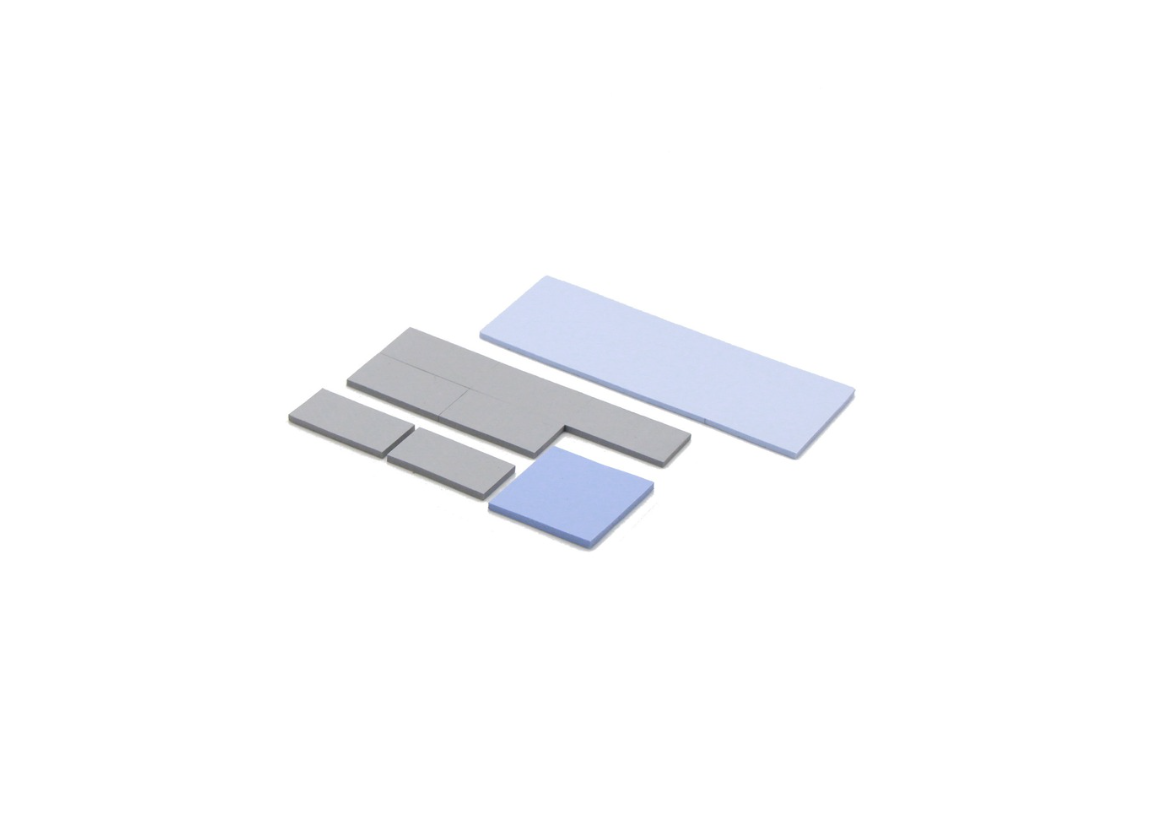
Silicone-based thermal pads are typically made of silicone elastomers filled with ceramic particles such as alumina or boron nitride. This composition balances thermal conductivity with electrical insulation.
Core properties include:
Softness and conformability – easily compresses to fill surface irregularities.
Dielectric insulation – protects against electrical shorts.
Moderate thermal conductivity – generally ranging from 1–8 W/m·K.
Strengths:
Excellent gap-filling ability, even with uneven surfaces.
Provides electrical isolation for high-voltage designs.
User-friendly in handling and assembly.
Limitations:
Potential for silicone oil migration in some grades.
May age or harden under long-term thermal cycling.
What Are Graphite-Based Thermal Pads?
Graphite-based pads are made from natural graphite, expanded graphite, or synthetic pyrolytic graphite (PGS). Unlike silicone pads, their primary strength lies in heat spreading rather than gap filling.
Core properties include:
Ultra-high in-plane thermal conductivity (up to 1500 W/m·K for PGS).
Extremely lightweight and thin profile.
Stable under high temperatures with no pump-out risk.
Advantages:
Superior at dissipating heat laterally, reducing hot spots.
No risk of outgassing or migration.
Ideal for compact, high-power devices.
Limitations:
Electrically conductive, requiring careful design to avoid shorts.
Brittle and less compliant, unsuitable for large gaps.
Often higher cost compared to silicone-based pads.
Performance Comparison: Silicone vs. Graphite Pads
When evaluating both categories, engineers need to consider multiple performance factors:
Thermal conductivity:
Silicone pads: moderate through-plane performance.
Graphite pads: exceptional in-plane spreading, but lower through-plane conduction.
Electrical properties:
Silicone = insulating.
Graphite = conductive (risk of short circuit).
Mechanical compliance:
Silicone = soft, compressible, fills uneven gaps.
Graphite = rigid, limited gap-filling.
Long-term reliability:
Silicone = may age but maintains insulation.
Graphite = stable, but fragile under pressure.
Cost and processing:
Silicone = versatile and cost-effective.
Graphite = specialized, often more expensive.
Typical Use Cases
Silicone pads are widely used in:
LED lighting modules – reliable insulation and easy assembly.
Automotive ECUs – gap-filling ability in rugged environments.
Consumer electronics – balances cost and thermal performance.
Telecom boards – insulation plus mechanical stability.
Graphite pads are preferred in:
Smartphones & tablets – ultra-thin heat spreading layers.
EV battery packs – lightweight materials for thermal diffusion.
Inverter and power modules – excellent lateral heat dissipation.
High-power compact electronics – where hot spots must be eliminated.
Key decision drivers: gap size, voltage isolation requirements, heat spreading needs, and overall system reliability.
Common Misconceptions
“Graphite is always better because it has higher conductivity.”
While graphite can offer extremely high in-plane conductivity, this does not always translate into lower junction temperatures in real assemblies. If the heat path is mainly through-plane (from chip to heatsink), graphite may not outperform silicone pads.
“Silicone pads are outdated.”
Far from it—silicone-based pads remain the industry standard in applications requiring dielectric insulation, soft gap filling, and reliable performance across a wide temperature range. Many automotive and telecom systems still rely heavily on silicone pads.
Ignoring thickness, surface roughness, and compression set.
Engineers sometimes focus only on datasheet conductivity. In practice, pad thickness, surface flatness, and the ability to maintain contact under compression often dictate real-world thermal resistance.
How to Choose the Right Pad for Your Design
When selecting between silicone and graphite pads, engineers should consider:
Thermal conductivity: in-plane vs. through-plane performance.
Electrical insulation: silicone pads are non-conductive; graphite is conductive.
Mechanical compliance: ability to conform to uneven surfaces and maintain pressure.
Reliability: stability under thermal cycling, compression, and long-term aging.
Cost and assembly: material price, handling method, and automation readiness.
Best practices include:
Reviewing supplier datasheets validated by ASTM/ISO testing.
Checking application notes and case studies relevant to your industry.
Collaborating early with suppliers and your design team to simulate real use conditions.
Conclusion & Recommendation
Silicone-based and graphite-based thermal pads each offer unique benefits. Silicone excels in insulation, softness, and gap-filling, while graphite stands out in thin, high-conductivity applications where spreading is key.
The right choice depends on your design priorities: whether that’s electrical isolation, mechanical compliance, or maximum heat spreading efficiency.
For engineers seeking optimized solutions, our team can provide tailored recommendations and sample evaluations to help you select the most suitable material for your application.

FAQ
Are graphite thermal pads electrically insulating?
No. Graphite is electrically conductive, so it requires caution when placed near sensitive circuits.
Can silicone pads handle high-power electronics?
Yes. Many silicone pads with ceramic fillers reach 3–8 W/m·K and are widely used in automotive ECUs, power supplies, and telecom equipment.
Which lasts longer under thermal cycling—silicone or graphite pads?
It depends. Silicone pads generally handle compression cycling well due to their elastomer base, while graphite pads offer long-term stability if mechanical stress is limited.
How to verify the real performance of a thermal pad beyond datasheets?
Lab testing under your actual assembly conditions—gap size, pressure, cycling, and ambient temperature—is the most reliable way to confirm performance.