Welcome to Taxo Tape
Selecting TIMs for 5G Base Station RF Modules
Introduction: Why TIM Selection Matters in 5G RF Modules
The transition from 4G to 5G has significantly increased the thermal demands placed on base station RF modules. Higher data rates, wider bandwidths, and advanced modulation schemes all contribute to increased power density within increasingly compact module designs. As a result, heat is generated faster and concentrated in smaller areas than in previous generations.
In 5G RF modules, thermal management is not isolated from electrical performance. Excessive junction temperatures can lead to gain drift, frequency instability, and reduced linearity in RF components. Over time, sustained thermal stress may also accelerate material aging and compromise long-term system reliability. This makes thermal interface material (TIM) selection a critical design decision rather than a secondary mechanical detail.
Base station designers often face practical challenges when managing heat in RF modules: limited space for heat spreading, uneven contact surfaces, and strict reliability expectations for outdoor operation. In this context, selecting an appropriate TIM becomes essential to ensure stable RF performance, consistent thermal behavior, and predictable lifetime performance under real operating conditions.

Typical Heat Sources in 5G Base Station RF Modules
Heat generation within a 5G base station RF module is distributed across several key components, each with distinct thermal characteristics.
Power amplifiers (PAs) are typically the dominant heat sources, operating at high output power and efficiency levels that still result in substantial heat dissipation. Localized hotspots around PA devices are common, especially in multi-channel or massive MIMO architectures.
RF transceivers and filters also contribute to the overall thermal load. While their individual power dissipation may be lower than that of PAs, their sensitivity to temperature variations makes effective heat transfer equally important.
Power management ICs, including DC-DC converters and voltage regulators, introduce additional thermal complexity. These components often operate continuously and may be located close to RF circuitry, increasing the importance of controlled thermal paths.
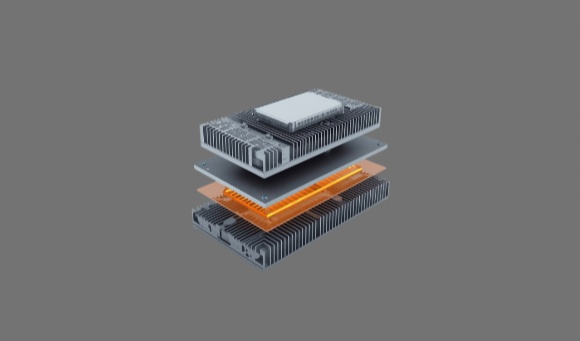
The interaction between RF layout and thermal paths further complicates module design. Metal shielding, ground planes, and compact routing can restrict heat flow, making the role of the TIM at interfaces between components, heat spreaders, and enclosures especially critical.
Key Thermal Requirements for 5G RF Applications
5G RF modules are typically designed for extended operating temperature ranges, often under harsh outdoor conditions. Maintaining thermal reliability across wide temperature cycles is a fundamental requirement for telecom infrastructure equipment.
Thermal loads in these systems are not always steady-state. Continuous background operation is frequently combined with peak power events during high data traffic periods. TIMs must therefore perform consistently under both sustained and transient thermal loads without degradation in thermal resistance.
Long-term thermal stability is another critical consideration. Exposure to temperature cycling, humidity, and prolonged high-temperature operation can affect TIM performance over time. Materials that exhibit stable thermal behavior and minimal aging effects are essential to support the long service life expected of 5G base station deployments.
Electrical and Mechanical Constraints Unique to RF Modules
Unlike purely power electronics, RF modules impose additional electrical constraints on TIM selection. Electrical insulation and dielectric properties must be carefully considered to avoid unintended signal coupling or leakage paths, particularly in high-frequency environments.
Signal integrity and EMI performance are also closely tied to material choice. TIMs with unsuitable dielectric characteristics or inconsistent thickness can influence impedance control and potentially introduce RF performance variability.
From a mechanical perspective, RF modules often have tight tolerance requirements and limited allowable assembly pressure. Uneven surfaces, thin substrates, and fragile components restrict the use of highly rigid materials. TIMs must accommodate these constraints while maintaining stable contact and predictable thermal performance throughout the product lifecycle.
These combined electrical and mechanical factors distinguish RF module TIM selection from more conventional thermal applications.
Common Types of TIMs Used in 5G Base Stations
Several types of thermal interface materials are commonly used in 5G base station applications, each offering distinct advantages and limitations.
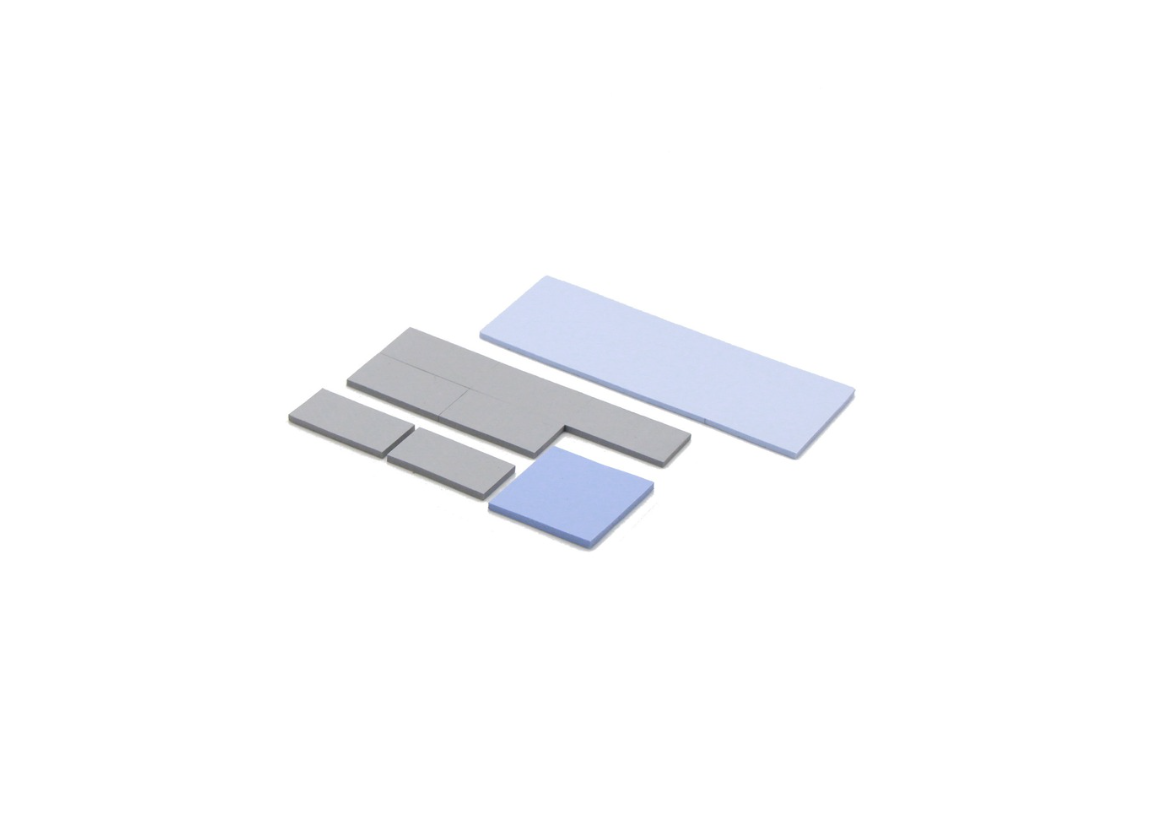
Thermal gap pads are widely applied where larger gaps or uneven surfaces must be accommodated. Their compressibility helps manage tolerance variation, though thickness selection is critical to minimize thermal resistance.
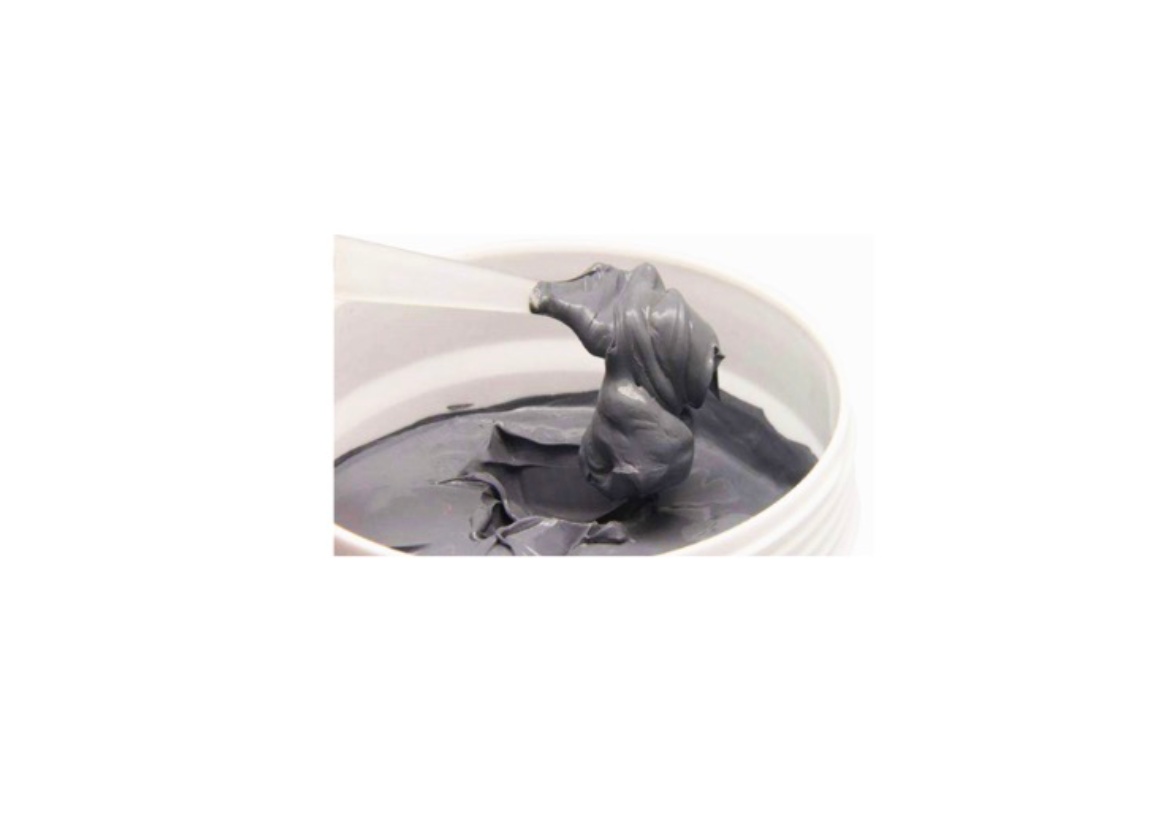
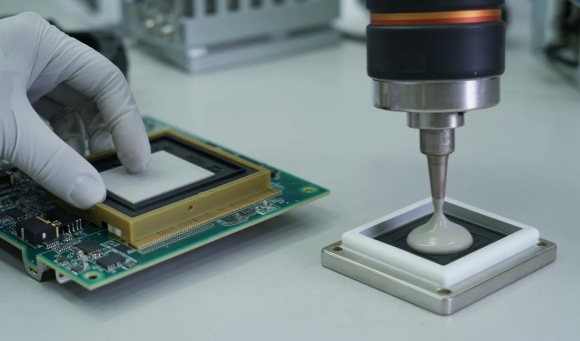
Thermal greases and gels are used where very low interface resistance is required and assembly pressure can be controlled. These materials conform well to surface irregularities but may require careful consideration of long-term stability.
Phase change materials (PCM) offer a balance between solid handling and low thermal resistance once activated at operating temperature. They are often used in applications with defined operating ranges and controlled interfaces.
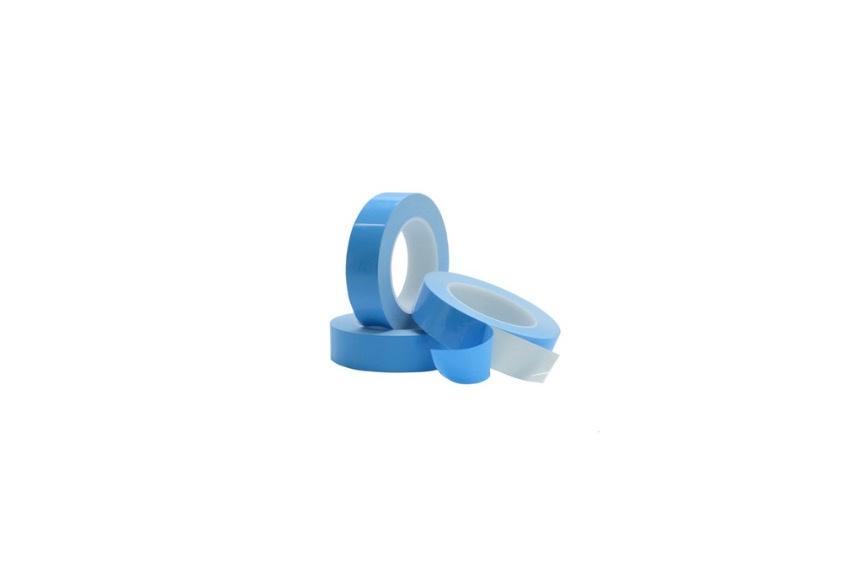
Double-sided thermal tapes provide both thermal conduction and mechanical fixation. They are typically selected for lighter components or auxiliary thermal paths where ease of assembly and positioning are important.
Each TIM type serves a specific role within the overall thermal design of a 5G base station, and selection should be based on system-level requirements rather than a single material property.
How to Match TIM Properties with RF Module Design
In RF module applications, high thermal conductivity alone does not guarantee effective heat transfer. The actual thermal performance is often dominated by contact resistance at the interfaces. Surface roughness, flatness, and mounting pressure can significantly reduce the real-world effectiveness of a theoretically high-conductivity material.
Thickness and compressibility must be matched to the mechanical design of the module. A TIM that is too thick may increase overall thermal resistance, while a material that is too stiff may fail to conform to surface irregularities. In RF modules with tight tolerances and delicate components, controlled compressibility is often more important than maximum filler loading.
Reworkability and maintenance should also be considered early in the design phase. In base station equipment, field servicing or module replacement may be required over the system’s lifetime. TIMs that leave residue, migrate, or degrade after reassembly can introduce long-term reliability risks. Selecting materials that maintain stable performance across multiple assembly cycles can simplify maintenance and reduce operational downtime.
Environmental and Reliability Considerations
5G base stations are frequently deployed in outdoor or semi-outdoor environments, exposing RF modules to temperature cycling, humidity, and mechanical vibration. These conditions place additional stress on thermal interfaces, particularly over long service lifetimes.
Aging behavior is a key factor in TIM selection. Some materials may experience changes in viscosity, hardness, or thermal resistance after prolonged exposure to elevated temperatures. Pump-out and dry-out effects can gradually degrade thermal performance, especially in applications with frequent thermal cycling.
Compliance with telecom reliability standards and customer-specific qualification requirements is also essential. TIMs must demonstrate stable thermal and electrical behavior under accelerated aging tests and environmental stress conditions, supporting the long-term reliability expectations of network infrastructure equipment.
Common Mistakes When Selecting TIMs for 5G RF Modules
One of the most common mistakes is over-focusing on datasheet thermal conductivity values. In practical RF module assemblies, interface conditions often limit heat transfer more than the bulk conductivity of the material itself.
Another frequent issue is ignoring interface pressure and assembly variation. Differences in mounting force, component height, and enclosure flatness can lead to inconsistent TIM performance across production units if these factors are not considered during material selection.
Selecting TIMs without RF-related validation is also a risk. Materials that perform well in power electronics may introduce unexpected issues in high-frequency environments, such as dielectric losses or interference with signal integrity. Application-specific evaluation is essential to avoid late-stage design changes.
Practical Selection Guidelines for RF and Thermal Engineers
When selecting TIMs for 5G RF modules, a structured and system-level approach is recommended:
Define thermal targets at the system level, including junction temperature limits and allowable thermal resistance.
Consider mechanical constraints early, such as gap variation, assembly pressure, and tolerance stack-up.
Involve both RF and thermal engineers in material evaluation to address electrical and thermal requirements together.
Evaluate TIMs under realistic operating conditions, including temperature cycling and power transients.
Validate long-term stability through reliability and aging tests aligned with telecom standards.
These steps help reduce design risk and ensure consistent performance throughout the product lifecycle.
Conclusion: Designing for Thermal and RF Performance Together
In 5G base station RF modules, TIM selection is an integral part of overall system optimization rather than a standalone material choice. Effective thermal management directly supports stable RF performance, reliability, and long-term system integrity.
Balancing thermal, electrical, and mechanical factors is essential to achieving predictable real-world performance. Early and informed TIM selection decisions can reduce downstream design changes, improve manufacturing consistency, and minimize long-term operational risk in demanding telecom applications.