Welcome to Taxo Tape
Selecting Thermally Conductive Tapes for Battery Pack Thermal Management

Introduction
Battery packs used in electric vehicles and energy storage systems operate under high power density, which generates significant heat during charging and discharging cycles. Efficient thermal management is essential to maintain performance, extend lifespan, and ensure safety.
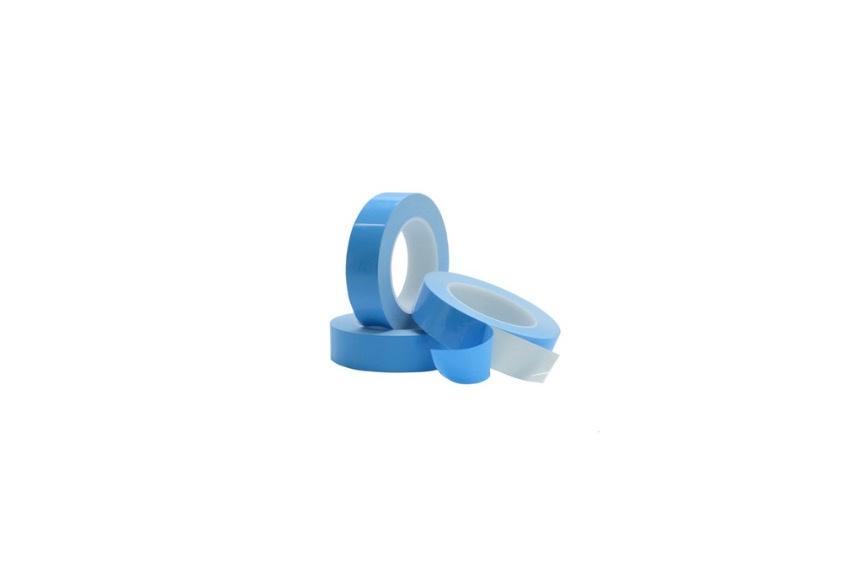
Among various thermal interface materials, thermally conductive tapes have emerged as a practical solution for battery assembly. They provide both heat conduction and mechanical bonding, offering a clean, efficient alternative to liquid adhesives or mechanical fasteners.
This article outlines how to select the right thermally conductive tape for battery pack thermal management and what key parameters engineers should evaluate.
Understanding the Role of Thermally Conductive Tapes in Battery Systems
Thermally conductive tapes serve two main purposes in battery systems:
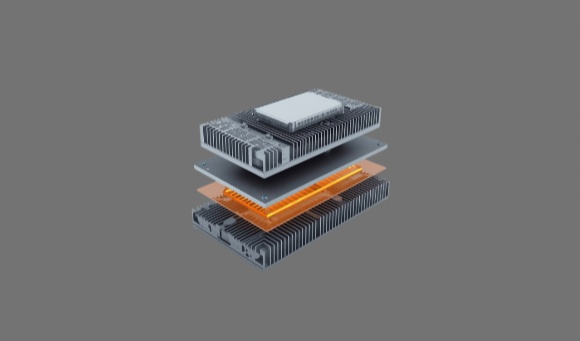
Heat dissipation: They transfer heat from cells or modules to cooling plates, graphite films, or aluminum housings.
Mechanical bonding: They securely hold components in place without adding extra weight or introducing mechanical stress.
By combining these two functions, conductive tapes simplify the design process and enable more compact, lightweight battery modules.
Key Properties to Consider When Selecting a Tape
Thermal Conductivity
Thermal conductivity determines how efficiently heat can move through the material.
For low to medium power modules, 0.8–1.5 W/m·K is typically sufficient.
For high-performance EV batteries or energy storage systems, values above 1.5 W/m·K are recommended to maintain uniform temperature distribution.
Adhesion Strength
Battery modules are exposed to vibration, temperature cycles, and physical stress. The tape should maintain strong adhesion over time.
Peel and shear strength indicate bonding reliability.
Aging resistance ensures long-term performance even in humid or high-temperature environments.
Electrical Insulation
Electrical insulation is critical for safety in high-voltage battery systems. Choose tapes with a dielectric breakdown voltage above 5 kV to prevent short circuits while maintaining heat transfer efficiency.
Thickness and Conformability
The tape must be thick enough to fill surface irregularities but thin enough to minimize thermal resistance.
0.2–0.3 mm thickness is common for cell-to-cooling-plate bonding.
Flexible materials adapt better to curved or uneven surfaces, ensuring full contact.
Benefits of Using Thermally Conductive Tapes in Battery Packs
Enhanced Thermal Uniformity
Conductive tapes help distribute heat evenly across the battery module, reducing temperature gradients that can cause capacity loss or imbalance.
Improved Safety
Stable temperature control minimizes the risk of thermal runaway and enhances overall system safety, especially under fast-charging or heavy-load conditions.
Simplified Assembly
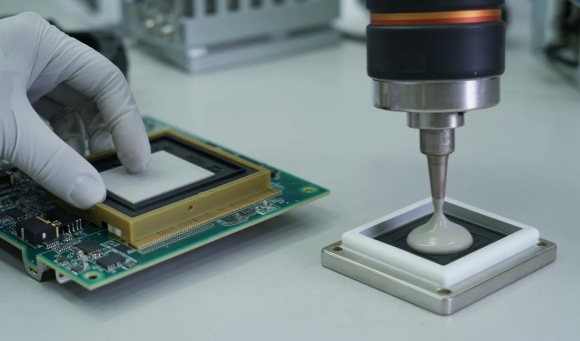
Compared with thermal grease or mechanical clamping, tapes allow for clean, fast, and automated assembly, reducing production time and potential contamination.
Weight and Space Savings
Their thin, lightweight structure supports compact module designs, contributing to higher energy density and lower total system weight.
Typical Applications in Battery Systems
Thermally conductive tapes are now used in multiple areas of battery design:
Cell-to-cooling-plate bonding in EV packs.
Graphite sheet or aluminum plate attachment for heat spreading.
Insulation layers between modules or pack enclosures.
BMS (Battery Management System) components, where localized heat must be controlled.
These applications show how versatile the material is across battery integration stages.
Practical Selection Tips for Engineers
When choosing a thermal tape for battery design:
Start with a thermal simulation to estimate target conductivity and thickness.
Evaluate compatibility with your substrate materials (e.g., aluminum, copper, or composite).
Check long-term reliability data, including high-temperature storage and humidity resistance.
Request sample testing before mass production to verify adhesion and performance under actual conditions.
Conclusion
Selecting the right thermally conductive tape is a critical step in designing reliable and efficient battery systems. The ideal material must balance thermal conductivity, electrical insulation, and mechanical stability while fitting seamlessly into automated assembly lines.
As EV and energy storage technologies continue to evolve, thermally conductive tapes will remain a key enabler of compact, safe, and thermally optimized battery pack designs.