Welcome to Taxo Tape
Selecting Thermal Interface Materials for Power Semiconductor Modules (IGBT, MOSFET)
Introduction: Why TIM Selection Matters for Power Modules
Power semiconductor modules based on IGBT and MOSFET devices sit at the heart of inverters, motor drives, EV powertrains and renewable energy converters. They switch high currents at high voltages in a compact footprint. As power density goes up, so does heat density.
If the heat is not removed efficiently, junction temperature rises. This leads to:
Reduced efficiency and derating
Parameter drift and unstable operation
Premature failure of chips, substrates, solder joints and passives
The thermal interface between the module baseplate and the heatsink or cold plate is one of the weakest links in this path. A well-selected thermal interface material (TIM) reduces interface resistance, stabilizes temperatures and improves long-term reliability of the entire system.

Typical Thermal Paths in Power Semiconductor Modules
In a typical IGBT or MOSFET power module, heat flows through several layers:
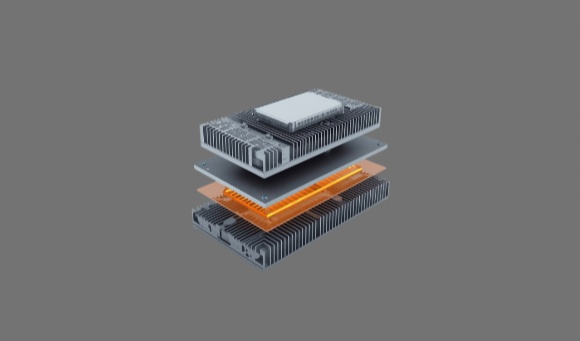
Chip → solder → substrate (DBC/AMB) → solder → baseplate → TIM → heatsink or cold plate
Each interface adds thermal resistance. Even if the heatsink is well designed, poor contact between the module baseplate and the cooling surface can dominate the overall thermal path.
TIMs are used to:
Fill microscopic gaps and surface roughness
Increase real contact area
Reduce contact resistance at the module–heatsink interface
For high-power modules with large baseplates, choosing the right TIM is critical to maintain an even temperature distribution and avoid local hot spots.
Key Performance Requirements for TIMs in IGBT & MOSFET Modules
When selecting TIMs for power modules, engineers usually look beyond a single “k value”. The material has to work thermally, electrically and mechanically over the full lifetime of the system. Important requirements include:
Low thermal resistance
Not only high thermal conductivity (k), but also suitable thickness, good wet-out or compression, and low interface resistance under the actual assembly pressure.Electrical insulation and dielectric strength
Many modules require isolation between the module baseplate and chassis. TIMs used here must combine good thermal performance with adequate dielectric strength and insulation resistance at the system voltage level.Long-term reliability under thermal and power cycling
The TIM must withstand repeated thermal cycles and load changes without cracking, pumping out, drying or losing performance. Stable properties over thousands of cycles are essential in drives, EV and renewable energy systems.Mechanical compliance and stress relief
Differences in coefficient of thermal expansion (CTE) between the module, baseplate and heatsink create mechanical stress. A compliant TIM can absorb part of this stress, protect solder joints and substrates, and maintain contact over time.
Overview of Common TIM Types for Power Modules
Different TIM families are used depending on power level, assembly process and insulation needs. Common options include:
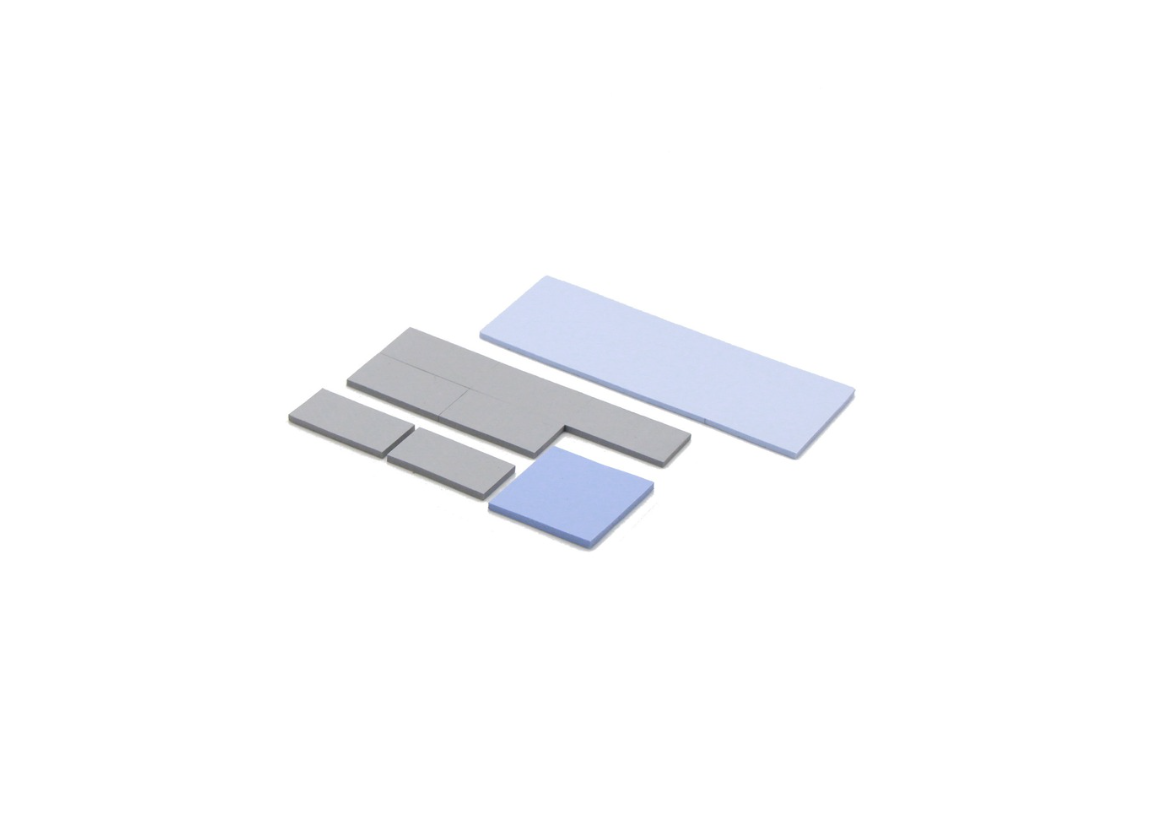
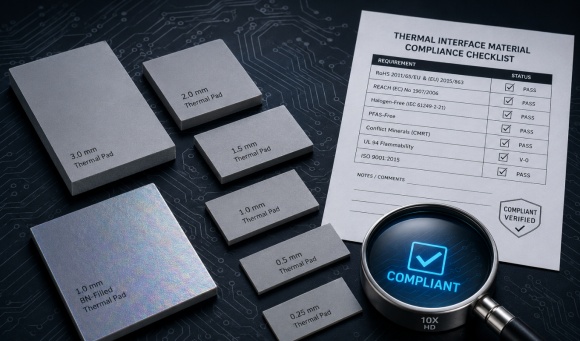
4.1 Thermal gap pads / gap fillers
Soft elastomeric pads, often filled with ceramic particles. They compress to fill gaps and surface irregularities. Suitable for modules with larger flatness tolerance, offering easy assembly, reworkability and electrical insulation.
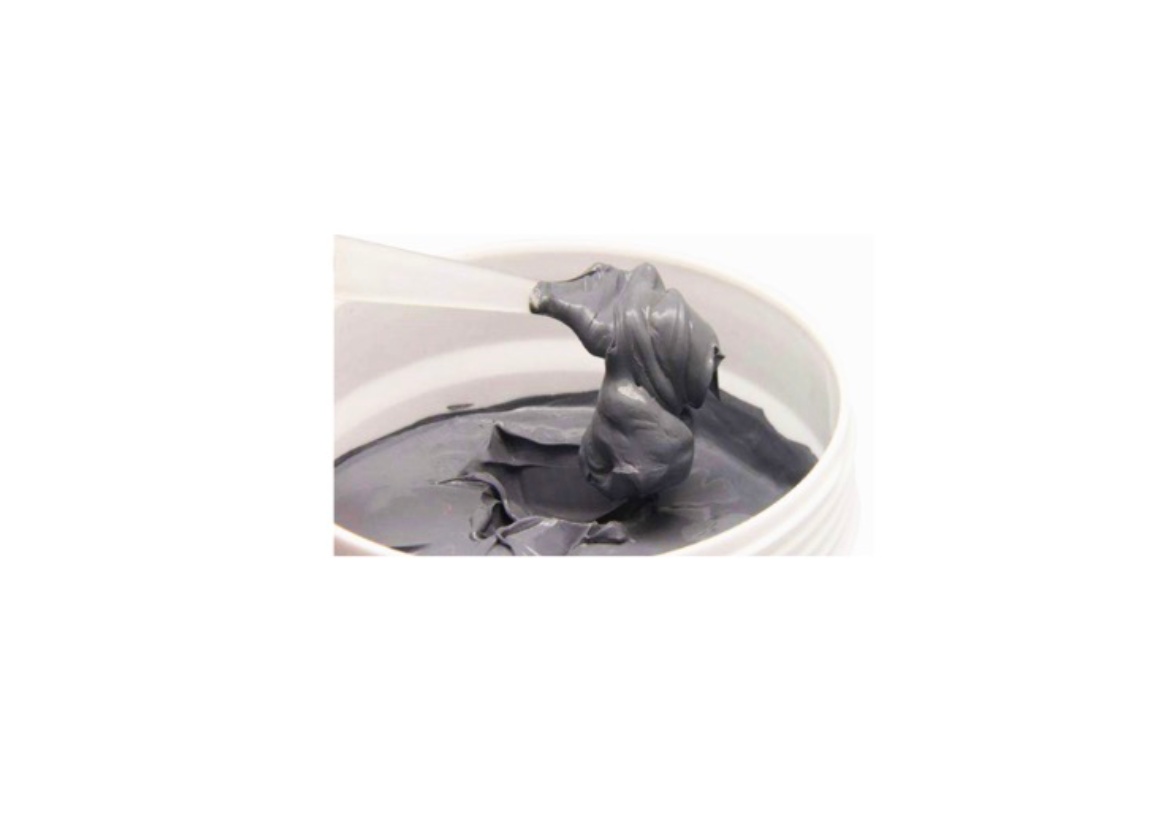
4.2 Thermal greases and gels
Paste- or gel-type materials that can be dispensed in a thin layer. They provide very low interface resistance and good wet-out, making them popular in high-power modules. Key points to watch are pump-out, bleeding and long-term stability.
4.3 Phase change materials (PCM)
Solid at room temperature, they soften or melt slightly above a defined temperature, improving wet-out and reducing resistance during operation. PCMs help with controlled application thickness and cleaner assembly compared with greases.
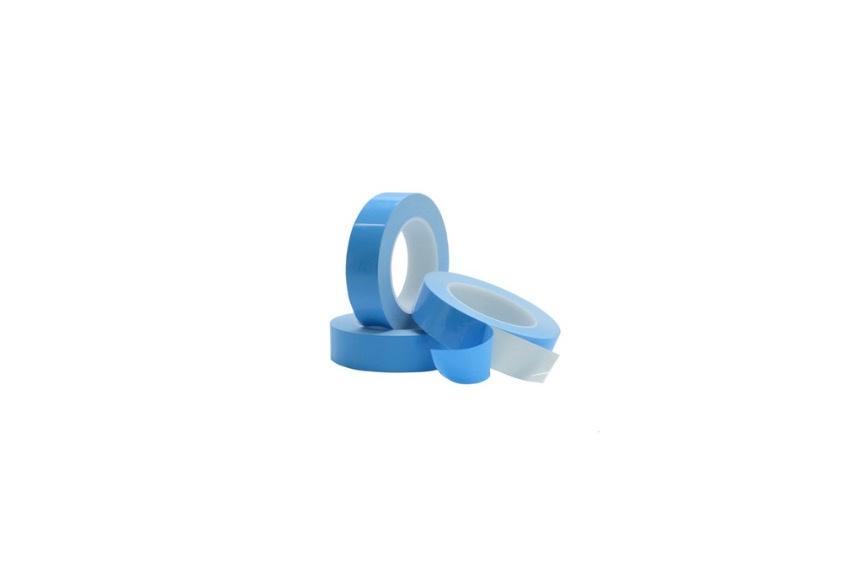
4.4 Thermal pads with adhesive (double-sided tapes)
TIMs that combine thermal conduction, electrical insulation and adhesive properties. They allow bonding of modules or heatsinks without additional mechanical fasteners in some designs, and are useful where mounting space is limited.
4.5 Graphite and other high-conductivity films (when insulation is not needed)
Compressed graphite sheets and similar films offer high in-plane thermal conductivity and low contact resistance. They are used where electrical insulation is not required, for example between a grounded baseplate and heatsink or in certain cold plate interfaces.
Selection Criteria and Trade-offs
When selecting a TIM for power modules, no single parameter tells the whole story. The right choice is always a balance between thermal, electrical, mechanical and process factors.
5.1 Thermal conductivity vs. interface pressure and surface flatness
Many designs start from the data sheet thermal conductivity value. In practice, the effective thermal resistance is driven by:
How much pressure the module can apply to the TIM
The flatness and roughness of the baseplate and heatsink
How well the TIM can flow or compress to fill gaps
A lower-k material that wets out well under realistic pressure can outperform a higher-k material that cannot fully conform to the surfaces. Always look at R_th (°C·cm²/W) or thermal impedance under defined pressure, not only the k value.
5.2 Thickness, compression, and tolerance stack-up in module assembly
In real assemblies, there are tolerances on module height, heatsink flatness and mounting hardware. TIM selection should consider:
Minimum and maximum bond line thickness (BLT)
Compression range of pads or gap fillers
Risk of over-compressing the module or leaving local air gaps
Soft gap pads are more forgiving to large tolerances. Greases, gels and PCMs work well with controlled flatness and mounting pressure, where a thin and uniform BLT can be maintained.
5.3 Electrical insulation requirements (system voltage class, creepage/clearance)
For many IGBT and MOSFET modules, the interface to the heatsink must be electrically insulated. When insulation is needed, check:
Dielectric breakdown voltage and insulation resistance
Thickness required to meet system voltage and safety standards
Impact of thicker, more insulating layers on thermal performance
If the baseplate or heatsink is already isolated, non-insulating materials such as graphite can be considered for lower thermal resistance.
5.4 Mechanical robustness: vibration, shock, pump-out, dry-out risks
Power modules often see vibration, shock and repeated load cycles. TIMs must remain in place and keep performance over years:
Greases and some gels can suffer from pump-out or migration under vibration and temperature cycling
Very hard materials may crack or lose contact when the assembly breathes with temperature
Soft pads and gap fillers can absorb some mechanical stress and protect solder joints, but very soft grades may creep over time if not properly supported
Field conditions (industrial drives vs. on-vehicle electronics) should guide the robustness level needed.
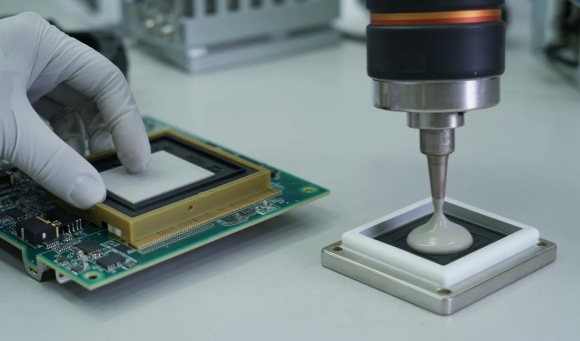
5.5 Process considerations: dispensing vs. pre-cut pad, rework, automation
The best TIM from a thermal standpoint may not fit the production line. Consider:
Can the material be dispensed automatically (viscosity, open time, cure profile)?
Are pre-cut pads or tapes easier for manual or semi-automatic assembly?
How often will rework be needed, and how cleanly can the TIM be removed and replaced?
For high volumes, stable dispensing and minimal cleaning are key. For lower volumes or prototyping, pads and tapes reduce process complexity.
5.6 Cost vs. performance and total system cost of ownership
TIM cost should be evaluated at system level, not only per piece:
A higher-performance TIM may enable higher power density, a smaller heatsink or lower fan speed
Better temperature control can extend module lifetime and reduce warranty risk
Materials that are easier to assemble can reduce labor time and scrap
In many designs, a moderate increase in TIM cost is justified if it enables a simpler or more reliable thermal solution.
Matching TIM Solutions to Application Scenarios
Different applications drive different priorities. Below are typical directions rather than fixed rules.
6.1 High-power industrial drives and inverters
Typical constraints: High continuous load, long lifetime, frequent thermal cycling, controlled cabinet environment.
Common TIM choices:
Thermal greases or gels for low thermal resistance when module and heatsink flatness are well controlled
Insulating gap pads for assemblies with larger tolerances or where reworkability is important
6.2 EV / HEV inverters and on-board chargers
Typical constraints: High power density, wide ambient range, strong vibration and shock, strict reliability and safety targets.
Common TIM choices:
High-stability gels or advanced greases with proven pump-out resistance
Soft, electrically insulating gap pads in areas with higher tolerance or where mechanical damping is needed
In some isolated baseplate designs, non-insulating high-conductivity films for minimal thermal resistance
6.3 Renewable energy (PV inverters, wind converters)
Typical constraints: Outdoor or semi-outdoor environment, long service life (15–20+ years), large temperature swings.
Common TIM choices:
Robust insulating pads and PCMs with excellent long-term stability
Gels with low volatility and good resistance to humidity and thermal cycling
Testing and Validation of TIMs for Power Modules
Lab data is only the starting point. Validation under realistic conditions is essential.
Thermal impedance measurement:
Use standardized or well-defined test setups to compare materials under the same pressure, area and BLT. Look at initial and aged values.Reliability tests:
Thermal shock / thermal cycling (e.g. –40 to 125 °C)
Power cycling at module level
High-temperature storage and humidity exposure
In-application testing on assembled modules:
Install the TIM in a real or close-to-real assembly, monitor case and heatsink temperatures, and check performance drift over time.
Practical Tips for Engineers During Design-In
Estimate thermal resistance early:
Build a simple thermal model including chip, substrate, baseplate, TIM and heatsink. Use realistic interface resistance values, not only bulk k.Avoid common mistakes:
Selecting a TIM only by k value on the data sheet
Ignoring mounting pressure and surface flatness
Over-specifying thickness “for safety”, which can hurt thermal performance
Not considering how the TIM will be applied and inspected in production
Work closely with TIM suppliers:
Request samples in the target thickness, ask for test data under similar conditions, and involve them early if a custom solution might be needed.
Conclusion
Selecting the right thermal interface material for IGBT and MOSFET power modules is a multi-parameter decision. Thermal performance, electrical insulation, mechanical compliance, reliability and process fit all need to be balanced.
By matching TIM types to the real application conditions and validating them in the actual module assembly, designers can control junction temperatures, extend system lifetime and reduce overall cost of ownership.
If you are evaluating TIM options for a new power module project, our team can support you with material selection, sampling and customized solutions tailored to your thermal design and production process.