Welcome to Taxo Tape
Reducing Thermal Contact Resistance in PCBA Assembly: Practical Methods
Introduction: Why Thermal Contact Resistance Matters in PCBA
In printed circuit board assembly (PCBA), managing heat is critical to maintaining performance and reliability. Even when high-performance heat sinks or thermal interface materials (TIMs) are used, there is still an invisible bottleneck that limits heat transfer — thermal contact resistance (TCR).
Thermal contact resistance refers to the resistance to heat flow that occurs at the interface between two solid surfaces, such as between a power device and a heat spreader or between a heat sink and a thermal pad. Microscopic surface roughness and trapped air gaps prevent full physical contact, forming small insulating layers that significantly reduce heat conduction efficiency.
When TCR is high, the temperature at the device junction increases, accelerating material degradation, reducing component lifespan, and in severe cases, leading to thermal runaway or solder joint fatigue. For high-power or compact electronics — such as power inverters, LED drivers, and automotive control units — minimizing contact resistance is essential for ensuring long-term thermal stability.

Understanding the Root Causes of Thermal Contact Resistance
The key to reducing thermal contact resistance lies in understanding what creates it in the first place.
Microscopic surface roughness and air gaps are the primary contributors. Even seemingly smooth metal or PCB surfaces have peaks and valleys at the microscopic level. These irregularities trap air pockets that act as thermal insulators.
Interface material selection also plays a crucial role. Choosing between silicone pads, thermal grease, phase change materials (PCMs), or graphite films depends on surface conditions, operating temperature, and assembly methods. A mismatch between material properties and the application often leads to excessive TCR.
Clamping pressure and mounting design directly affect how well the interface material conforms to both surfaces. Too little pressure leaves air voids; too much pressure may damage components or squeeze out the TIM unevenly.
Finally, surface contamination and oxidation — such as residues, oils, or oxide layers — further hinder intimate contact. Proper cleaning and surface preparation are necessary to ensure stable thermal performance over time.
Measuring and Evaluating Thermal Contact Resistance
Quantifying thermal contact resistance helps engineers compare materials and optimize assembly processes.
Standard test methods, such as ASTM D5470, are widely used to measure thermal interface performance under controlled pressure and temperature. Both steady-state and transient measurement techniques provide insight into how well a material conducts heat through the interface.
For practical PCBA evaluation, engineers often conduct prototype-level tests using embedded thermocouples or infrared thermography to measure the temperature difference across the interface.
In typical electronic assemblies, acceptable TCR (often expressed as Rth, or °C·cm²/W) depends on the power density and cooling capacity. For example, high-power modules may require interface resistances below 0.1 °C·cm²/W, while lower-power circuits can tolerate higher values. Understanding these thresholds ensures the system remains within safe thermal limits.
Material Strategies to Reduce Interface Resistance
Selecting and applying the right thermal interface material (TIM) is the most effective way to reduce contact resistance in PCBA. The optimal choice depends on power density, surface flatness, and mechanical design.
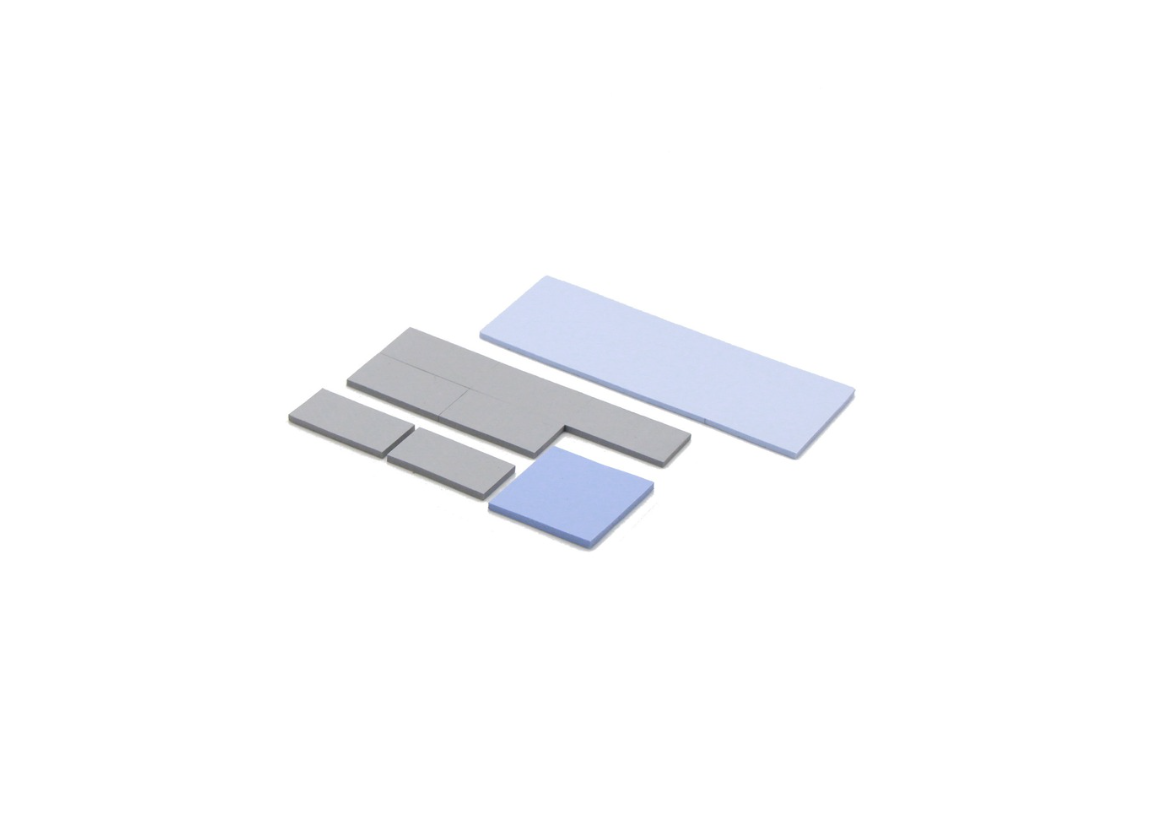
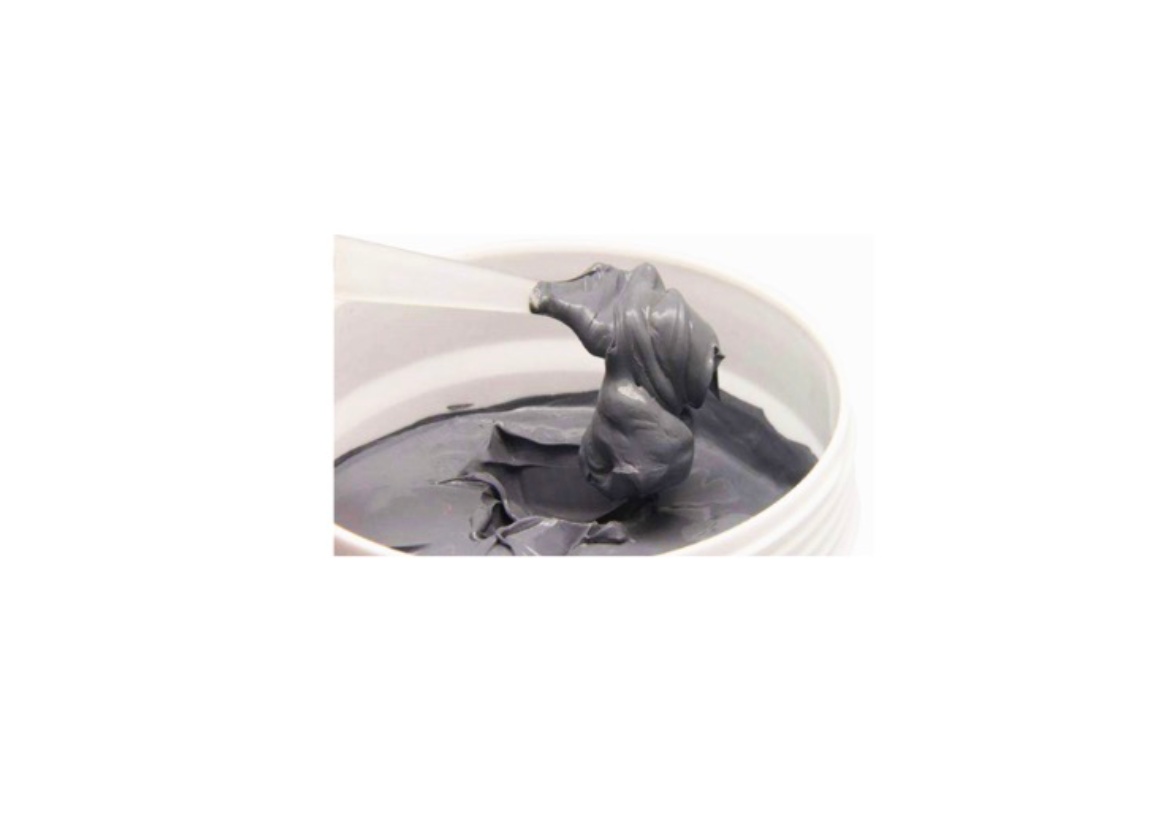
Thermal grease offers the lowest contact resistance due to its ability to fill microscopic voids completely, but it can be messy and difficult to control in mass production. Gap fillers (such as silicone pads or gels) are easier to apply and provide mechanical cushioning, making them suitable for uneven or shock-prone assemblies. Graphite films offer high in-plane conductivity and are often used in thin-profile designs where spreading heat laterally is critical.
Phase change materials (PCMs) are a practical solution for balancing performance and manufacturability. They remain solid at room temperature and soften at operating temperatures, automatically conforming to surface irregularities during operation.
Finally, the compressibility and conformability of a TIM determine its ability to reduce air gaps under varying pressure. Softer, more elastic materials often deliver better long-term reliability by maintaining consistent thermal contact even after thermal cycling or vibration.
Process and Assembly Techniques for Better Thermal Contact
Even with the best thermal interface materials, poor assembly can easily compromise heat transfer performance. Implementing correct process and assembly techniques is just as critical as selecting the right TIM.
Surface preparation is the first step. Both the device and the heat spreader surfaces should be clean, smooth, and free of dust, oils, or oxide films. Simple cleaning with isopropyl alcohol or applying a light mechanical polish can significantly improve surface contact.
Applying uniform pressure and correct mounting torque ensures the TIM layer spreads evenly across the interface. Uneven pressure causes voids or thin spots, which create localized hot spots. Proper screw torque settings or the use of spring-loaded fasteners can help maintain stable compression over the product’s lifetime.
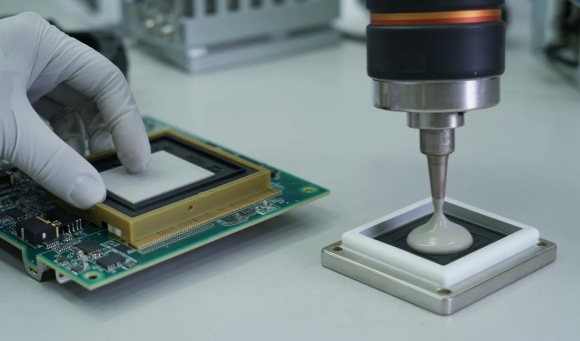
Avoiding voids and air entrapment during application is essential. When dispensing liquid TIMs or greases, air bubbles can form if the dispensing speed or nozzle distance is not well controlled. Using a controlled lamination process or vacuum-assisted assembly can help eliminate trapped air.
In automated production, controlled dispensing and lamination systems provide consistent film thickness and coverage. Automation minimizes human variation and ensures repeatable thermal performance across large batches of PCBA assemblies.
Design Considerations for Engineers
Beyond materials and process, good thermal performance starts with mechanical and thermal design decisions made early in development.
Optimizing flatness and planarity of mating surfaces reduces the required TIM thickness and therefore lowers contact resistance. Inconsistent flatness often results in thick TIM layers, which increase overall thermal impedance.
Mechanical clamping design should aim for even compression across the entire interface. Using multiple mounting points, compliant springs, or torque-limiting screws can help distribute pressure uniformly and prevent over-compression near sensitive components.
Engineers must also consider reworkability and long-term aging of TIMs. Some materials, such as thermal greases, can dry out or pump out under thermal cycling. Choosing a material that maintains stability and can be easily re-applied during rework helps extend product lifespan and reduce maintenance costs.
Case Insights: Thermal Resistance Reduction in Real Applications
In a recent power inverter module project, engineers identified that excessive junction temperatures were caused by uneven thermal contact between MOSFET packages and the heat sink. After switching from a standard silicone pad to a soft gap filler with higher compressibility and adjusting the mounting torque, the measured thermal interface resistance dropped by nearly 35%, leading to a 6–8°C reduction in device temperature.
Similarly, in LED driver boards, applying a phase change material (PCM) instead of traditional grease improved assembly consistency and reduced rework time. The temperature stability across LEDs became more uniform, minimizing color shift and improving lifetime reliability.
These real-world examples highlight that even small changes in TIM selection and mounting process can yield significant thermal improvements without major design modifications.
Summary: Key Takeaways for PCBA Designers
Reducing thermal contact resistance is a combined effort of material selection, surface preparation, pressure control, and design optimization.
To summarize:
Always ensure clean, smooth, and flat contact surfaces.
Choose a TIM that matches the application’s power density and mechanical structure.
Control pressure and application uniformity through proper torque design and automation.
Validate thermal performance through measurement and iterative testing.
Early attention to thermal contact design not only enhances heat dissipation efficiency but also improves system reliability and long-term durability. By integrating these methods into the PCBA assembly process, engineers can achieve lower junction temperatures, longer component lifespans, and higher overall product quality.