Welcome to Taxo Tape
Material Traceability in Thermal Pads: Why B2B Buyers Should Care
Introduction: Why Traceability Matters More Than Ever
In today’s electronics manufacturing environment, quality expectations are higher than ever. OEMs and system integrators face increasing pressure from end customers, regulatory bodies, and internal quality teams to ensure consistency, reliability, and compliance across every component used in their products. This pressure does not only apply to major components like chips or power modules, but also to materials that are often considered secondary.
Thermal pads are a typical example. They are relatively small, low-profile components, yet they play a critical role in heat dissipation, system stability, and long-term reliability. A minor variation in thermal performance or mechanical behavior can lead to higher junction temperatures, reduced product lifespan, or even field failures.
This is where material traceability becomes important. In practical terms, traceability means knowing where the material comes from, how it was processed, and how it can be identified later if a quality issue arises. For B2B buyers, especially those sourcing thermal interface materials for long-life or high-power applications, traceability is no longer a “nice to have” feature—it is a basic requirement for risk control.
What Is Material Traceability in Thermal Pads?
Material traceability in thermal pads refers to the ability to track a product from its raw materials through manufacturing and into final delivery. This includes clear records that link each finished thermal pad to specific materials, formulations, and production conditions.
At a practical level, traceability usually covers several key elements:
Raw material batch identification
Each incoming silicone base, filler, or additive is assigned a batch number, allowing suppliers to trace performance back to specific material sources.Formulation and filler consistency
Thermal conductivity and mechanical properties depend heavily on filler type, loading ratio, and dispersion. Traceability ensures that the same formulation is used consistently from batch to batch.Production lot numbers
Finished thermal pads are labeled or documented by production lot, linking them to specific manufacturing runs, equipment settings, and quality inspections.
It is important to distinguish between basic batch control and full traceability. Basic batch control may only record production dates or lot numbers, while full traceability connects raw materials, formulation data, process parameters, and final inspection results. For B2B buyers, this difference directly affects how quickly and accurately issues can be identified and resolved.
Common Risks When Traceability Is Missing
When thermal pads lack proper traceability, several risks can appear, often only after products are already in the field.
One common issue is inconsistent thermal conductivity between batches. Without clear material records, small changes in filler quality or formulation may go unnoticed, leading to performance variation in real applications.
Another risk is variation in hardness, compression behavior, or thickness tolerance. These mechanical differences can affect contact resistance, assembly pressure, and long-term stability, especially in automated production lines.
Traceability gaps also make root-cause analysis extremely difficult. When a failure occurs, engineers may not be able to determine whether the issue is related to material changes, processing conditions, or application design.
Over time, these problems increase the risk in long-term supply projects, where consistent performance across multiple production cycles is essential. Without traceability, even a trusted supplier can become a source of uncertainty.
Why Material Traceability Is Critical for B2B Buyers
4.1 Engineering Reliability
For engineers, traceability supports stable thermal performance across repeated builds and design iterations. When materials are consistent and traceable, validation results remain relevant over time, reducing the need for frequent requalification.
Traceability also reduces design uncertainty. Engineers can focus on optimizing thermal solutions rather than compensating for unpredictable material behavior.
4.2 Procurement and Supply Chain Control
From a procurement perspective, traceability improves supplier accountability. Clear records make it easier to discuss quality issues based on data rather than assumptions.
It also enables more accurate supplier comparison for long-term sourcing. When specifications and traceability levels are transparent, buyers can evaluate suppliers beyond price alone.
Most importantly, traceability helps lower hidden costs caused by rework, returns, or unexpected production stops—costs that are often far higher than the material price difference itself.
4.3 Compliance and Audit Readiness
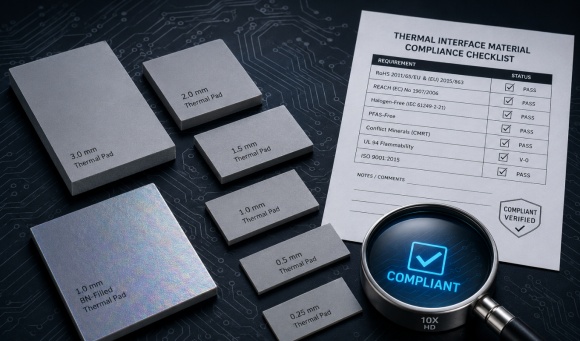
Material traceability plays a key role in compliance with regulations such as RoHS and REACH. Traceable records support documentation requirements and simplify communication with customers or regulatory bodies.
In addition, traceability aligns well with ISO-based quality management systems. Whether for internal audits or customer audits, having clear material records reduces risk and demonstrates a structured approach to quality control.
How Traceability Affects Real Applications
Material traceability becomes especially important when thermal pads are used in real-world, high-volume, or long-life applications.
LED lighting modules are a typical example. LEDs are highly sensitive to temperature changes, and even small variations in thermal pad performance can affect light output, color stability, and lifetime. When thermal pads are traceable, manufacturers can maintain consistent thermal performance across different production batches, reducing the risk of uneven aging or early failures in the field.
In power electronics, such as inverters and power supplies, thermal pads are exposed to higher power densities and frequent thermal cycling. Traceable materials help ensure that thermal conductivity, compression behavior, and electrical insulation remain stable over time. This consistency is critical for protecting power components and maintaining system reliability.
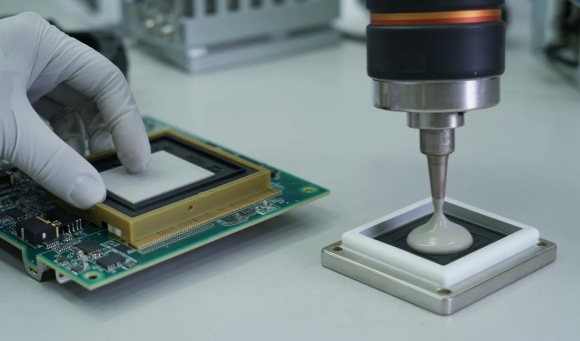
For battery modules and PCBA assemblies, traceability supports both thermal safety and manufacturing stability. In these applications, thermal pads often serve multiple functions, including heat dissipation, gap filling, and vibration absorption. When materials are traceable, engineers can better control tolerances and reduce variability during automated assembly.
Long-life applications are particularly sensitive to traceability because problems may only appear after months or years of operation. Without traceable records, it becomes difficult to identify whether a field issue is related to material variation, process changes, or application design.
What B2B Buyers Should Ask Their Thermal Pad Supplier
To evaluate a supplier’s traceability capability, B2B buyers should go beyond datasheet values and ask practical questions, such as:
Do you control raw material batches internally, or are they sourced externally without full batch records?
Are batch numbers clearly linked to datasheets, inspection reports, and performance test results?
Can you provide traceable records for repeat orders to ensure long-term consistency?
How do you manage formulation or process changes, and how are customers informed?
Clear and confident answers to these questions often indicate whether traceability is part of a supplier’s quality system or simply a marketing term.
Traceability vs Cost: A Practical Perspective
A common concern among buyers is whether traceability automatically means higher cost. In reality, traceability does not always increase material cost significantly, especially when it is integrated into the supplier’s standard production and quality processes.
The real cost risk often comes from sourcing the “cheapest thermal pad” without considering traceability. Hidden costs may appear later in the form of requalification, production delays, warranty claims, or field returns.
In many cases, traceability brings long-term savings by reducing uncertainty, improving yield, and minimizing unexpected failures. For projects with stable demand and long product life cycles, this reliability often outweighs small differences in unit price.
Conclusion: Traceability as a Long-Term Value, Not a Buzzword
Material traceability should be viewed as part of overall risk management, not just a technical detail. It helps protect product performance, supports compliance, and strengthens supply chain stability.
As electronics systems become more complex and quality expectations continue to rise, serious B2B buyers are increasingly prioritizing suppliers with transparent and well-documented quality systems.
Choosing a thermal pad supplier with clear material traceability is not only about today’s performance, but also about ensuring consistency, reliability, and confidence over the full product lifecycle.