Welcome to Taxo Tape
Mastering Thermal Adhesive Tapes: Engineering Factors for Reliable Thermal Performance
Introduction
In modern electronics, efficient heat dissipation is critical to ensure component stability, safety, and lifespan. As devices become more compact and powerful, traditional fastening and thermal solutions such as screws or thermal grease are often insufficient.
Thermal adhesive tapes offer a clean, reliable, and production-friendly solution by combining bonding strength with effective heat transfer. Yet, to achieve consistent performance, engineers must understand the key factors that influence the tape’s thermal reliability and mechanical durability.
What Are Thermal Adhesive Tapes?
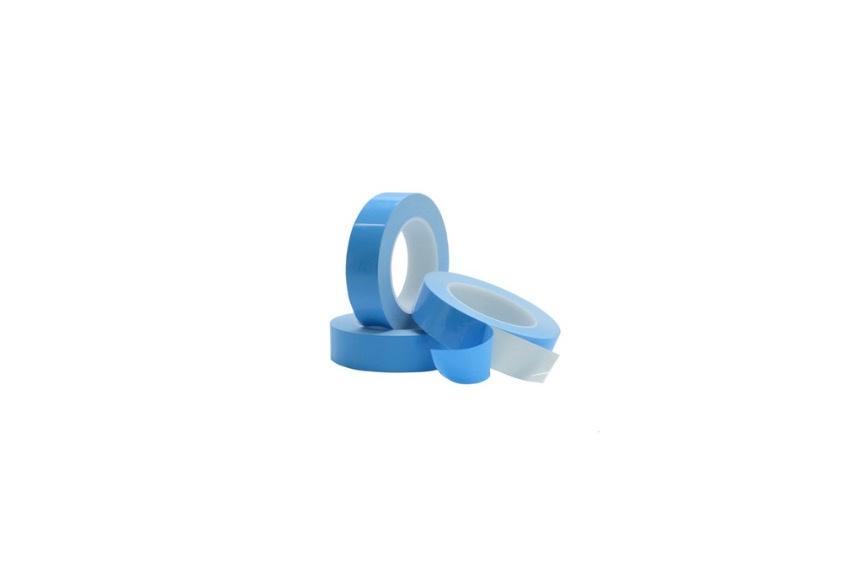
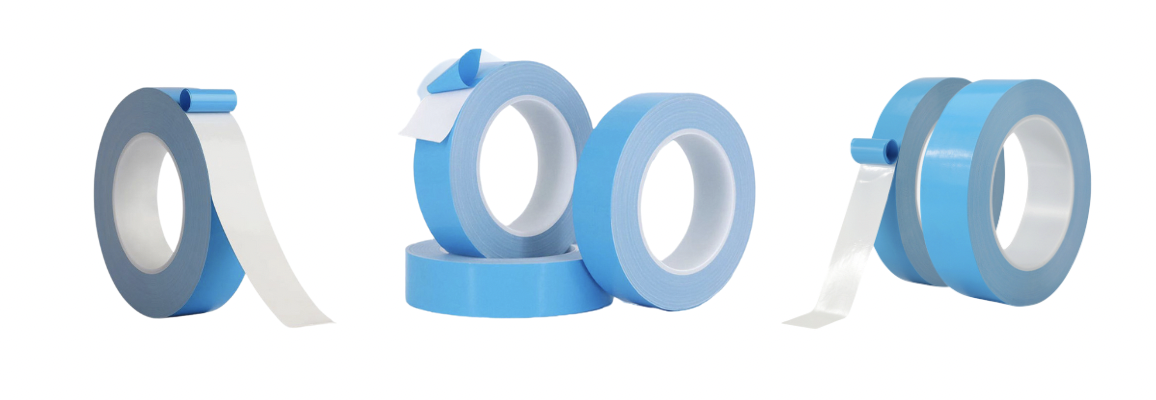
Thermal adhesive tapes are pressure-sensitive, double-sided materials designed to conduct heat while securing components in place. They typically consist of:
A thermally conductive matrix (such as ceramic-filled silicone or acrylic)
Adhesive layers for mechanical bonding
Optional carrier films for dimensional stability
Unlike pastes or gels, these tapes provide precise thickness control, easy handling, and clean assembly, making them ideal for high-volume manufacturing environments.
Core Engineering Factors Affecting Thermal Performance
2.1 Thermal Conductivity
The most fundamental property, thermal conductivity (measured in W/m·K), determines how efficiently heat can pass through the tape.
For power electronics, LED modules, or battery packs, selecting a tape with conductivity above 1.0 W/m·K can significantly reduce thermal resistance and improve overall system reliability.
2.2 Interfacial Contact and Surface Preparation
Even the most conductive tape can perform poorly if air gaps exist between surfaces. Engineers should ensure flat, clean, and properly prepared surfaces to maximize contact area and minimize micro-voids that increase thermal resistance.
2.3 Adhesive Strength and Mechanical Integrity
Adhesive strength directly influences long-term reliability. Under thermal cycling or vibration, inferior tapes may delaminate or lose contact, leading to localized overheating.
A robust thermal tape maintains stable adhesion across a wide temperature range — typically from -40°C to 150°C or higher.
2.4 Electrical Isolation
In assemblies involving conductive metal substrates or high-voltage components, electrical insulation is critical.
Many silicone-based thermal tapes are designed with dielectric strengths above 2.0 kV, providing both safety and performance in compact layouts.
2.5 Thickness and Compressibility
Tape thickness affects both thermal resistance and mechanical compliance.
Thinner tapes (0.1–0.2 mm) minimize thermal path length, while thicker versions (up to 0.5 mm) help fill surface irregularities.
The right balance ensures good contact without mechanical stress on components.
2.6 Aging, Humidity, and Thermal Cycling Resistance
Long-term stability under humidity, temperature fluctuations, and UV exposure is another measure of quality.
High-end thermal tapes maintain over 90% adhesion strength even after prolonged thermal aging or high-humidity storage, ensuring durability in harsh environments.
Application Insights
Thermal adhesive tapes are widely used in:
Power modules and IGBTs — bonding heat spreaders to semiconductor packages
LED lighting systems — securing PCBs to aluminum housings
Battery modules — stabilizing cells and equalizing temperature distribution
Communication devices — dissipating heat from processors or RF components
These tapes simplify assembly while maintaining consistent, repeatable thermal performance across production lines.
Selecting a Reliable Thermal Tape Supplier
Beyond material properties, supplier capability plays a major role in consistent performance.
When evaluating suppliers, engineers should look for:
Proven data from ASTM D5470 thermal resistance testing
Customization options for thickness, carrier type, and release liner
Technical support for sample evaluation and application testing
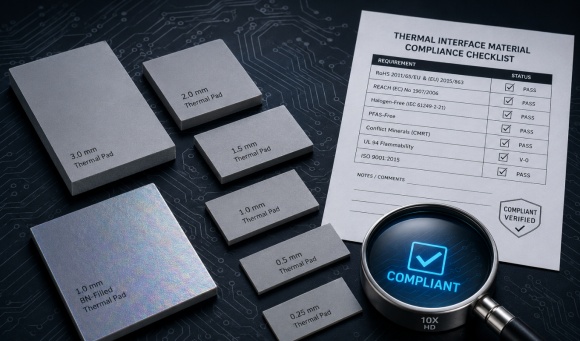
Compliance with RoHS and REACH standards
Partnering with a supplier experienced in heat management materials ensures not only stable tape quality but also optimized performance in your final assembly.
Conclusion
Mastering thermal adhesive tape selection requires more than checking data sheet values — it demands understanding how material composition, surface preparation, and bonding conditions interact in real applications.
When properly chosen and applied, thermal adhesive tapes offer clean assembly, strong adhesion, and dependable heat transfer, making them an indispensable solution for today’s power electronics, LED, and energy systems.