Welcome to Taxo Tape
Improving Thermal Reliability of Battery BMS Electronics with TIM Solutions
Introduction: Why Thermal Reliability Matters in Battery BMS
Battery Management Systems (BMS) play a critical role in ensuring the safe and efficient operation of modern battery systems. Beyond basic functions such as voltage and temperature monitoring, today’s BMS electronics are responsible for cell balancing, current sensing, communication, and system-level protection. As battery packs become larger and more energy-dense, the reliability of these electronic subsystems has become increasingly important.
BMS electronics are widely used across demanding environments, including electric vehicles (EVs), energy storage systems (ESS), and industrial battery applications. In these scenarios, BMS boards are often exposed to elevated ambient temperatures, frequent load changes, and long operating cycles. Unlike laboratory conditions, real-world operation introduces thermal stress that accumulates over time.
Heat-related failures in BMS electronics are often not immediate or obvious. Instead, excessive temperature or repeated thermal cycling can gradually degrade component performance, leading to drift in measurements, intermittent faults, or premature system failure. For this reason, thermal reliability is a key factor in the long-term stability and safety of battery systems, even though it is sometimes underestimated during early design stages.

Typical Thermal Challenges in BMS Electronics
BMS boards integrate multiple heat-generating components within a limited space. Although individual devices may have modest power dissipation, their combined thermal effect can be significant in compact designs.
Common heat sources in BMS electronics include power MOSFETs and balancing resistors, which are actively involved in charge control and cell equalization. DC-DC converters also contribute localized heat due to switching losses, especially under high current conditions. In addition, current sensing components such as shunt resistors or Hall-effect sensors can experience temperature rise that directly affects measurement accuracy.
Space constraints further complicate thermal management. BMS PCBs are often designed to fit within battery enclosures, leaving limited room for airflow or large cooling structures. As a result, heat tends to accumulate unevenly, creating local hot spots rather than a uniform temperature distribution across the board. These localized temperature peaks are particularly challenging, as they may not be detected by system-level thermal monitoring.
Consequences of Poor Thermal Management in BMS
Inadequate thermal management can have both immediate and long-term effects on BMS performance. One of the most critical impacts is on measurement accuracy. Temperature-sensitive components may exhibit drift or noise, leading to unstable voltage or current readings that affect control decisions.
Over time, elevated temperatures accelerate the aging of electronic components. Solder joints, polymer materials, and semiconductor devices all experience reduced lifetime when exposed to sustained thermal stress. This degradation becomes more pronounced under repeated charge-discharge cycles, where expansion and contraction introduce additional mechanical stress.
From a system perspective, poor thermal control increases the likelihood of unexpected failures during operation. In safety-critical battery applications, such failures can pose compliance risks and compromise overall system reliability. As regulatory standards continue to tighten, thermal performance is increasingly linked to qualification and certification requirements.
Why Conventional Cooling Methods Are Often Not Enough
Traditional cooling approaches used in electronic systems are not always suitable for BMS applications. Many battery packs are sealed or semi-sealed for safety and environmental protection, which severely limits the effectiveness of airflow-based cooling.
Heat sinks, while effective in some power electronics designs, are constrained by size, weight, and assembly considerations in compact BMS layouts. In addition, direct attachment of heat sinks to all heat-generating components is often impractical due to PCB geometry and component height variations.
A less visible but equally important issue is the presence of interface gaps. Even when components are placed close to a housing or heat spreader, microscopic air gaps between surfaces create significant thermal resistance. These gaps prevent efficient heat transfer and limit the effectiveness of otherwise well-designed cooling structures.
Role of Thermal Interface Materials (TIMs) in BMS Applications
Thermal Interface Materials (TIMs) address thermal challenges at the interface level, where heat transfer is often most restricted. Their primary function is not to replace cooling structures, but to improve thermal contact between mating surfaces.
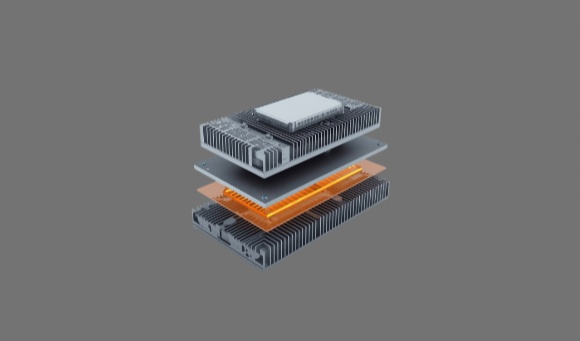
In BMS designs, TIMs help reduce thermal resistance between the PCB and the battery housing, as well as between power devices and heat spreaders. By conforming to surface roughness and compensating for mechanical tolerances, TIMs minimize air gaps that would otherwise act as thermal insulators.
It is important to note that effective thermal management depends not only on the nominal thermal conductivity of a material, but also on contact quality under real assembly conditions. Pressure, surface flatness, and long-term stability all influence how efficiently heat is transferred away from critical BMS components. Understanding this interface behavior is essential for achieving reliable thermal performance in battery systems.
Key TIM Types Used in Battery BMS Electronics
Different thermal interface materials are used in BMS electronics depending on the interface geometry, pressure conditions, and assembly process.
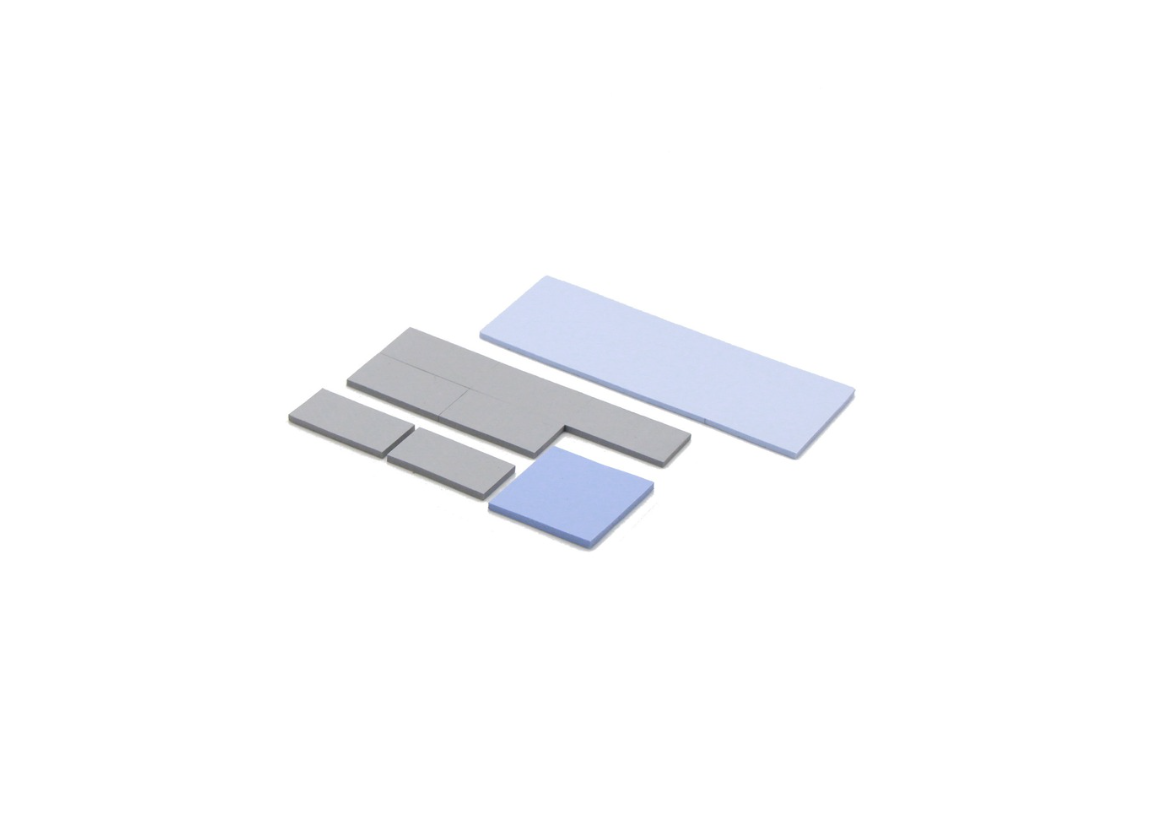
Thermal gap pads are commonly applied between components and the battery housing or heat spreader. Their ability to compress and fill larger gaps makes them suitable for designs with component height variations or mechanical tolerances. In many BMS layouts, gap pads provide a stable and repeatable thermal path from the PCB to the enclosure.
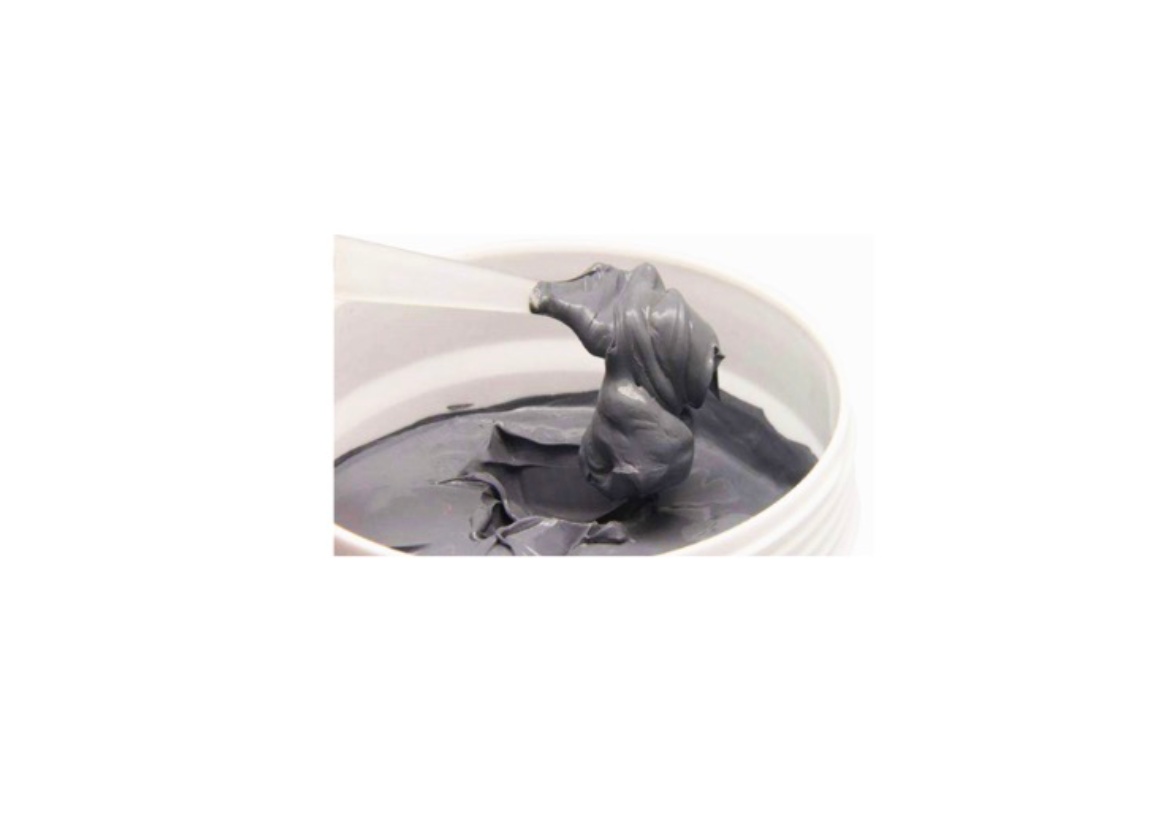
Thermal greases are often selected for interfaces with low contact pressure or highly uneven surfaces. Their fluid-like nature allows them to wet surface irregularities effectively, reducing interfacial thermal resistance. However, grease handling and long-term stability must be carefully considered in battery environments.
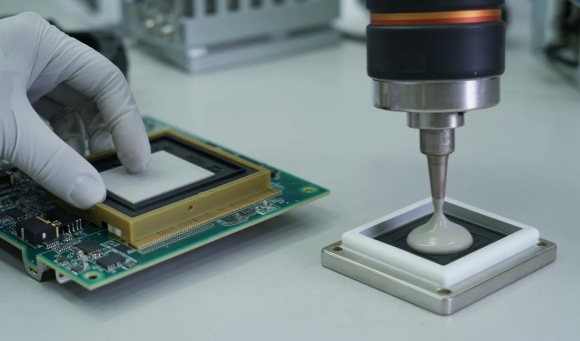
Thermal gels are increasingly used in BMS designs that rely on automated dispensing. These materials combine good conformability with controlled flow behavior, making them suitable for high-volume production. Their resistance to vibration and mechanical stress is particularly valuable in mobile or automotive battery systems.
Another important distinction is whether a TIM provides electrical insulation. Many BMS applications require electrically insulating thermal interface materials to prevent short circuits and ensure safety compliance, while non-insulating options may be used in controlled grounding scenarios.
Selection Considerations for TIMs in BMS Design
Selecting the right TIM for a BMS application involves balancing multiple factors rather than optimizing a single property.
Thermal conductivity is important, but it should be evaluated together with compressibility. A material with slightly lower conductivity may perform better in practice if it achieves better surface contact under realistic assembly pressure.
Electrical insulation and dielectric strength are critical for protecting sensitive electronics and meeting safety standards. TIMs used near high-voltage sections of the BMS must maintain insulation performance throughout the product lifecycle.
Long-term stability under thermal cycling is another key consideration. Battery systems experience repeated heating and cooling, which can lead to material hardening, pump-out, or loss of contact over time if the TIM is not designed for such conditions.
Finally, TIM selection should align with the assembly process. Materials suitable for manual assembly may not be optimal for automated production, and vice versa. Early alignment between thermal design and manufacturing strategy helps avoid later reliability issues.
Application Examples: Where TIMs Improve BMS Reliability
In practical BMS designs, TIMs contribute to thermal reliability across several critical areas.
Power stages on BMS boards, including MOSFETs and driver circuits, benefit from improved heat transfer to the enclosure or heat spreader. Effective thermal coupling helps maintain stable operating temperatures under high load conditions.
Shunt resistors and balancing circuits are another common application. These components generate localized heat that can affect measurement accuracy. Proper use of TIMs helps dissipate heat more evenly and reduces temperature-induced drift.
TIMs also play an important role in improving thermal contact between the PCB and aluminum battery enclosures. By bridging interface gaps, they enable the enclosure to function as an effective heat sink without requiring complex mechanical structures.
Common Mistakes in TIM Selection for BMS Electronics
One common mistake is focusing solely on thermal conductivity values listed in datasheets. Interface performance depends heavily on contact conditions, and high conductivity alone does not guarantee low thermal resistance in real assemblies.
Another frequent oversight is ignoring interface pressure and tolerance stack-up. Variations in PCB flatness, component height, and enclosure geometry can significantly affect TIM performance if not accounted for during material selection.
Using generic thermal materials not designed for battery environments can also lead to issues. Battery systems impose specific requirements related to temperature range, vibration, and long-term reliability that not all TIMs are designed to handle.
Practical Guidelines for Engineers and Designers
Thermal paths should be defined early in the BMS design process, alongside electrical and mechanical considerations. Early planning allows thermal solutions to be integrated rather than added as a corrective measure.
Matching the TIM type to the interface geometry and assembly method is essential. Understanding how a material behaves under compression, shear, and thermal cycling leads to more predictable performance.
Finally, thermal solutions should be validated under real operating scenarios, not only through theoretical calculations. Practical testing helps confirm that the selected TIM supports long-term reliability under actual battery system conditions.
Conclusion: Enhancing BMS Reliability Starts at the Thermal Interface
Thermal reliability is a foundational aspect of BMS performance, influencing measurement accuracy, component lifetime, and overall system safety. While cooling structures and enclosures are important, the thermal interface often determines how effectively heat is transferred away from critical components.
By selecting appropriate thermal interface materials and considering real-world assembly and operating conditions, designers can significantly improve the reliability and lifespan of battery management systems. In many cases, optimizing the thermal interface is a practical and efficient step toward more robust battery electronics.