Welcome to Taxo Tape
Improving Inverter Reliability with Advanced TIMs: What Engineers Should Know
Introduction
Power inverters sit at the heart of many modern systems: from EV traction inverters, to solar string and central inverters, to industrial motor drives in factories. All of them have one thing in common – they must convert electrical power efficiently and reliably, often in compact housings and harsh environments. As switching frequencies and power densities increase, reliability and thermal management have become key design constraints rather than afterthoughts.
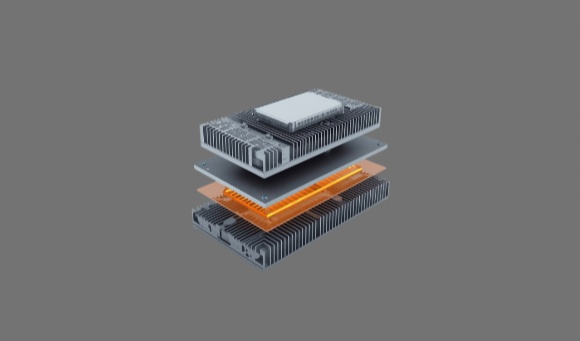
In a typical inverter thermal stack, heat flows from the semiconductor device (IGBT, MOSFET, diode) through the substrate and baseplate, across a Thermal Interface Material (TIM), and finally into the heatsink or cold plate. If the TIM interface is poorly designed, it becomes a hidden bottleneck, raising junction temperatures and shortening lifetime.
This article gives design engineers a practical view of how advanced TIMs can improve inverter reliability. We will look at common failure mechanisms, the role of different TIM technologies, and which material properties are most critical when you want to extend inverter life and reduce field failures.
Thermal Challenges in Modern Inverter Design
Modern inverters are pushed to run faster, smaller, and hotter. Higher switching frequencies reduce passive component size but increase switching losses. At the same time, higher power density and smaller footprints mean less surface area for cooling.
Key heat sources inside inverters include:
IGBTs or MOSFETs in power modules
Freewheeling diodes
DC-link capacitors and busbars
Gate driver and control boards located close to hot components
If thermal management is insufficient, several consequences follow:
Junction temperature rise: exceeding Tj limits accelerates silicon wear-out and can trigger protection events.
Solder fatigue and bond wire lift-off: repeated thermal cycling leads to cracks and delamination.
Derating, unexpected shutdown, or field failures: systems may be forced to operate below their rated power, or fail prematurely in the field.
In many designs, the interface between module baseplate and heatsink is the “silent” problem. Even with a good heatsink and coolant system, high interface resistance (R_th interface) from a poor TIM can undermine the entire thermal design.
Role of TIMs in Inverter Reliability
From Junction to Heatsink – Where TIMs Act
The TIM is typically placed between the power module baseplate (or DCB substrate) and the heatsink or liquid-cooled plate. Its job is to wet and fill microscopic gaps and machining marks, replacing air (a very poor conductor) with a thermally conductive layer.
By reducing interfacial resistance, TIMs directly improve the junction temperature margin. Even a small reduction in total R_th from junction to heatsink can lower Tj by several degrees under full load, which can significantly extend component lifetime and keep the design inside its safe operating area.
Impact on Key Failure Mechanisms
Better-performing TIMs help mitigate several critical failure mechanisms in inverters:
Lower temperature swings (ΔTj) → reduced thermo-mechanical fatigue in solder layers and bond wires.
More uniform temperature distribution across chips and modules → fewer hotspots and more balanced current sharing.
Improved lifetime of power semiconductors and solder joints → fewer cracks, lower risk of delamination, and better long-term stability.
In short, the right TIM does not just “cool better”; it slows down wear-out inside the power module and surrounding interconnects.
Types of TIMs Used in Inverters
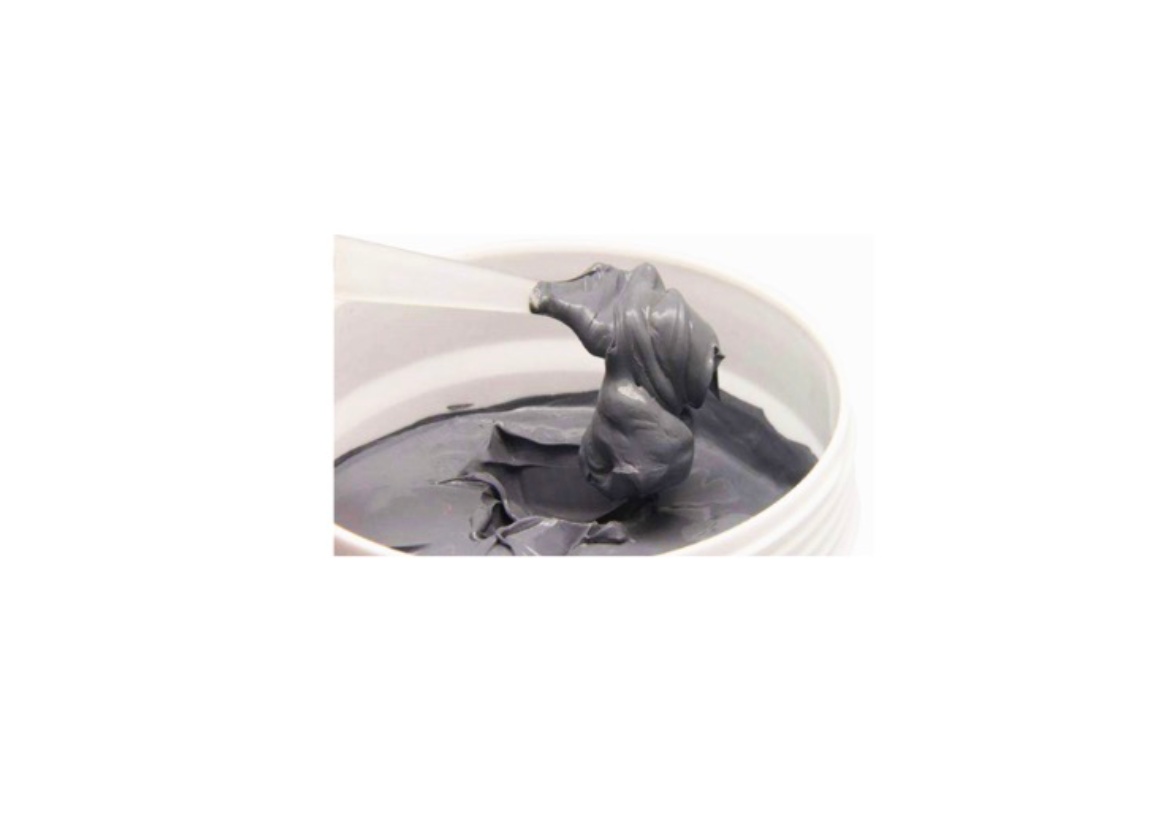
Thermal Grease
Pros:
Very low initial thermal resistance due to thin BLT and good wetting.
Easy to use in prototypes and small series, adjustable coverage.
Cons:
Prone to pump-out, dry-out, and contamination over time.
Long-term stability is limited, especially under cycling and vibration.
Requires careful application and often maintenance or rework in long-life systems.
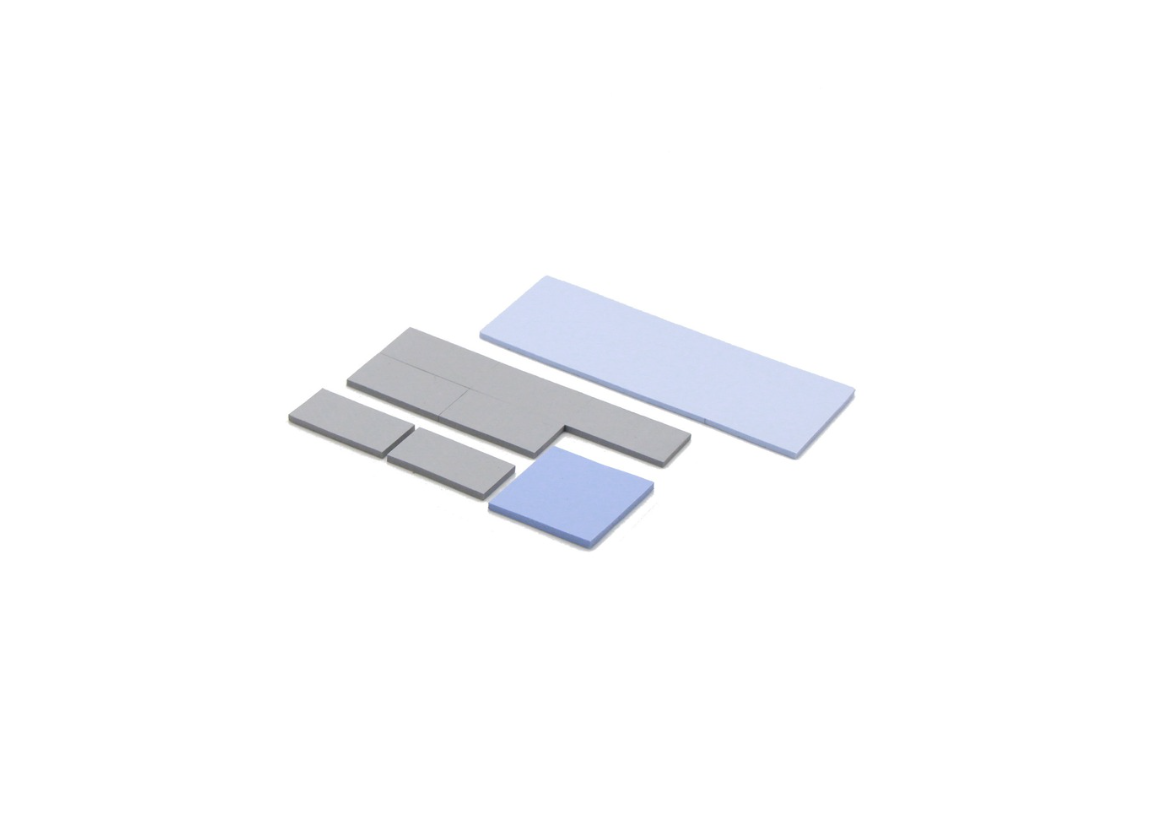
Thermal Gap Pads
Pros:
Easy handling: pre-cut shapes, simple placement.
Good for varying gaps and tolerances, especially between baseplate and heatsink.
Cons:
Limited thermal conductivity (k) compared with advanced gels or PCMs.
Compression set over time may increase BLT and resistance.
At low pressure, BLT remains higher, which limits performance.
Phase-Change Materials (PCMs)
Pros:
Solid at room temperature, then melt and flow slightly during operation → very low contact resistance.
Stable after cycling, resistant to pump-out and dry-out.
Clean application, minimal mess compared to grease.
Cons:
Higher material cost than traditional greases or pads.
Often require good surface preparation (flatness, cleanliness) to maximize benefit.
Thermal Gel / Gap Filler
Pros:
Dispensable, ideal for automated production lines.
Can cover large areas and complex geometries; good for modules with uneven surfaces.
Cons:
Requires strict process control (dispense pattern, volume, curing) to avoid voids.
Risk of bleeding or settling if not properly formulated or processed.
Emerging Advanced TIMs
High-k filled elastomers, graphite-based solutions, and hybrid stacks (e.g., pad + graphite layer) are gaining attention.
Trends include:
Silicone-free formulations for sensitive environments or contamination concerns.
Higher thermal conductivity to support ultra-high power density inverters.
Improved reliability under aggressive cycling and vibration profiles.
Key Properties That Affect Inverter Reliability
Thermal Conductivity and Thermal Impedance
Many engineers focus on thermal conductivity (k), but k alone is not enough. The real-world performance is governed by total thermal impedance, which includes:
Material conductivity
Bond line thickness (BLT)
Contact resistance at both surfaces
A TIM with moderate k but very thin, stable BLT and low contact resistance can outperform a high-k material applied too thick or with poor contact. Even a small reduction in R_th from the module to the heatsink can lower junction temperature by several degrees, which directly increases power cycling capability and system lifetime.
Pump-Out, Dry-Out, and Bleed
Pump-out: material gradually moves out of the interface due to thermal cycling and vibration.
Dry-out: volatiles or oils evaporate, leaving a less conductive residue.
Bleed: low-viscosity components migrate, contaminating nearby surfaces.
These effects increase interface resistance over time and are especially critical in inverters that run for tens of thousands of hours. Advanced TIMs are formulated to minimize these phenomena, maintaining stable performance over the product’s life.
Mechanical Compliance and Vibration Resistance
Inverters often experience vibration, shock, and mechanical stress, especially in EVs and industrial drives. TIMs must be soft and conformable enough to:
Absorb tolerances and differential expansion between baseplate and heatsink
Avoid transferring excessive mechanical stress to solder joints, ceramics, or PCBs
A TIM that is too stiff can amplify mechanical stresses, while a very soft but unstable TIM may creep or pump out. The right balance of compliance and stability is essential for long-term reliability.
Electrical Insulation and Safety Margins
High-voltage inverters demand safe and robust insulation between live parts and grounded heatsinks or cooling plates. TIMs with electrical insulation must provide:
Adequate dielectric strength and breakdown voltage
Stable performance under thermal cycling, humidity, and mechanical compression
Their insulation performance must be considered together with creepage and clearance distances and the overall insulation coordination strategy. Advanced insulating TIMs help designers meet safety standards without compromising thermal performance.
Design and Integration Considerations
Surface Preparation and Flatness
The best TIM in the world cannot compensate for poor surface quality. The baseplate of the power module and the heatsink or cold plate often carry machining marks, warpage, and surface roughness that create micro-gaps and local air pockets. These defects drive up contact resistance and reduce the effective thermal performance of the interface.
Good inverter practice includes:
Controlling planarity of both baseplate and heatsink.
Specifying reasonable roughness (Ra/Rz) limits in drawings.
Cleaning surfaces to remove oil, dust, and oxide flakes before TIM application.
Improving flatness and cleanliness helps the TIM wet the surface better, resulting in fewer voids and lower interface resistance.
Application Method and Process Control
How a TIM is applied is just as important as which material is selected. Common application methods include:
Screen printing: good for greases and pastes, controlled patterns and thickness.
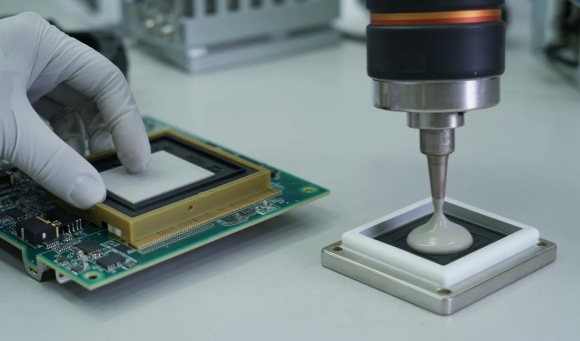
Dispensing: ideal for gels and gap fillers, flexible for different module sizes.
Stamping / laminating: used for films, PCMs, and pads in pre-defined shapes.
Pre-cut pads: simple placement with minimal process variables.
Across mass production, you need consistent bond line thickness (BLT) and uniform coverage. Under-application leads to voids and hotspots; over-application can cause squeeze-out, contamination, or increased BLT.
Inline process controls—such as weight checks, vision systems, thickness gauges, or pressure monitoring—help detect defects early and ensure that every inverter leaves the line with a reliable thermal interface.
Matching TIM to Inverter Cooling Concept
The optimal TIM also depends on the cooling architecture:
Air-cooled heatsinks: often have larger temperature swings and lower overall cooling capacity, making low-impedance, stable TIMs important to keep Tj under control.
Liquid-cooled plates: enable lower baseplate temperatures, but any high interface resistance will waste the benefit of the liquid system.
Module design also matters:
Baseplate modules can tolerate softer, conformable TIMs to absorb tolerances.
Baseplate-less modules often demand more careful control of pressure and compliance to protect fragile substrates.
For single-sided cooling, the TIM is usually between the baseplate and heatsink. In double-sided cooling (e.g., advanced EV inverters), TIMs are required on both sides, which increases the importance of mechanical compliance and long-term stability. Matching TIM behavior to the chosen cooling concept avoids surprises later in validation.
Testing and Qualification of TIMs for Inverter Use
Thermal Cycling and Power Cycling Tests
To understand how a TIM behaves in real life, it must be tested under realistic inverter profiles. Thermal cycling (T_min ↔ T_max) and power cycling (on/off load with defined ΔTj) reveal:
Changes in thermal resistance over time
Susceptibility to pump-out, cracking, or void growth
Interaction between TIM, baseplate, and heatsink under mechanical stress
This kind of testing gives engineers confidence that the material will remain stable over the entire design lifetime.
Standardized Measurements
Standard thermal impedance setups (often based on ASTM-style methods, e.g., similar to ASTM D5470) are used to measure the initial and aged thermal resistance of TIMs under controlled pressure and temperature.
By tracking thermal resistance drift over many hours or cycles, engineers can build lifetime curves and determine how much design margin is required. A material that starts slightly higher in R_th but remains stable can be more reliable than one that begins very low but degrades quickly.
System-Level Validation
No qualification is complete without system-level testing in real inverters. This includes:
Monitoring junction temperature via thermocouples, TSEP methods, or built-in monitoring features.
Identifying and tracking hotspot locations and ΔT across modules.
Comparing measurement data with simulation results to refine models and increase confidence in the design.
This correlation ensures that the chosen TIM not only looks good in lab tests, but also performs under real switching patterns, vibrations, and ambient conditions.
Case Example: Upgrading TIM to Extend Inverter Lifetime
Consider a legacy industrial inverter that uses conventional thermal grease between the power module baseplates and the heatsink. Over time, field data shows:
Rising junction temperatures under the same load
Increased rate of failures linked to solder fatigue and module degradation
Root cause analysis points to grease pump-out and dry-out, especially after long-term cycling.
The design team decides to switch to an advanced PCM or high-stability gap filler with higher thermal stability and lower risk of pump-out. After requalification:
Junction temperature at full load drops by several degrees Celsius.
ΔTj during cycling is reduced, easing thermo-mechanical stress on solder joints.
Lifetime predictions improve, and field returns decrease, allowing less conservative derating and more robust operation.
The lesson: a targeted TIM upgrade can solve reliability issues without redesigning the entire cooling system.
Practical Selection Tips for Design Engineers
You should start considering a move from conventional grease to advanced TIMs when:
Power density increases and thermal margins become tight.
Expected lifetime is long (EV/rail/industrial drives running for many years).
Maintenance access is limited or expensive.
Vibration and cycling profiles are harsh.
A practical checklist includes:
Power density and allowed max junction temperature.
Expected lifetime and typical operating profile.
Maintenance strategy – sealed for life vs. serviceable.
Assembly method – manual vs. fully automated.
Working closely with TIM suppliers can be a big advantage. Ask for:
Real test data under conditions similar to your inverter design.
Samples for your own cycling and system-level testing.
Design support, including recommendations on pressure, BLT, and application methods.
Conclusion
In modern power electronics, advanced TIMs are no longer just accessories—they are a core part of inverter reliability engineering. The right material, correctly integrated, can lower junction temperatures, reduce thermal cycling stress, and significantly extend the lifetime of power modules.
Integrating TIM choice early into both thermal and mechanical design avoids late surprises, reduces redesign loops, and helps meet ambitious efficiency and reliability targets.
Looking ahead, the industry is moving toward higher-k, silicone-free, and application-specific TIMs tailored for EV traction inverters, solar inverters, and industrial drives.
Now is a good time for engineers to review existing designs, critically assess the behavior of their current TIMs, and consider targeted TIM upgrades as a straightforward and cost-effective way to gain reliability and performance.