Welcome to Taxo Tape
How to Select Thermal Tapes for Heat Management in Industrial and Power Applications
Introduction
In modern industrial and power electronics, efficient heat management is essential to maintain stable performance and prevent thermal failure. Components such as power modules, inverters, and LED drivers often generate high heat during continuous operation. To manage this effectively, engineers rely on thermal interface materials (TIMs)—and among them, thermal tapes are one of the most practical options.
Thermal tapes combine strong bonding and effective heat transfer in one material, offering a clean, reliable solution compared to greases or mechanical clamps. This article explores how to select the right thermal tape for your industrial or power application to ensure consistent performance and long-term reliability.
Understanding What Thermal Tapes Do
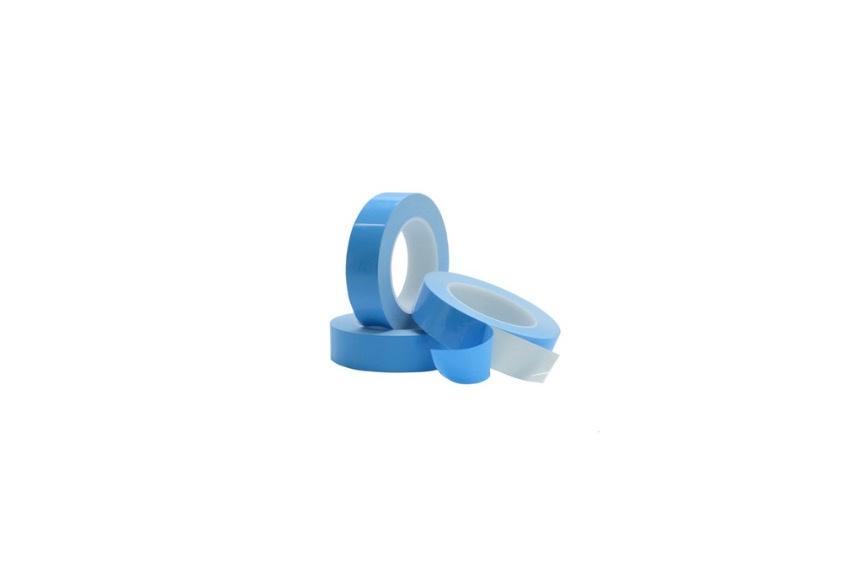
Thermal tapes are pressure-sensitive adhesive materials designed to attach components to heat sinks, housings, or cooling plates while allowing heat to pass through efficiently.
Their main functions include:
Thermal conduction: transferring heat from electronic components to the cooling structure.
Mechanical bonding: replacing screws, clips, or liquid adhesives for easier assembly.
Electrical insulation: preventing short circuits in conductive environments.
This combination of properties makes them ideal for industrial electronics, LED modules, and power conversion systems.
Key Parameters to Evaluate
Thermal Conductivity
This measures how efficiently heat moves through the tape. It is usually expressed in watts per meter-kelvin (W/m·K).
Low-power systems: 0.5–1.0 W/m·K is generally sufficient.
High-power systems: 1.5–3.0 W/m·K ensures better temperature uniformity and prevents local hot spots.
Higher conductivity materials often have ceramic or graphite fillers for superior heat spreading.
Adhesion Strength
Adhesion is crucial for ensuring long-term stability, especially under vibration or high-temperature conditions.
Peel strength shows how well the tape holds under tension.
Shear strength indicates its resistance to sliding forces.
Choose a tape that maintains adhesion after thermal aging and humidity exposure.
Electrical Insulation
In power systems, electrical safety is as important as heat transfer. Select tapes with strong dielectric strength (usually above 5 kV) to ensure insulation between conductive surfaces such as aluminum housings and circuit boards.
Thickness and Conformability
The tape thickness affects both bonding quality and thermal resistance.
Thin tapes (0.1–0.2 mm): suitable for smooth, flat interfaces.
Thicker tapes (0.3–0.5 mm): ideal for filling surface irregularities or bonding rough substrates.
Flexible tapes conform better to uneven surfaces, ensuring full contact and consistent performance.
Benefits of Using Thermal Tapes in Industrial Heat Management
Simplified Assembly
Thermal tapes eliminate the need for curing, clamping, or messy dispensing. They support fast, clean, and repeatable installation, which improves production efficiency.
Improved Reliability
A stable adhesive layer maintains continuous thermal contact over time, even under thermal cycling, vibration, and environmental stress.
Lightweight and Space-Efficient
Thermal tapes replace mechanical fasteners and bulky thermal pads, reducing total weight and freeing up design space—ideal for compact or portable equipment.
Enhanced Safety
For high-voltage systems, the combination of thermal conductivity and electrical insulation helps maintain both thermal control and electrical protection.
Common Applications in Power and Industrial Systems
Thermal tapes are widely used across multiple industries and power devices:
LED lighting: bonding PCBs to heat sinks for consistent brightness and extended lifespan.
Power inverters and converters: attaching MOSFETs, IGBTs, and rectifiers to metal housings.
Battery modules: bonding cells or BMS components to cooling plates for heat dissipation.
Telecom power supplies: stabilizing thermal performance in enclosed environments.
These applications demonstrate how one simple material can enhance reliability and manufacturing efficiency across diverse sectors.
Practical Selection Tips for Engineers
When choosing a thermal tape, consider the following:
Define the target operating temperature range and expected heat load.
Identify substrate materials (aluminum, copper, plastic) for compatibility testing.
Request sample evaluation under real conditions—especially for peel and thermal cycling tests.
Ensure the tape meets UL, RoHS, or automotive-grade certifications if required by your industry.
Testing in the early design phase ensures the chosen tape meets both thermal and mechanical requirements in long-term operation.
Conclusion
Selecting the right thermal tape for industrial and power applications requires careful evaluation of thermal conductivity, adhesion strength, insulation, and environmental durability. When properly matched, thermal tapes can significantly improve heat dissipation, simplify assembly, and enhance the overall reliability of high-power systems.
As power electronics continue to advance, thermal tapes will remain a key enabler for efficient and compact heat management solutions across industries.