Welcome to Taxo Tape
How to Optimize Thermal Management in Compact Electronic Devices
Introduction: Why Thermal Management Becomes Critical in Compact Electronics
Over the past decade, electronic devices have become smaller, thinner, and more functionally integrated than ever before. From power modules and LED drivers to communication equipment and embedded systems, designers are expected to deliver higher performance within increasingly compact electronic devices. This trend toward miniaturization inevitably leads to higher power density, making thermal management a critical design challenge rather than a secondary consideration.
As component sizes shrink and circuit layouts become denser, heat generated by ICs, power semiconductors, LEDs, and batteries has fewer paths to escape. When heat is not managed effectively, compact devices are more vulnerable to temperature-related failures. Common consequences include reduced electrical performance, accelerated material aging, shortened product lifespan, and long-term reliability risks such as solder fatigue or component drift.
Thermal issues rarely appear immediately during early testing. In many cases, they emerge after prolonged operation, higher ambient temperatures, or real-world usage conditions—when redesign is already costly. For this reason, thermal management challenges in compact electronics must be addressed early and systematically.
This article focuses on practical approaches to optimizing thermal performance in limited spaces. Rather than relying on oversized heatsinks or complex cooling systems, we will explore realistic strategies that combine material selection, interface optimization, and thermal path design to improve heat dissipation without increasing device size.
Key Thermal Challenges in Compact Device Design
Designing thermal solutions for compact electronic devices involves a unique set of constraints that differ significantly from larger systems.
Limited space for heat dissipation is often the most obvious challenge. Compact enclosures restrict the size of heatsinks, reduce surface area for heat spreading, and limit airflow paths. Designers are forced to work within tight mechanical boundaries, where every millimeter matters.
At the same time, heat flux continues to increase. High-power components such as MOSFETs, IGBTs, processors, and high-brightness LEDs generate substantial heat over very small footprints. This concentration of thermal energy increases local temperatures and places greater demands on thermal interfaces.
Many compact devices also operate in restricted airflow or fully enclosed environments. Fanless designs, sealed housings, and IP-rated enclosures are common in industrial, lighting, and outdoor applications. In these cases, convection is minimal, and heat must be transferred efficiently through solid materials to the enclosure or ambient environment.
Another often overlooked issue is thermal interaction between closely packed components. When heat sources are placed near one another, localized hot spots can overlap, raising overall system temperatures and reducing the effectiveness of individual cooling solutions. Without careful thermal path planning, improvements in one area may unintentionally worsen conditions elsewhere.
Understanding Heat Transfer Paths in Compact Electronics
Effective thermal management starts with understanding how heat moves through a compact electronic system.
Heat is typically generated by active components such as ICs, power modules, LEDs, and batteries. Once generated, this heat must travel from the component junction to the surrounding environment through a combination of conduction, convection, and radiation. In compact electronics, conduction is usually the dominant heat transfer mechanism due to limited airflow and enclosed structures.
Small enclosures significantly constrain convection and radiation. As a result, the efficiency of conductive heat paths—from the heat source, through interface materials, into heat spreaders, housings, or frames—becomes critical. Any weakness along this path increases thermal resistance and raises operating temperatures.
Minimizing junction-to-ambient thermal resistance is therefore a key design objective. Even small improvements at material interfaces can lead to meaningful temperature reductions, especially when multiplied across multiple components or extended operating periods. This is where material choice and interface design play a decisive role.
Material Selection: The Foundation of Efficient Thermal Management
4.1 Thermal Interface Materials (TIMs) in Space-Constrained Designs
In compact assemblies, surfaces are rarely perfectly flat. Microscopic air gaps between components and heat spreaders can dramatically reduce heat transfer efficiency. Thermal interface materials (TIMs) are used to eliminate these air gaps and lower contact thermal resistance.
Several types of TIMs are commonly used in compact electronic devices, each with its own advantages and limitations:
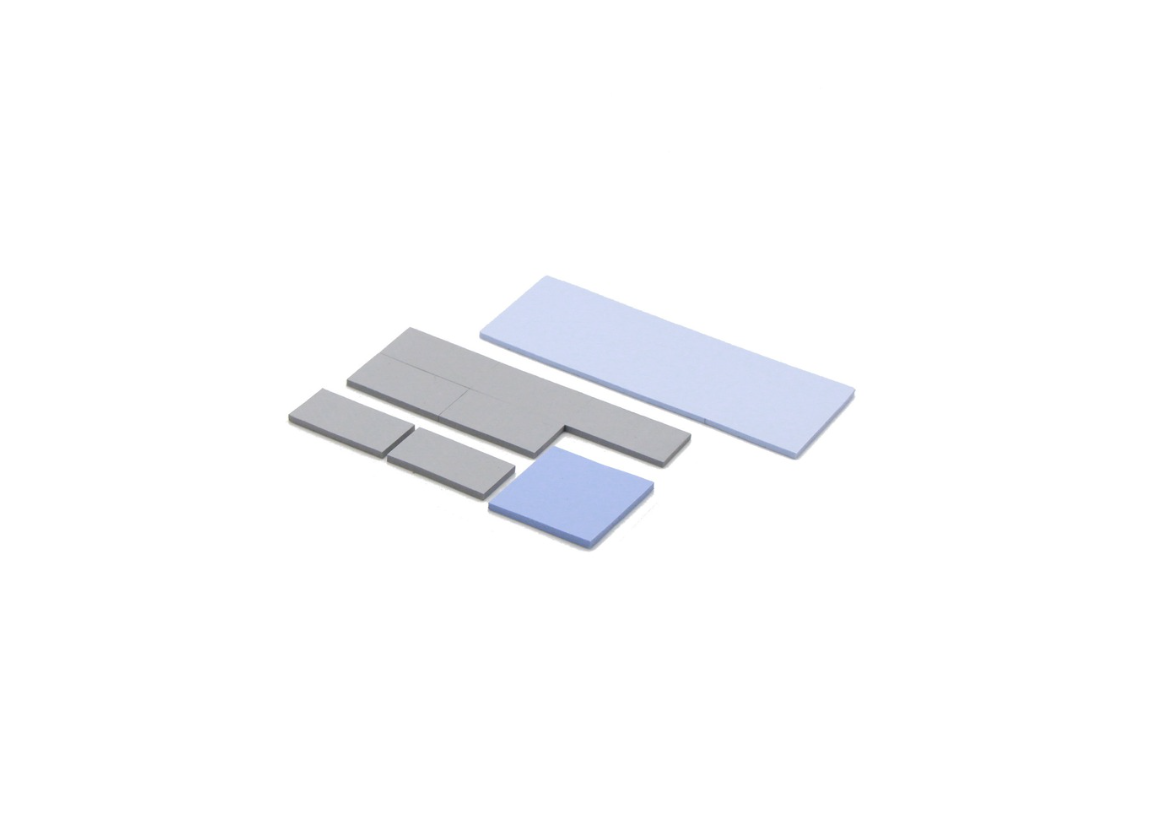
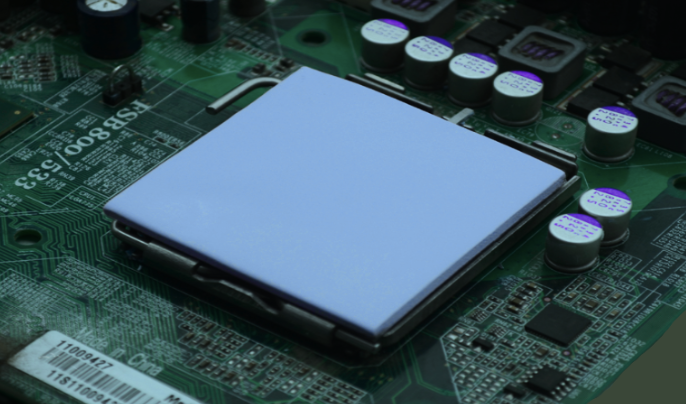
Thermal pads offer clean handling, consistent thickness, and electrical insulation. They are widely used where assembly speed and reliability are important.
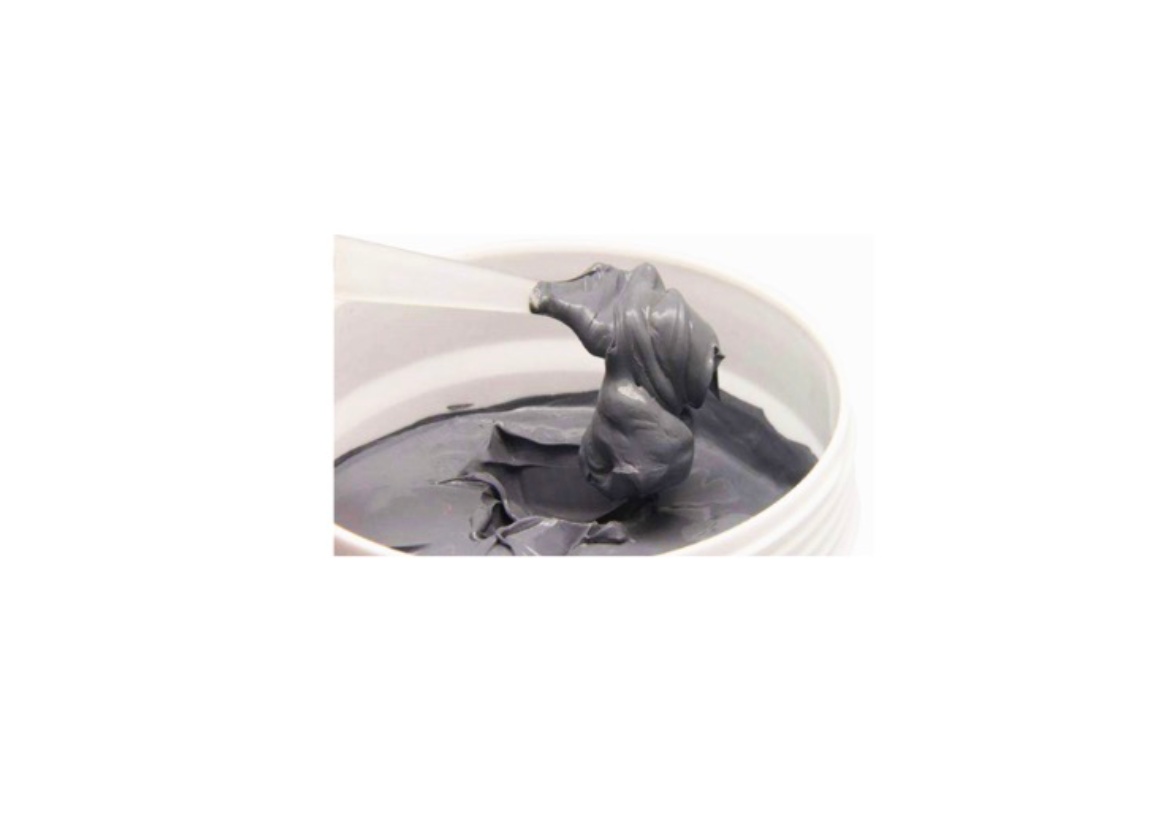
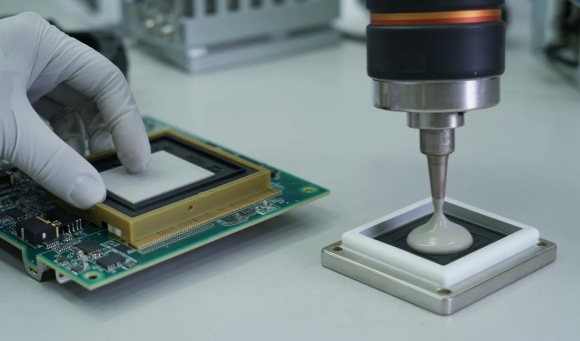
Thermal greases or pastes provide excellent surface wetting and low thermal resistance, but may present challenges related to pump-out or long-term stability.
Thermal gap fillers are designed for larger gaps and tolerance variations, especially where components are not perfectly aligned.
Phase change materials (PCMs) behave like solids at room temperature and soften at operating temperatures, improving interface contact without flowing like grease.
Selecting the right TIM depends on space constraints, assembly conditions, operating temperature, and long-term reliability requirements rather than thermal conductivity alone.
4.2 Key Material Properties to Consider
In compact electronics, thermal conductivity must be balanced with compressibility. A very high-conductivity material may perform poorly if it cannot conform to surface irregularities or accommodate mechanical tolerances.
Thickness control is another critical factor. Excessively thick materials increase thermal resistance, while overly thin materials may fail to bridge gaps consistently in mass production. Precise thickness selection helps maintain both thermal performance and mechanical integrity.
Long-term reliability should not be underestimated. Issues such as pump-out, dry-out, and material volatility can degrade thermal performance over time, particularly in devices exposed to thermal cycling or elevated temperatures. Stable materials with proven aging performance are often more valuable than marginal gains in initial conductivity.
Design Strategies for Optimizing Thermal Performance
Optimizing thermal management in compact devices requires a system-level approach rather than isolated fixes.
One of the most effective strategies is reducing thermal resistance at interfaces. Improving contact quality between heat sources, TIMs, and heat spreaders often delivers greater benefits than increasing heatsink size.
Designers must also balance mechanical tolerance with thermal efficiency. Real-world assemblies involve variations in flatness, pressure, and alignment. Materials and structures should be selected to perform reliably across these variations, not just under ideal conditions.
Where space is limited, thin, high-performance materials can provide efficient heat transfer without increasing stack height. In many cases, optimizing material placement and interface pressure yields better results than adding more thermal mass.
Finally, it is important to avoid over-design. Adding excessive thermal solutions can increase cost, weight, and assembly complexity without proportional thermal benefit. A well-optimized compact design focuses on efficient heat paths, appropriate materials, and realistic operating conditions.
Managing Heat Without Increasing Device Size
In compact electronic devices, increasing heatsink size or adding active cooling is often not an option. Effective thermal management therefore depends on making better use of existing space and structures.
One common approach is the use of thermally conductive yet electrically insulating materials. These materials allow heat to be transferred efficiently while maintaining electrical safety, making them suitable for direct contact with power components, PCBs, and metal housings.
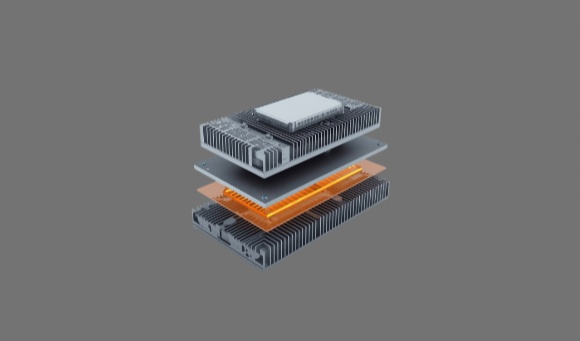
Another effective strategy is integrating thermal paths into existing mechanical structures. Device housings, metal frames, and internal brackets can serve as heat spreaders when designed with thermal conduction in mind. By guiding heat toward these structures, designers can improve overall dissipation without adding extra components.
In some cases, combining thermal and functional materials provides additional benefits. For example, materials that offer both thermal conductivity and EMI absorption can address multiple design challenges simultaneously. This multifunctional approach is especially valuable in space-constrained systems where every layer must serve a purpose.
Common Thermal Management Mistakes in Compact Devices
Despite careful design efforts, several common mistakes continue to limit thermal performance in compact electronics.
One frequent issue is relying solely on heatsinks without optimizing thermal interfaces. Even the most efficient heatsink cannot perform well if heat transfer from the component to the heatsink is restricted by poor surface contact or unsuitable interface materials.
Another mistake is selecting materials based only on datasheet thermal conductivity. Laboratory values do not always reflect real-world performance, especially when factors such as surface flatness, assembly pressure, and long-term aging are involved.
Ignoring assembly pressure and tolerance variations can also lead to inconsistent thermal results in mass production. A material that performs well under ideal pressure conditions may fail to maintain contact when mechanical variations are introduced.
Finally, underestimating long-term thermal aging effects can compromise reliability. Pump-out, dry-out, or material hardening over time may gradually increase thermal resistance, even if initial test results appear acceptable.
Application Examples of Compact Electronics Thermal Optimization
Thermal optimization strategies vary depending on application requirements, operating environments, and power density levels. Understanding these differences is essential for selecting appropriate materials and solutions.
In power electronics modules, efficient heat transfer is critical to maintain electrical stability and extend component lifespan. Thin, conformable interface materials are often used to manage high heat flux while accommodating mechanical tolerances.
LED lighting and driver systems face challenges related to continuous operation and elevated junction temperatures. Here, stable thermal paths and long-term material reliability play a key role in maintaining lumen output and color consistency.
For communication and networking devices, compact layouts and multiple heat sources often create localized hot spots. Thermal solutions must balance heat spreading, electrical insulation, and sometimes EMI considerations within limited space.
In consumer and industrial embedded systems, thermal requirements vary widely depending on duty cycle and ambient conditions. Application-based material selection helps ensure that thermal solutions are matched to real operating scenarios rather than theoretical performance alone.
How Early Thermal Planning Improves Product Reliability
Incorporating thermal considerations early in the design process can significantly improve product reliability and development efficiency.
Early thermal planning allows designers to identify potential hot spots and thermal bottlenecks before mechanical layouts are finalized. This reduces the need for late-stage design changes that can increase cost and delay time to market.
It also enables faster validation and fewer redesign cycles, as thermal solutions are evaluated alongside electrical and mechanical requirements rather than treated as an afterthought.
From a manufacturing perspective, early thermal optimization leads to greater product consistency in mass production. Materials and interfaces that tolerate assembly variations help ensure stable thermal performance across large production volumes.
Conclusion: Practical Steps Toward Better Thermal Management
Optimizing thermal management in compact electronic devices requires more than adding cooling components. It involves understanding heat transfer paths, minimizing thermal resistance at interfaces, and selecting materials that perform reliably under real-world conditions.
Matching thermal solutions to specific application requirements is essential. Factors such as space constraints, operating temperature, assembly tolerances, and long-term reliability should all be considered together rather than in isolation.
By evaluating thermal management holistically and integrating it early in the design process, designers can achieve better performance, improved reliability, and more robust compact electronic products.
FAQ
How do you improve heat dissipation in small electronic devices?
Heat dissipation can be improved by optimizing thermal interfaces, using thermally conductive materials, and integrating heat paths into existing structures such as housings or frames. Reducing thermal resistance is often more effective than increasing heatsink size.
What is the best thermal interface material for compact electronics?
There is no single “best” material. The optimal choice depends on gap size, assembly pressure, electrical requirements, operating temperature, and long-term reliability. Application-based evaluation is essential.
Why do compact devices overheat more easily?
Compact devices typically have higher power density, limited airflow, and restricted heat dissipation paths. These factors make efficient thermal design and material selection especially important.