Welcome to Taxo Tape
How to Improve Heat Dissipation in Compact LED Drivers with TIMs
Introduction
LED drivers are the backbone of modern lighting systems, regulating current and ensuring stable operation across applications such as street lighting, architectural illumination, and consumer products. As lighting technology continues to demand higher efficiency in increasingly compact designs, thermal management has become one of the most pressing engineering challenges.
Compact LED drivers, while space-saving, create a natural bottleneck for heat dissipation. With less room for heatsinks and airflow, the thermal stress on sensitive electronic components rises significantly. If not properly managed, this can compromise both performance and product lifetime.
This article explores how Thermal Interface Materials (TIMs) can effectively manage heat in compact LED drivers. By improving heat transfer pathways, TIMs offer engineers practical solutions for enhancing system stability and reliability.
Thermal Challenges in Compact LED Drivers
Miniaturization in LED driver design brings with it several heat-related issues. The combination of high power density and limited PCB space results in concentrated thermal loads that are difficult to dissipate.
Key components such as MOSFETs, control ICs, and capacitors are particularly vulnerable to heat buildup. Elevated temperatures accelerate material degradation, cause electrical drift, and reduce overall system efficiency.
If left unaddressed, these thermal challenges can lead to:
Reduced luminous efficiency, as LEDs lose brightness at higher junction temperatures.
Shortened lifespan, due to accelerated wear of both electronic and optical components.
System failure, where overheating pushes the driver beyond its design tolerance.
Why Thermal Interface Materials Are Essential
Traditional cooling methods alone are often insufficient for compact LED drivers. This is where Thermal Interface Materials (TIMs) play a decisive role. Acting as a thermal bridge, TIMs fill microscopic air gaps between heat-generating components and their cooling surfaces, such as heatsinks, chassis, or enclosures.
By eliminating these voids, TIMs reduce thermal resistance and enable more efficient heat flow away from critical parts. The result is lower operating temperatures, even under high load conditions.
The benefits of integrating TIMs in LED driver design include:
Stable performance, with consistent output across varying operating environments.
Extended lifetime, as lower temperatures slow down material fatigue and component aging.
Reduced maintenance, minimizing early replacements and warranty claims.
In short, TIMs provide a cost-effective and reliable solution for meeting the thermal demands of compact LED driver systems.
Types of TIMs Suitable for LED Driver Applications
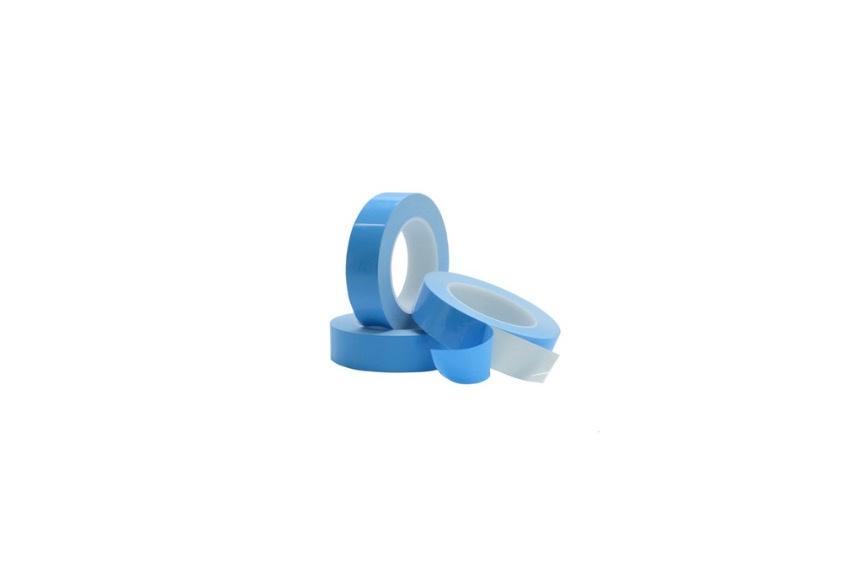
Different LED driver designs require different approaches to thermal management, and the choice of Thermal Interface Material (TIM) depends on performance, assembly, and reliability needs. Below are the most common TIM options for compact LED driver applications:
Thermal Pads
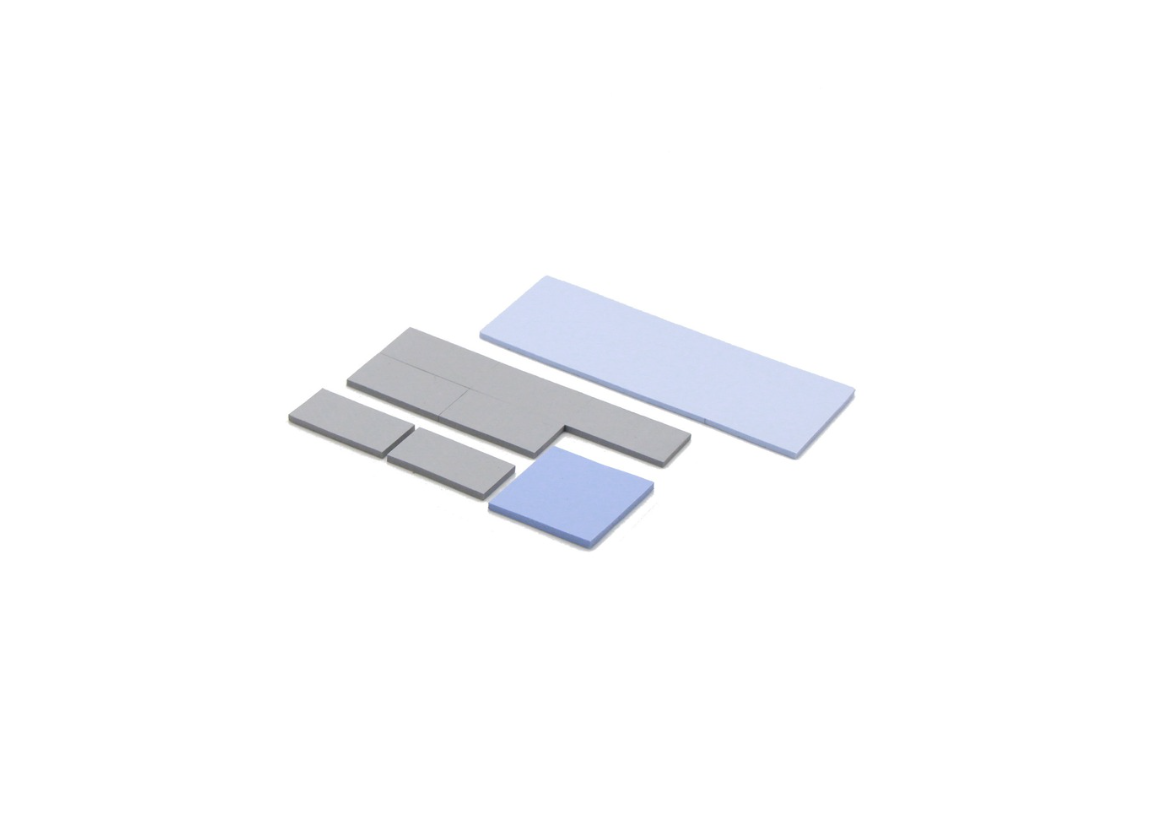
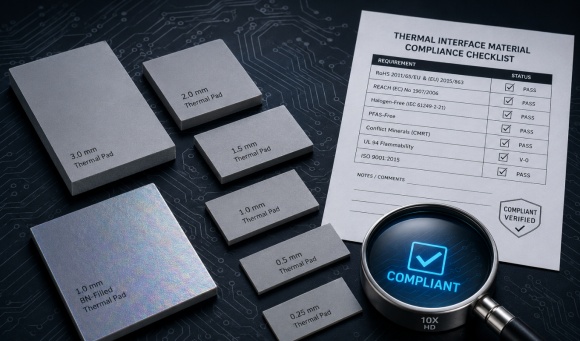
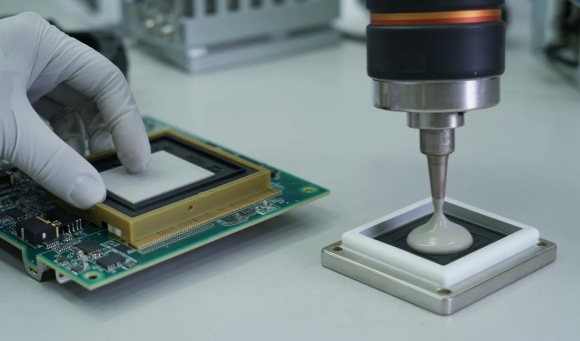
Pre-formed gap fillers that are easy to assemble and provide consistent coverage. They also offer electrical isolation, making them ideal for components that require both thermal and dielectric protection.Thermal Grease / Paste
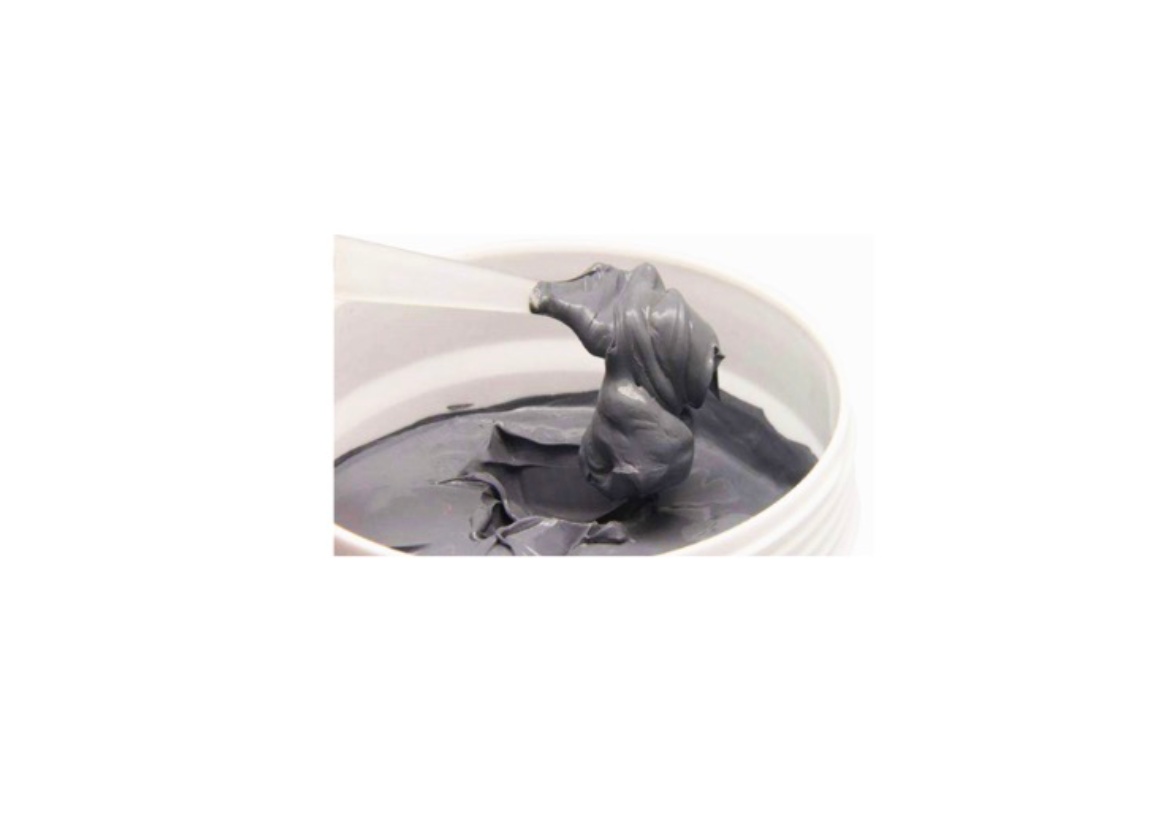
A highly conformable material that fills even the smallest surface irregularities, ensuring excellent wetting and low thermal resistance. It is commonly used where surfaces are rough or uneven, although careful application is needed during assembly.Phase Change Materials (PCM)
These materials remain solid at room temperature for ease of handling, but soften when heated, allowing them to flow and create a reliable long-term thermal interface. They are especially useful in applications requiring stability over long operational lifetimes.Graphite Sheets
Offering exceptionally high in-plane thermal conductivity, graphite sheets are effective in spreading heat across larger surface areas. They are particularly well-suited for ultra-thin LED driver designs where space constraints limit traditional cooling methods.
Selecting the right TIM requires balancing thermal performance with manufacturability, cost, and long-term reliability under real operating conditions.
Case Example: TIM Application in a Compact LED Driver
Background
A compact LED driver designed for architectural and street lighting applications faced repeated failures in field tests. Engineers found that the power IC near the output stage was consistently overheating during extended operation in high ambient temperatures.
Thermal Issue Identified
Although the driver used a standard aluminum housing for heat dissipation, microscopic air gaps between the IC and the enclosure limited heat transfer. This caused local hot spots, raising the junction temperature beyond recommended limits.
TIM Solution Applied
To solve this problem, the engineering team selected a 0.5 mm thermal gap pad with a conductivity of 3 W/m·K. The material was chosen for its ease of assembly, compressibility, and ability to provide both thermal conduction and electrical isolation.
Testing Results
After implementing the TIM solution:
Junction temperatures of the power IC were reduced by 12–15°C under peak load.
The LED driver maintained stable operation in ambient conditions above 50°C.
Reliability testing showed a significant reduction in component stress and extended system lifetime.
This case highlights how properly selected TIMs can transform compact LED drivers from thermally vulnerable designs into reliable, long-lasting solutions.
Best Practices for Engineers and Designers
When integrating TIMs into compact LED driver designs, a few best practices can ensure reliable results:
Select TIMs based on system design, not just datasheet values
Real-world performance depends on factors such as surface flatness, pressure, and thermal cycling. Engineers should validate TIMs under actual operating conditions rather than relying solely on catalog specifications.Consider assembly process and manufacturability
A TIM that offers high conductivity but is difficult to apply may slow production or introduce inconsistencies. Ease of handling, reworkability, and compatibility with automation are critical to smooth manufacturing.Evaluate long-term reliability under thermal cycling and humidity
Compact LED drivers often operate in challenging environments. Ensuring the TIM maintains performance over years of exposure to heat, moisture, and repeated load changes is essential to product durability.
Conclusion
Thermal Interface Materials are vital enablers for efficient thermal management in compact LED drivers. By improving heat dissipation and protecting sensitive components, TIMs help ensure stable operation, higher efficiency, and longer system life.
For engineers and procurement teams, the message is clear: investing in the right TIM solution is not just a material choice—it is a strategy for product reliability and customer satisfaction. Exploring optimized TIM solutions today can prevent costly failures tomorrow.
FAQ
Why do LED drivers overheat in compact designs?
Limited space restricts airflow and heatsink capacity, leading to higher thermal stress on power components.
What type of TIM is most suitable for LED drivers?
Thermal pads are often preferred for their ease of use and electrical isolation, but pastes, PCMs, or graphite sheets may be better for specific designs.
How can TIMs extend the lifespan of LED lighting systems?
By reducing junction temperatures, TIMs slow component degradation, ensuring consistent performance over time.
Can the same TIM be used for both LED drivers and LED modules?
In some cases, yes—but the optimal choice depends on design requirements, power levels, and assembly constraints.