Welcome to Taxo Tape
How to Cut Graphite Sheet – A Practical Guide for Engineers and Manufacturers
Introduction
Graphite sheets have become a go-to material in thermal management applications due to their excellent in-plane thermal conductivity, low thermal resistance, and high temperature stability. These materials play a vital role in space-constrained, high-efficiency electronics where managing heat effectively is essential.
Cutting graphite sheets properly is essential to maintain performance, ensure precise fitment, and minimize material waste. Improper cutting can lead to frayed edges, material breakage, or dimensional inaccuracies—all of which can compromise thermal performance and increase assembly time or cost.
Custom-cut graphite sheets are commonly used across multiple industries, including:
Consumer Electronics – for smartphones, tablets, and laptops to dissipate localized heat
Battery Packs – in electric vehicles (EVs) and energy storage systems (ESS) for thermal insulation and conduction
LED Lighting Systems – to manage junction temperature and extend lifespan
Automotive & Power Electronics – where high power density demands reliable thermal solutions
Understanding Graphite Sheet Material
Before cutting, it's important to understand what type of graphite sheet you are working with. Not all graphite materials behave the same during processing.
Types of Graphite Sheets
Natural Graphite Sheets: Made from compressed natural graphite flakes, these offer good thermal conductivity and are relatively brittle.
Synthetic Graphite Sheets: Engineered for consistency and purity, synthetic sheets provide high conductivity and better mechanical strength.
Expanded Graphite Sheets: These have a more flexible structure and are often used in gaskets or sealing applications. They tend to be softer but may shed particles when cut.
Key Material Properties
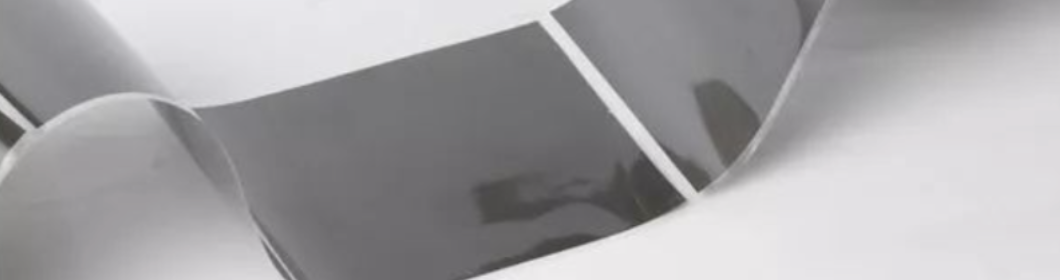
High Thermal Conductivity: Particularly in the XY (in-plane) direction, often exceeding 1500 W/m·K in premium synthetic variants.
Flexibility: Thin graphite sheets can be bent or curved, but thicker or reinforced sheets may be more rigid.
Brittleness: Graphite is inherently fragile, especially when thin or untreated, and can crack or flake during rough handling or improper cutting.
Surface Treatments
To enhance handling and durability, many graphite sheets include surface reinforcements or adhesives:
PET or PI Reinforcement Films: Improve mechanical strength and prevent tearing or delamination during processing.
Adhesive Backing: Common in die-cut thermal pads or EMI shielding gaskets; requires special attention during cutting to avoid adhesive gum-up or edge lifting.
Understanding these material characteristics is the foundation for selecting the right cutting method, which will be discussed in the next sections.
Common Challenges When Cutting Graphite Sheets
Cutting graphite sheets may seem straightforward, but the material’s physical characteristics can present several challenges:
Flaking or Cracking: Graphite’s brittle nature—especially in thin, natural forms—can lead to edge chipping or flaking during cutting, reducing the material's structural integrity and appearance.
Particle Contamination: In cleanroom or sensitive electronic environments, graphite dust or particles generated during cutting can become a serious contamination risk.
Maintaining Tight Tolerances: High-performance applications often require cuts with tight dimensional accuracy. Inconsistent cutting methods can lead to gaps, poor fitment, or reduced thermal efficiency.
Adhesive Layer Damage: When cutting adhesive-backed graphite sheets, improper tools or pressure may stretch, distort, or separate the adhesive layer, compromising the bonding function.
Recognizing and addressing these challenges is key to achieving optimal performance in the final thermal interface application.
Tools and Methods for Cutting Graphite Sheet
Manual Cutting
Tools: Utility knife, razor blade, precision scalpel
Best for: Simple, small-quantity tasks or quick prototyping
Tips: Use a cutting mat and metal ruler to guide straight lines; apply even pressure to avoid tearing or uneven edges.
Die Cutting
Advantages: Excellent for high repeatability, clean shapes, and medium to high production volumes
Material Compatibility: Works well with both reinforced and non-reinforced graphite sheets
Applications: Often used for producing thermal pads, EMI gaskets, or custom-shaped inserts
Laser Cutting
Benefits: Offers high precision, programmable designs, and clean edges with minimal mechanical stress
Considerations:
May create a heat-affected zone that alters material properties on the cut edge
Requires fume extraction due to vaporized graphite or adhesive
Best for: Complex shapes, rapid prototyping, or thin reinforced graphite sheets
CNC Cutting
Strengths: Ideal for thicker or multi-layered graphite composites where tight tolerances and complex contours are needed
Common Uses: EV battery insulation panels, inverter interface parts, or heat spreader substrates
Plotter Cutting
Advantages: Low setup cost, suitable for short-run samples and iterative development
Best with: Thin graphite sheets, especially adhesive-backed types
Applications: R&D testing, small-batch customization, and fast design revisions
Best Practices for Clean and Precise Cutting
Regardless of the tool or method, following these best practices can help ensure optimal results:
Stabilize the Material: Secure the graphite sheet during cutting to prevent shifting or warping, especially with soft or flexible substrates.
Use Sharp, Maintained Blades: Dull blades increase the risk of frayed edges, uneven cuts, and material stress.
Control Dust and Particles: Conduct cutting in a dust-controlled area or under localized extraction if contamination is a concern.
Pre-Test for Delamination: Especially with adhesive-backed or laminated graphite, conduct a test cut to ensure clean separation without peeling or bubbling.
Stack Cutting Thin Sheets: For higher throughput, consider stacking thin sheets (if allowable) during die or plotter cutting to increase efficiency.
Choosing the Right Cutting Method for Your Application
Selecting the most suitable cutting method depends on a few key factors that affect both the quality and efficiency of the end product:
Sheet Thickness
Thinner sheets (≤0.2mm) can often be cut with manual tools or plotters, while thicker or multi-layered graphite requires CNC or die cutting.
Volume of Production
For low-volume or prototyping, manual, plotter, or laser cutting is often sufficient. For mass production, die cutting or CNC machining provides consistent, scalable results.
Tolerance Requirements
Applications like EV battery modules or power electronics often require tight tolerances. CNC and laser cutting are preferred when dimensional accuracy is critical.
Surface Treatment (Adhesive or Reinforced Backing)
Adhesive-backed graphite sheets are more prone to delamination or edge distortion, so gentler methods like plotter or precision die cutting are ideal. Reinforced sheets may require more robust tools like CNC or a laser.
Outsource vs. In-House Cutting
If your production line lacks cleanroom conditions, cutting expertise, or high-precision machinery, outsourcing to a professional converter or die-cutting service ensures better yield, lower material waste, and reduced labor time.
FAQs About Cutting Graphite Sheets
Q1: Can I cut graphite sheets at home?
Yes, for small-scale, thin graphite sheets without adhesives, you can use a sharp utility knife and a cutting mat. However, be aware of dust, edge chipping, and dimensional inconsistency.
Q2: Will laser cutting damage the sheet?
Laser cutting can provide clean edges and high precision, but may cause minor heat-affected zones—especially on non-reinforced sheets. Proper fume extraction and parameter control minimize damage.
Q3: How do I cut adhesive-backed graphite sheets without damaging the adhesive?
Use low-pressure cutting methods like plotter cutting or kiss-cut die cutting. Avoid excessive heat or stretching forces that could separate or deform the adhesive layer.
Q4: What's the difference between CNC and die cutting for graphite?
CNC cutting: Ideal for complex shapes, thick or multilayer materials, and tight tolerances; suitable for both prototyping and volume runs.
Die cutting: Cost-effective for high-volume, consistent parts with less complex geometry; initial tooling is required.
Conclusion
Cutting graphite sheets accurately and efficiently is critical to ensuring their thermal performance, mechanical stability, and cost-effectiveness.
From simple utility knives to high-precision CNC and laser systems, the choice of method depends on your application’s requirements. Consider factors like material type, surface treatment, production volume, and required tolerances when planning your cutting process.
Final Tips:
Always test before full production.
Maintain cutting tools and cleanliness.
Work with experienced converters when precision or scalability is essential.
By using the right tools and techniques—or partnering with a trusted supplier—you can minimize waste, improve product fit, and ensure optimal thermal management performance.