Welcome to Taxo Tape
How to Choose the Right Thermally Conductive Tape for Electronic Devices
Introduction
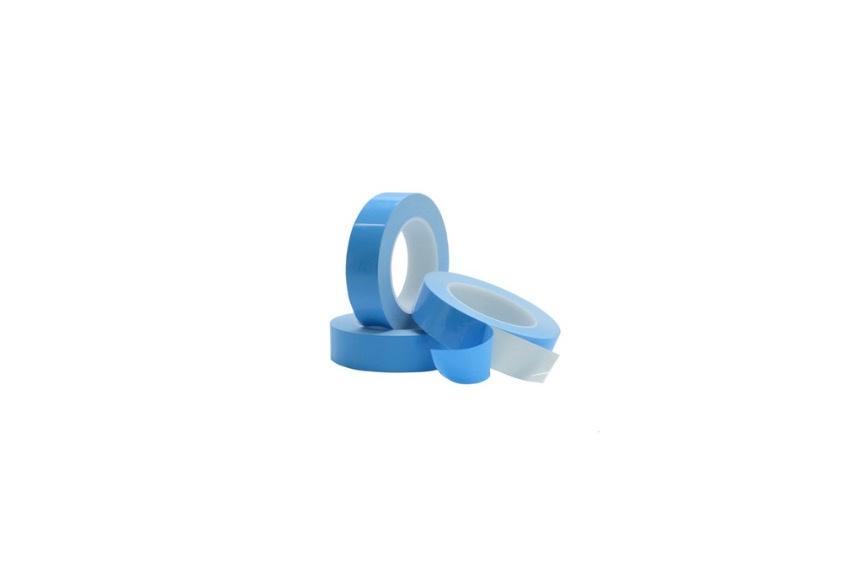
As electronic devices become smaller and more powerful, heat management has turned into one of the biggest design challenges. Thermally conductive tapes are now widely used to bond components while efficiently transferring heat away from critical areas. However, not all thermal tapes perform the same way. Selecting the right one can directly impact the stability, lifespan, and safety of your products.
This guide explains the key parameters engineers should consider when choosing thermally conductive tape for electronic assemblies.
Understand Your Application Requirements
Before selecting any thermal material, start with a clear understanding of your application’s thermal and mechanical needs.
Operating temperature: Know the maximum and continuous working temperatures of your device.
Surface types: Check if the surfaces are rough, smooth, metal, or plastic.
Bonding pressure and assembly process: Some tapes perform better under higher compression or specific application methods.
Defining these basics helps narrow down the tape options that meet your project requirements.
Thermal Conductivity: Balancing Heat Flow and Design
Thermal conductivity is one of the most important performance indicators. It defines how effectively the tape can transfer heat from a component to its heat sink.
Low power devices (e.g., sensors, control boards): 0.5–1.0 W/m·K is usually sufficient.
High power modules (e.g., LEDs, MOSFETs, batteries): 1.5 W/m·K or higher ensures better temperature control.
When comparing data sheets, remember that higher conductivity often comes with trade-offs in flexibility or adhesion, so balance performance with processability.
Adhesion Strength and Long-Term Reliability
Strong bonding is essential to prevent delamination and maintain consistent thermal contact. Evaluate:
Peel strength: Resistance to separation under stress or vibration.
Shear strength: Holding capability between vertical or heavy components.
Aging resistance: Ability to maintain adhesion after long-term exposure to heat and humidity.
Industrial-grade thermal tapes typically use acrylic or silicone adhesives designed to stay stable under temperature cycling.
Electrical Insulation and Safety Considerations
In many electronic devices, components are mounted onto metal housings or conductive heat sinks. Using a thermally conductive yet electrically insulating tape prevents short circuits and ensures user safety.
For high-voltage or power electronics, check the tape’s dielectric breakdown voltage (usually rated in kV).
For signal or low-voltage applications, thinner insulating layers can be acceptable to enhance heat transfer.
Always verify insulation requirements during the design stage to avoid costly redesigns later.
Thickness and Conformability
The right thickness allows the tape to fill microscopic surface gaps without creating excessive thermal resistance.
Thin tapes (0.1–0.2 mm): Suitable for smooth, flat surfaces.
Thicker tapes (0.3–0.5 mm or above): Better for uneven or textured surfaces.
Flexible tapes also help absorb mechanical stress and vibration, improving reliability under temperature cycling.
Ease of Processing and Automation Compatibility
In modern mass production, the assembly method can determine overall efficiency.
Die-cutting capability: Choose tapes that can be pre-cut to fit specific component shapes.
Reworkability: Some tapes allow repositioning during assembly.
Automation: Roll-form tapes are ideal for robotic or continuous lamination processes.
Selecting a tape compatible with your manufacturing workflow saves both time and cost.
Typical Applications in Electronics
Thermally conductive tapes are used across a range of devices:
LED lighting modules – bonding PCBs to aluminum substrates.
Battery systems – attaching cells to cooling plates.
Power supplies and inverters – connecting power semiconductors to heat sinks.
Telecom and industrial controllers – stabilizing thermal performance in enclosed environments.
Each application demands a specific combination of conductivity, adhesion, and insulation.
Conclusion
Selecting the right thermally conductive tape for electronic devices requires balancing thermal performance, mechanical reliability, electrical safety, and manufacturing efficiency. A careful evaluation of your application’s real-world conditions ensures consistent performance and long-term product stability.
By understanding these selection factors, engineers can make informed choices that enhance device reliability and reduce maintenance costs—creating more efficient and durable electronic systems.