Welcome to Taxo Tape
TIM Selection for High-Temperature Electronics
Introduction
Standard TIM selection guidance generally assumes a moderate, well-controlled operating temperature — the kind of environment most consumer and light industrial electronics actually see. That assumption breaks down for automotive motor controllers sitting next to an engine bay, industrial power supplies running continuous duty in unventilated enclosures, or LED drivers sealed inside outdoor fixtures under direct summer sun. In these applications, the operating temperature itself becomes a primary selection constraint, not a secondary consideration checked after conductivity and thickness are already decided.
This matters because elevated temperature doesn't just test whether a material survives — it actively degrades several of the properties that make a TIM effective in the first place, often at a rate most engineers underestimate. This guide covers what "high temperature" actually means for TIM selection, how heat degrades different material types differently, and the specific criteria worth weighing before specifying a material for a genuinely hot operating environment.
What "High Temperature" Actually Means for TIM Selection
"High temperature" isn't a single threshold — different points on the temperature scale correspond to different material behavior changes, and knowing where your application falls matters more than the label itself.
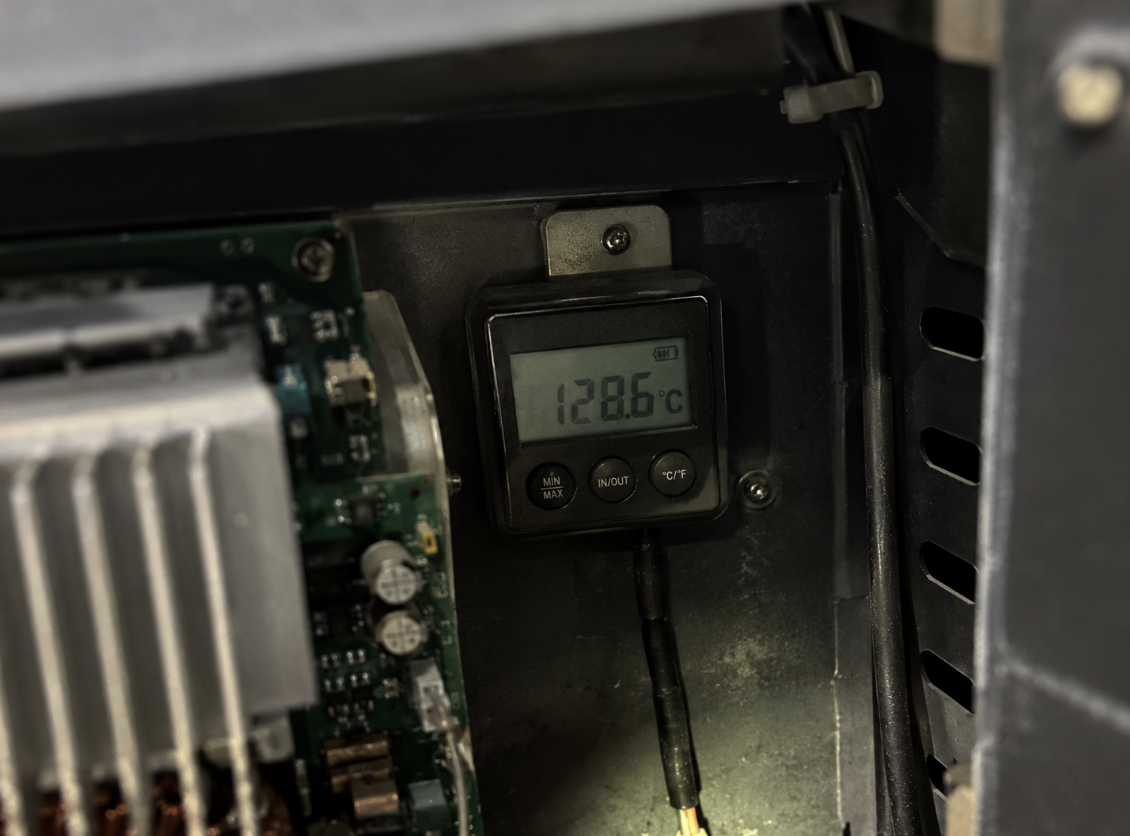
Below roughly 85°C, most standard silicone-based TIMs operate well within their comfort zone, with minimal accelerated aging. Between 85°C and 125°C — the range many industrial power electronics and automotive applications actually run at continuously — standard formulations remain viable but aging rates start to matter for long service life targets, and this is typically where "high-temperature" selection considerations first become relevant rather than optional. Above 125°C to 150°C, standard commodity greases and lower-grade pads begin showing meaningfully accelerated degradation, and formulation choice starts to matter significantly. Above 150°C, and especially approaching 200°C, only specifically formulated high-temperature grades — often with different base chemistry or enhanced filler systems — remain suitable, and material selection at this range requires supplier-specific high-temperature data rather than general commodity specifications.
Knowing which of these bands your application actually operates in — not just its peak transient temperature, but its sustained operating condition — is the first step that determines how much extra scrutiny the material selection process needs.
How Elevated Temperature Degrades TIM Performance
Heat doesn't just test a TIM's stability — it actively drives several distinct degradation mechanisms, and understanding which ones apply to your material type shapes what to check before specifying it.
Accelerated chemical aging follows a well-established pattern in polymer-based materials: as a general rule for many silicone-based formulations, each 10°C increase in sustained operating temperature roughly doubles the rate of chemical aging reactions — the same Arrhenius-type relationship covered in more depth in Why Thermal Grease Fails: Aging, Pump-Out & How to Prevent It. This means a material qualified at 85°C can degrade meaningfully faster at 105°C or 125°C, even when the datasheet lists the same nominal maximum operating temperature.
Compression set — permanent thickness loss under sustained compressive load — worsens as temperature rises, since elevated temperature accelerates the polymer relaxation that drives this failure mode. A pad that shows negligible compression set at room temperature can lose a meaningful fraction of its original thickness after extended service at 125°C or higher, directly increasing bond line thickness and thermal resistance over the product's life.
Volatilization and oil separation accelerate with temperature in both greases and silicone pads. Higher sustained temperature drives off low-molecular-weight components faster, which is part of why low-volatility formulations matter more in high-temperature sealed enclosures than in cooler, better-ventilated designs.
Material-by-Material High-Temperature Performance
Different TIM types tolerate elevated temperature to meaningfully different degrees, and generic "high-temperature" claims on a datasheet deserve scrutiny against these baseline patterns.
Silicone-based thermal pads generally offer the widest standard operating range among common TIM types, with many commercial grades rated to 150–200°C continuous, and specialty formulations extending further. Their performance ceiling in practice is usually set by compression set behavior at sustained high temperature rather than an abrupt failure point.
Thermal greases and pastes show more variation by base chemistry. Standard silicone-based greases typically handle continuous operation up to 150–180°C, while metal-particle-filled formulations can extend somewhat higher but carry their own volatility considerations. Grease is generally the TIM type most sensitive to accelerated aging at elevated temperature, given its reliance on a flowable oil phase.
Phase change materials need their activation temperature specifically verified against the application's operating profile — a PCM with a 45–65°C phase transition needs to reliably reach that range during normal operation to deliver its intended performance, and its upper continuous operating limit should be confirmed separately from the transition temperature itself.
Graphite sheets hold up notably well at elevated temperature relative to polymer-based TIMs, since graphite itself doesn't undergo the same chemical aging processes — making it a relevant option for heat-spreading duty in high-temperature designs, though it still requires a separate interface material at the direct contact point rather than serving as a standalone solution.
Thermal Conductivity Drift at Elevated Temperature
A property that gets less attention than it deserves: a material's thermal conductivity isn't necessarily constant across its operating temperature range. Some formulations show measurable conductivity drift as temperature rises — in some cases improving slightly as certain polymer matrices soften and improve filler-to-filler contact, in others declining as thermal expansion increases the spacing between conductive filler particles within the material.
The practical implication is that a conductivity value measured at room temperature during standard characterization may not represent performance at your application's actual sustained operating temperature. For high-temperature applications with a tight thermal budget, request conductivity or thermal resistance data measured at your actual operating temperature, or at minimum ask whether the supplier has characterized temperature-dependent behavior — many datasheets report only a single room-temperature value without indicating whether it's stable across the material's full rated range.
Selection Criteria Specific to High-Temperature Applications
Standard TIM selection weighs conductivity, thickness, and electrical insulation as largely fixed properties. At elevated sustained temperature, several of these properties need to be evaluated as functions of temperature rather than single static values.
Electrical insulation can degrade at elevated temperature in some formulations, since dielectric breakdown voltage and volume resistivity are themselves temperature-dependent properties for many polymer systems. For high-voltage applications operating continuously above 100°C, confirm insulation performance is specified at your actual operating temperature, not just at room temperature.
Mechanical properties — hardness, compressibility, elastic recovery — shift with sustained heat exposure, which affects how well a material maintains contact pressure over time. A pad that's appropriately soft and conformable at installation can become measurably stiffer after months at elevated temperature, changing its effective performance at the interface even if the bulk material hasn't failed outright.
Operating temperature range margin deserves more scrutiny than the raw datasheet number suggests. A material rated to 150°C doesn't necessarily perform identically at 100°C and 145°C — request aged property data near the upper end of your actual operating range rather than assuming linear, uniform performance across the full rated span.
Application Scenarios Where High-Temperature TIM Selection Is Critical
A handful of application types push TIM selection into genuinely high-temperature territory as a matter of course. Automotive and EV motor controllers and inverters operate in engine bay or drivetrain-adjacent environments where ambient conditions alone can exceed 100°C before accounting for the component's own heat generation. Industrial power supplies in unventilated or outdoor enclosures face similar combined thermal loading — enclosure heating plus internal component dissipation, with limited convective relief. Sealed outdoor LED drivers present a related but distinct challenge, where internal enclosure temperatures commonly reach 90–120°C at the hottest interfaces during peak summer operation, covered in more depth in TIM Selection for Outdoor LED Drivers: Sealed Enclosure Requirements.
Each of these scenarios shares a common thread: the TIM operates at meaningfully elevated sustained temperature for the product's full service life, not just during occasional peak load — which is exactly the condition where the degradation mechanisms covered in section 3 accumulate into real performance loss.
Testing and Validation for High-Temperature Applications
Confirming a TIM actually performs at your target operating temperature — rather than assuming a datasheet's rated maximum guarantees stable long-term behavior — requires specific validation data beyond standard initial characterization.
Request aged thermal resistance data measured after extended exposure at or near your actual operating temperature — commonly 500 to 1,000+ hours at elevated temperature for higher-reliability applications, similar to the aging protocols covered in Why Your TIM Datasheet Doesn't Match Real Performance. Request compression set data specifically at your operating temperature rather than a generic room-temperature or single elevated-temperature reference point, since compression set at 85°C and 150°C can differ substantially for the same material. And where the application involves a sealed enclosure, confirm outgassing behavior at the actual sustained temperature, since volatilization rates that are negligible at moderate temperature can become meaningful at higher sustained conditions. For the broader supplier qualification process this data collection fits into, see How to Validate a TIM Supplier.
Common Mistakes in High-Temperature TIM Selection
Relying on room-temperature conductivity alone. As covered in section 5, conductivity isn't necessarily stable across a material's full temperature range — a value measured at standard lab conditions may not represent behavior at your actual sustained operating temperature.
Confusing maximum rated temperature with stable long-term performance. A material rated to 150°C hasn't necessarily been characterized for multi-year stability at that temperature — the rated maximum often reflects short-term survival rather than long-term aging behavior, which is why aged property data matters more than the headline temperature spec.
Ignoring compression set until it shows up as a field failure. Because compression set accumulates gradually and worsens with sustained heat, its effects — increasing bond line thickness, rising thermal resistance — often aren't visible until well into a product's service life, by which point correcting the design is far more expensive than specifying the right material upfront.
FAQ
Q: At what temperature does a TIM selection actually require special high-temperature consideration?
As a general guideline, sustained operation above roughly 100–125°C is where standard commodity TIM specifications start to warrant extra scrutiny — below that range, most standard formulations perform adequately with normal aging expectations. Always verify against your specific material's datasheet and, where available, supplier aging data at your actual operating temperature rather than relying on a general threshold.
Q: Which TIM type generally has the highest temperature tolerance?
Graphite sheets tend to hold up best at sustained elevated temperature since they don't undergo the same polymer-based chemical aging as silicone or grease formulations, though they require a separate interface material at the direct contact point. Among polymer-based options, high-temperature silicone pad formulations generally outperform standard greases for long-term stability at sustained high heat, given grease's greater sensitivity to accelerated aging and volatilization.
Q: Does a higher operating temperature rating always mean better high-temperature performance?
Not necessarily. A higher maximum rating indicates the material survives that temperature, but doesn't guarantee favorable long-term aging behavior throughout that range. Two materials rated to the same maximum temperature can show meaningfully different compression set or conductivity drift after extended exposure — request aged data rather than relying on the maximum rating alone to compare candidates.
Conclusion
TIM selection for genuinely high-temperature applications isn't a matter of applying standard selection logic with a higher temperature number typed into the spec sheet. Elevated sustained temperature actively accelerates chemical aging, worsens compression set, and can shift conductivity in ways that a room-temperature datasheet value doesn't reveal — which means the materials and validation data that work fine for a moderate-temperature design can leave real performance gaps in a genuinely hot operating environment.
For the foundational material types and general selection framework this guide builds on, see What Are Thermal Interface Materials? A Guide for Engineers, and for the supplier qualification process that translates these considerations into a production decision, see How to Validate a TIM Supplier.
Contact TaxoTape® to discuss TIM selection for your high-temperature application →