Welcome to Taxo Tape
How Thermal Pads Improve Cooling Efficiency in Telecom Power Supplies
Introduction: Heat Challenges in Telecom Power Supplies
Telecom power supplies have become smaller, smarter and more efficient, but also much hotter. Rectifiers, DC-DC converters and power modules pack more power into the same or even smaller footprint. This high power density makes thermal management a critical part of the design, not an afterthought.
In base stations, remote radio units and core network equipment, power supplies run 24/7. If key components operate at elevated temperature for a long time, designers see:
Reduced efficiency and derating
Drift of electrical parameters
Shorter lifetime of semiconductors, capacitors and connectors
Keeping temperature stable is essential for uptime, reliability and meeting telecom service level agreements. Thermal pads help make the thermal path from hot components to metal work more predictable and efficient.

Where the Heat Comes From in Telecom Power Systems
Most of the heat inside a telecom power supply is generated in the power conversion stage. Typical hot spots include:
Power MOSFETs and rectifier diodes in PFC and DC-DC stages
Synchronous rectifiers and controllers on high-current rails
Magnetics such as transformers and inductors under heavy load
A simplified thermal path looks like this:
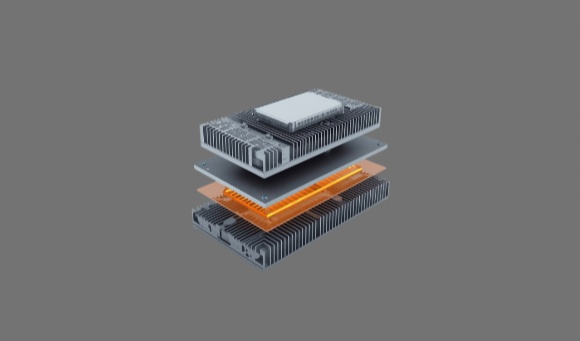
Component → solder → PCB or baseplate → thermal pad → chassis or heatsink
Every interface in this stack adds thermal resistance. If there is an air gap between the PCB, baseplate or module and the metal chassis, heat flow is restricted and component temperatures rise. This is where thermal pads come in.
What Thermal Pads Do in the Cooling Stack
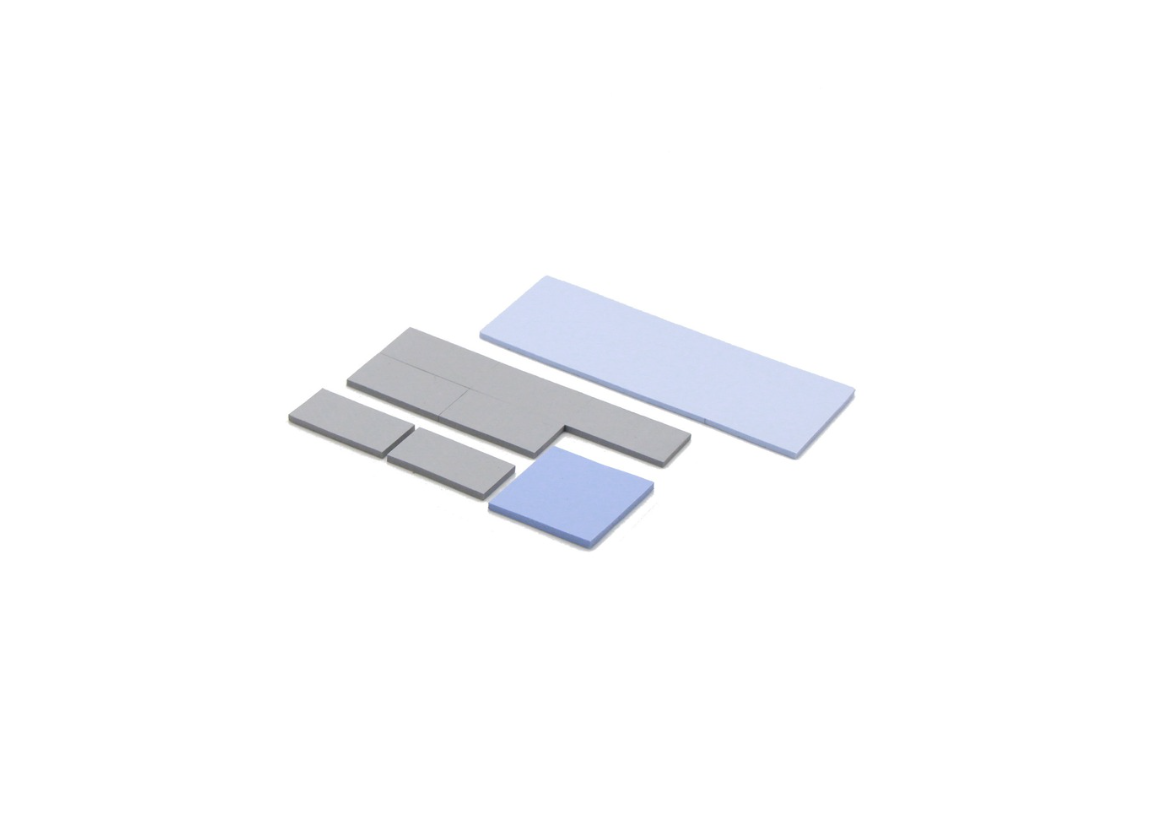
Thermal pads are soft, filled materials placed between two solid surfaces to improve heat transfer. Their main functions are:
Filling air gaps and surface roughness
Even machined metal and FR-4 surfaces are not perfectly flat. Thermal pads deform under pressure and fill microscopic gaps that would otherwise be filled with air, which is a poor conductor of heat.Increasing real contact area
By conforming to both surfaces, pads increase the real contact area between the hot part (PCB, baseplate, component) and the cold part (chassis, heatsink, frame). More contact area means lower thermal resistance.Reducing thermal resistance at key interfaces
The combination of compliant material and thermally conductive fillers significantly reduces interface resistance. As a result, more heat flows into the chassis or heatsink for the same temperature difference.
Key Benefits of Thermal Pads for Telecom Applications
4.1 Improved cooling efficiency and lower component temperatures
By replacing air gaps with a thermally conductive path, thermal pads help bring down case and junction temperatures. This gives more thermal margin, supports higher ambient temperatures and helps keep efficiency high under peak load.
4.2 Better reliability and longer lifetime under 24/7 operation
Lower and more stable temperatures reduce thermal stress on semiconductors, magnetics and capacitors. For telecom systems designed to run continuously for many years, a few degrees of temperature reduction can make a noticeable difference in field reliability and lifetime.
4.3 Electrical insulation and safety on high-voltage sections
Many gap pad materials provide both thermal conductivity and electrical insulation. This allows designers to safely bridge high-voltage sections to the grounded chassis, supporting isolation requirements and telecom safety standards while still moving heat efficiently.
4.4 Vibration damping in outdoor and base-station equipment
Outdoor units and base-station hardware can see vibration, shock and mechanical stress. Soft thermal pads act as a cushion between PCB or modules and the metal housing. They help absorb movement, reduce mechanical stress on solder joints, and maintain good contact over time, even under demanding field conditions.
Selecting Thermal Pads for Telecom Power Supplies
Choosing a thermal pad for telecom power is a balance of thermal, electrical, mechanical and reliability requirements. Data sheet numbers are only the starting point.
5.1 Thermal conductivity vs. thickness and compression
A higher thermal conductivity (k) does not always mean better performance in the real unit. Effective thermal resistance depends on:
Pad thickness (bond line thickness)
How much the pad can compress in your design
Contact area and surface flatness
Thinner, well-compressed pads usually give lower thermal resistance than thick pads with little compression, even if k is the same. When comparing materials, look at thermal impedance (°C·cm²/W) at the target thickness and pressure, not only k.
5.2 Dielectric strength and creepage/clearance requirements
In telecom power systems, many pads must also provide electrical insulation between high-voltage circuits and the chassis. When insulation is needed, check:
Dielectric breakdown voltage and insulation resistance
Required thickness to meet system voltage and safety standards
Impact on creepage and clearance distances
Sometimes a slightly thicker, more insulating pad is needed to pass safety tests. In that case, thermal performance must be checked with the final thickness, not just the nominal value.
5.3 Softness, reworkability, and assembly process (manual vs. automated)
The hardness or softness of a pad affects both thermal performance and assembly:
Softer pads conform better to uneven surfaces and lower clamping forces
Firmer pads are easier to handle in high-speed automated assembly
Consider how the pad will be installed:
Manual assembly: pre-cut pads with release liners reduce mess and simplify training
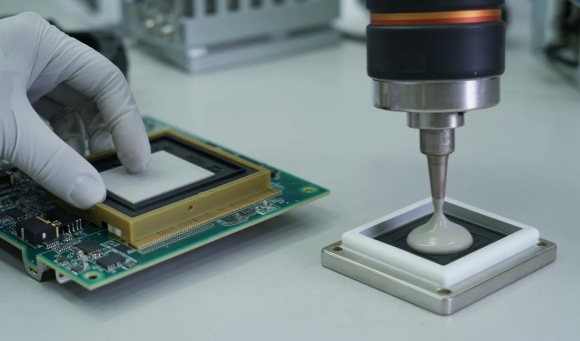
Automated assembly: pads supplied in sheets, rolls or on carrier liners can support pick-and-place
Rework is also important. Pads that can be removed and replaced cleanly help serviceability of power shelves and base-station units.
5.4 Compliance with telecom standards and outdoor use (humidity, temperature range)
Telecom equipment often operates in harsh or extended environments:
Wide operating temperature range (for example –40 to 85 °C or higher)
High humidity, salt mist, and pollution in outdoor or coastal sites
Long service life expectations
Thermal pads should be evaluated for stability under these conditions: low outgassing, minimal hardness change, and consistent thermal performance after aging. Materials that are qualified in telecom or industrial standards reduce project risk.
Typical Use Cases in Telecom Hardware
6.1 Between power modules and system heatsinks
Soft gap pads are commonly used between DC-DC bricks, rectifier modules or custom power bricks and a shared system heatsink or cold plate. In many designs, this can reduce module case temperature by 3–8 °C compared with direct contact with small air gaps.
6.2 Between hot components on PCB and chassis or cold plate
Pads bridge the gap between tall components (inductors, transformers, MOSFETs) and the metal chassis. A properly selected pad can pull several watts of heat from each component into the housing, helping to keep PCB temperature more uniform.
6.3 Inside rack-mount rectifiers and power shelves
In 1U/2U rectifiers and power shelves, pads are used to connect PCBs and bus bar assemblies to the aluminum frame. Designers often see improved hotspot temperatures and more consistent thermal performance between units when pads are optimized for thickness and compression.
Practical Design Tips for Engineers
Estimate thermal resistance early
Build a simple 1D thermal stack: component → PCB/baseplate → pad → chassis. Use pad data at the target thickness and pressure to estimate temperature rise. This helps you see if you need higher k, thinner pads or more area.Common mistakes to avoid
Selecting pads only by k value, ignoring thickness and compression
Choosing a pad that is too thick “just to be safe”, which increases thermal resistance
Not checking how much mechanical pressure the structure can provide
Ignoring electrical insulation requirements until late in the design
Prototype with different pad thicknesses and hardness
In early builds, test 2–3 thicknesses and hardness levels. Measure temperatures at key components and check assembly feel (compression, torque). This small effort often leads to a more robust final choice.
Conclusion and Next Steps
Thermal pads play a quiet but critical role in telecom power supplies. By filling air gaps, improving contact to the chassis and providing insulation and vibration damping, they help lower temperatures and improve long-term reliability in 24/7 operation.
If you are designing or upgrading a telecom power platform, our team can help you select the right thermal pad material, thickness and hardness. We can also provide samples and custom-cut sizes to match your layout and assembly process.