Welcome to Taxo Tape
How Filler Particle Size Affects Thermal Conductivity in Silicone Pads and Gels
Introduction: The Role of Fillers in Thermal Interface Materials
Silicone-based thermal interface materials (TIMs), such as thermal pads and gels, are widely used to bridge the air gaps between heat-generating components and heat sinks. Their primary function is to minimize thermal resistance at the interface, ensuring efficient heat dissipation and stable device performance.
However, silicone polymers themselves are poor conductors of heat. To achieve meaningful thermal conductivity, fillers are introduced into the silicone matrix. These fillers—typically ceramic particles—serve as the true heat transfer pathways within the composite. The higher the filler loading and connectivity, the better the overall heat conduction performance.
Common fillers include alumina (Al₂O₃), boron nitride (BN), and aluminum nitride (AlN), each chosen for their unique balance of thermal performance, electrical insulation, and cost. The design challenge lies not only in selecting the right material, but also in engineering the filler size and distribution to optimize performance.
Thermal Conductivity Mechanism in Silicone-Based TIMs
In silicone pads and gels, heat is conducted through two primary routes: the polymer matrix and the filler particle network. Since silicone has inherently low thermal conductivity (typically <0.3 W/m·K), the majority of heat transfer occurs through the fillers once a conductive network is formed.
The efficiency of this network depends on two key parameters:
Filler loading – the volume percentage of filler in the composite.
Particle-to-particle contact – how effectively the filler particles touch or overlap to form continuous thermal paths.
Even when fillers have high intrinsic conductivity, poor interfacial contact between particles can significantly reduce overall heat flow. This phenomenon is known as interfacial thermal resistance (ITR). Minimizing ITR—through optimized particle morphology, surface treatment, and size distribution—is therefore critical for achieving high bulk thermal conductivity in silicone-based TIMs.
The Impact of Filler Particle Size on Thermal Pathways
Filler particle size directly shapes the internal thermal pathways of a silicone pad or gel. Larger filler particles tend to create longer and more direct conduction channels, which helps lower interfacial resistance between particles. However, large particles reduce the total number of contact points and limit how densely fillers can pack, potentially leaving voids in the structure.
Smaller particles, on the other hand, improve the packing density and help fill micro-voids between larger ones, enhancing contact uniformity and consistency across the material. Yet, excessive use of small particles increases surface area, leading to higher viscosity and more interfacial boundaries—both of which may counteract thermal gains.
The most effective approach often combines both: a multi-modal particle size distribution, where large particles build the main conduction backbone while smaller ones fill the gaps, resulting in a more continuous and efficient thermal pathway.
Particle Size Distribution (PSD) Optimization
The particle size distribution (PSD) determines how effectively fillers occupy space within the silicone matrix. A mono-modal system uses fillers of a single particle size, which simplifies production but typically leaves voids and limits maximum loading.
In contrast, bi-modal or tri-modal filler systems—where multiple particle sizes are blended—enable smaller fillers to occupy the gaps between larger ones. This increases packing density, reduces interfacial resistance, and creates more continuous thermal conduction paths.
However, optimization is not only about thermal performance. As filler packing improves, viscosity and processability change as well. For example, a highly loaded bi-modal system may achieve superior thermal conductivity but become too stiff for thin-pad molding or gel dispensing. Therefore, effective PSD design balances thermal conductivity with mechanical flexibility and manufacturing practicality, depending on the end-use application.
Balancing Thermal Conductivity with Mechanical Properties
While increasing filler content or using larger particles can boost thermal conductivity, these strategies inevitably influence the mechanical performance of silicone pads and gels. A high filler loading stiffens the matrix, reducing softness, compressibility, and reworkability—properties that are crucial for reliable assembly under variable surface pressures.
Particle size also plays a defining role. Larger particles generally increase material hardness and reduce conformability, making the pad less capable of compensating for surface irregularities. Smaller particles improve flexibility and surface contact but may sacrifice some thermal conductivity.
This trade-off explains why silicone gels—designed for low-pressure or delicate components—often adopt smaller filler particles. The fine fillers ensure smooth flow and intimate contact with uneven surfaces, providing excellent wetting and low interfacial resistance, even if bulk thermal conductivity is slightly lower than that of silicone pads.
Case Comparison: Silicone Pad vs. Silicone Gel
The table below summarizes the typical differences between silicone pads and gels when formulated with various filler particle sizes.
| Property | Silicone Pad | Silicone Gel |
|---|---|---|
| Typical Filler Types | Alumina, AlN, BN | Alumina, BN |
| Particle Size Range | 10–40 µm | 0.5–10 µm |
| Thermal Conductivity (W/m·K) | 2.0–8.0 | 1.0–4.0 |
| Hardness / Softness | Medium to firm | Very soft and conformable |
| Compressibility | Moderate | High |
| Surface Wetting | Limited, depends on pressure | Excellent, self-wetting |
| Best for | Modules, power devices, inverters | PCBA, LEDs, sensors, fragile parts |
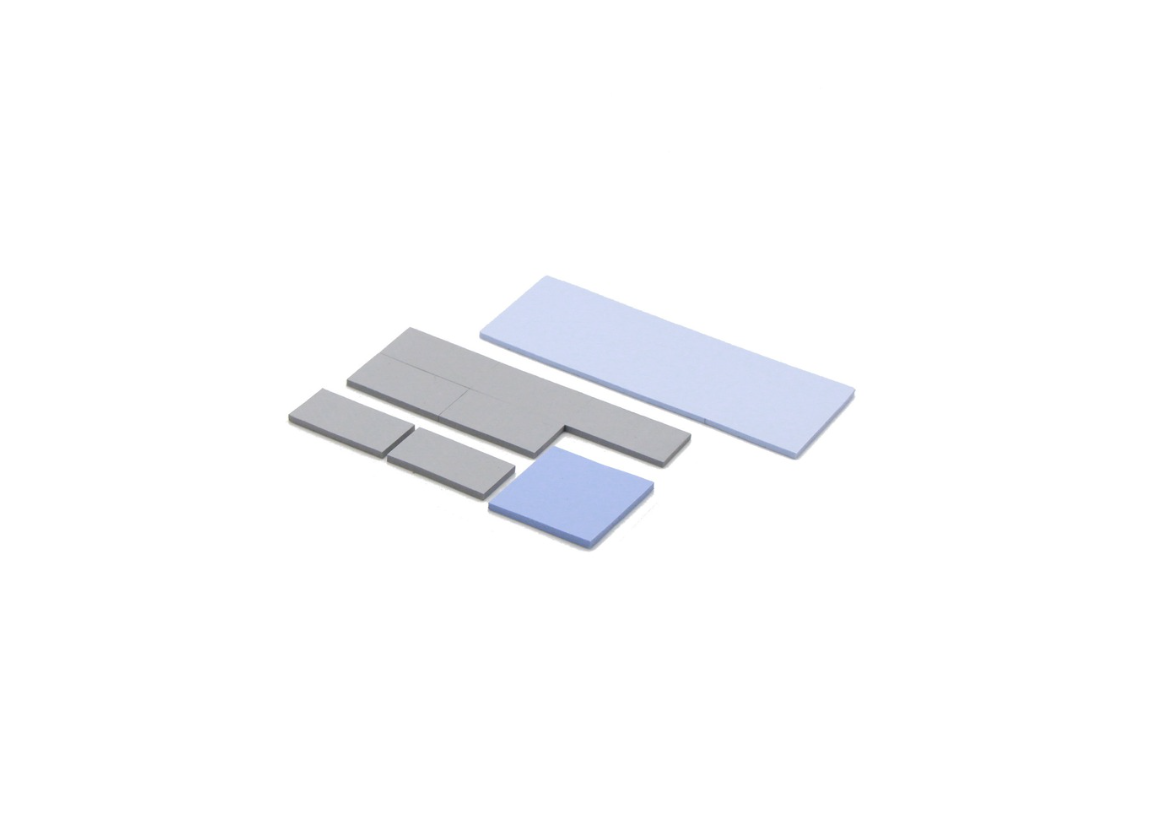
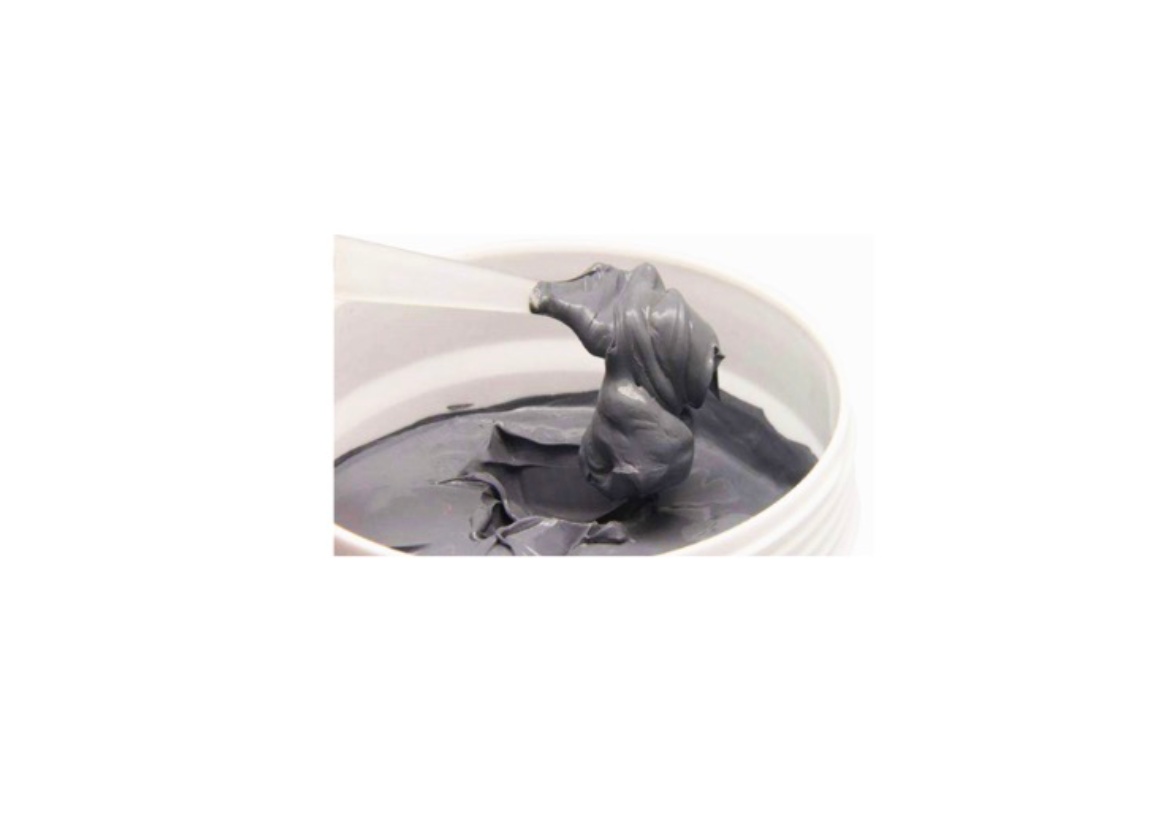
Gels show superior surface wetting and lower contact resistance, especially when assembly pressure is low or uneven. Pads, however, offer better dimensional stability and bulk conductivity, making them suitable for power modules or high-heat-load applications. Selecting between them depends on whether mechanical compliance or thermal performance takes priority in the design.
Practical Considerations for Engineers
Selecting the appropriate filler particle size or distribution should always be based on application requirements rather than theoretical conductivity alone.
Key factors include:
Application type:
LED modules benefit from smaller fillers for smooth contact with fragile boards.
Inverters or EV battery modules perform better with larger or mixed fillers for efficient heat spreading.
Assembly pressure and surface roughness:
High-pressure assemblies can accommodate larger particles.
Low-pressure or uneven surfaces require smaller or blended particles for better conformity.
Performance vs. reliability:
Extremely high filler content can enhance heat transfer but risk cracking or poor reworkability.
A balanced formulation ensures both thermal efficiency and mechanical durability.
When evaluating material performance, standardized test methods such as ASTM D5470 (steady-state thermal resistance) or laser flash analysis provide reliable and comparable data.
Conclusion
Filler particle size is not a secondary design parameter—it is one of the main determinants of how heat travels through silicone pads and gels. Properly engineered particle size and distribution can dramatically improve thermal conductivity, contact performance, and long-term stability.
In practice, the goal is optimization, not simply “bigger equals better.” The ideal formulation depends on the application’s mechanical constraints and thermal load.
For engineers and designers seeking customized thermal management materials, exploring different filler systems and size distributions is the key to unlocking both performance and manufacturability.