Welcome to Taxo Tape
Graphene-Enhanced TIMs: Commercial Reality vs. Marketing Claims
Introduction: Why Graphene TIMs Attract So Much Attention
As power electronics, LED lighting, and energy conversion systems continue to increase in power density, thermal management has become one of the most critical design constraints. Higher switching frequencies, compact layouts, and smaller form factors all contribute to localized heat accumulation, pushing conventional cooling solutions closer to their limits.
Against this background, graphene-based materials have attracted significant attention. With reported intrinsic thermal conductivity values exceeding 2000 W/m·K, graphene is often presented as an ideal solution for high power electronics cooling. In theory, incorporating graphene into thermal interface materials (TIMs) seems like a direct path to lower junction temperatures and improved system reliability.
However, the reality of commercial TIM applications is more complex. Laboratory-scale material properties do not automatically translate into system-level thermal performance. The way graphene is produced, dispersed, oriented, and integrated into polymer matrices has a far greater impact than the headline numbers often highlighted in marketing materials. Understanding this gap between theory and practice is essential when evaluating graphene thermal interface materials for real-world designs.

What “Graphene-Enhanced” Actually Means in TIM Products
In commercial TIM products, the term “graphene” is often used loosely. In practice, it may refer to several different carbon-based materials, each with distinct thermal and structural characteristics.
Graphene typically describes single-layer or few-layer carbon sheets with exceptional intrinsic properties, but these are difficult and expensive to use at scale.
Graphene oxide (GO) and reduced graphene oxide (rGO) are more common in commercial products, offering better processability but lower thermal conductivity.
Graphite derivatives, including expanded graphite or graphene nanoplatelets, are widely used due to their availability and cost efficiency.
In most commercial TIMs, graphene-related fillers are added at relatively low loading levels, often only a few weight percent. Higher loading can negatively affect viscosity, mechanical compliance, and manufacturing consistency. As a result, most products on the market are better described as graphene-modified TIMs, rather than “pure graphene” materials.
This distinction is important, as datasheets sometimes imply a level of graphene content or performance that is not representative of the actual formulation. Clear terminology helps engineers make realistic comparisons between different TIM options.
Theoretical Thermal Conductivity vs. Real-World Performance
One of the most common sources of confusion around graphene TIMs lies in the difference between theoretical thermal conductivity and real-world heat transfer performance.
Graphene and graphite-based fillers exhibit highly anisotropic behavior. Their in-plane thermal conductivity can be extremely high, while through-plane conductivity—which is often more relevant for TIM applications—is significantly lower. In many assemblies, heat must travel vertically across interfaces rather than laterally along a surface.
More importantly, interface thermal resistance often dominates overall heat transfer. Even if a TIM contains high-conductivity fillers, poor surface wetting, insufficient contact pressure, or non-uniform bond-line thickness can limit performance. In such cases, increasing filler conductivity alone does not result in a meaningful reduction in junction temperature.
This is why a higher reported thermal conductivity value does not necessarily translate into better cooling at the system level. The interaction between material properties, assembly conditions, and surface characteristics is often the deciding factor.
Common Marketing Claims — And What to Check Carefully
Marketing claims around graphene-enhanced TIMs frequently focus on impressive numerical values, such as “thermal conductivity above 10 W/m·K.” While such figures are not impossible, the test method and conditions matter greatly.
Different standards, sample thicknesses, and measurement directions can lead to large variations in reported results. A value measured on a well-aligned laboratory sample may not reflect performance in a typical production assembly.
Another consideration is scalability. Laboratory samples are often prepared under controlled conditions, while mass production introduces variability in filler dispersion, curing, and thickness control. Consistency across batches is just as important as peak performance.
In many successful designs, graphene acts as a performance enhancer, improving certain characteristics such as lateral heat spreading or mechanical stability, rather than serving as a standalone solution. Treating graphene as a headline feature instead of a functional component can lead to unrealistic expectations.
Where Graphene-Enhanced TIMs Actually Make Sense
Despite the limitations, graphene-enhanced TIMs can provide real benefits when used in appropriate applications.
They tend to perform best in thin bond-line scenarios, where material thickness is tightly controlled and interface resistance is minimized. High-pressure assembly conditions can further improve contact quality, allowing the conductive fillers to contribute more effectively.
Applications that benefit from lateral heat spreading, rather than purely vertical heat transfer, are particularly suitable. Typical examples include:
Power modules, where localized hotspots need to be redistributed across a larger baseplate
LED COB modules, where uniform temperature distribution improves optical performance and lifetime
Compact inverter designs, where space constraints limit traditional cooling solutions
In these cases, graphene-enhanced TIMs can offer measurable advantages—provided they are selected based on realistic operating conditions rather than datasheet claims alone.
Trade-Offs Engineers Should Be Aware Of
Like any advanced material, graphene-enhanced TIMs involve trade-offs that should be evaluated carefully rather than assumed to be universally beneficial.
Cost versus performance gain is often the first consideration. Graphene-related fillers typically increase material cost, while the actual temperature reduction at the system level may be incremental rather than dramatic. For many designs, the cost premium is only justified if thermal margins are already tight.
Processability is another key factor. Higher filler content can affect dispensing stability, compression behavior, and bond-line thickness control. In some formulations, reworkability may be reduced, which can complicate manufacturing or field repair.
Electrical insulation and long-term reliability also deserve attention. Not all graphene-enhanced TIMs maintain consistent dielectric strength, especially under thermal cycling or high humidity. Long-term performance depends not only on filler type, but also on matrix formulation, curing behavior, and mechanical compliance over time.
Comparison with Conventional TIM Solutions
To evaluate the real value of graphene-enhanced TIMs, it is useful to compare them with established thermal interface solutions.
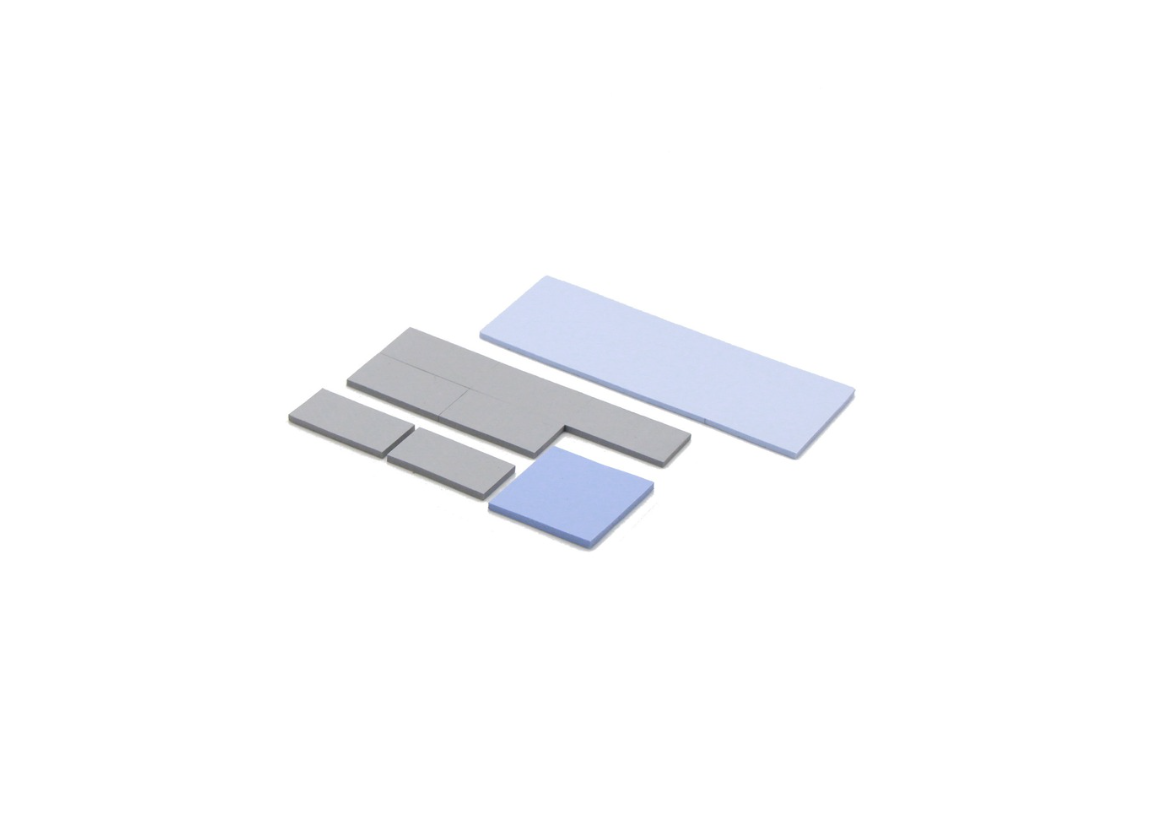
Silicone thermal pads offer stable thickness, electrical insulation, and ease of assembly. They are often preferred where gap tolerance and reworkability are important, even if their thermal conductivity is moderate.
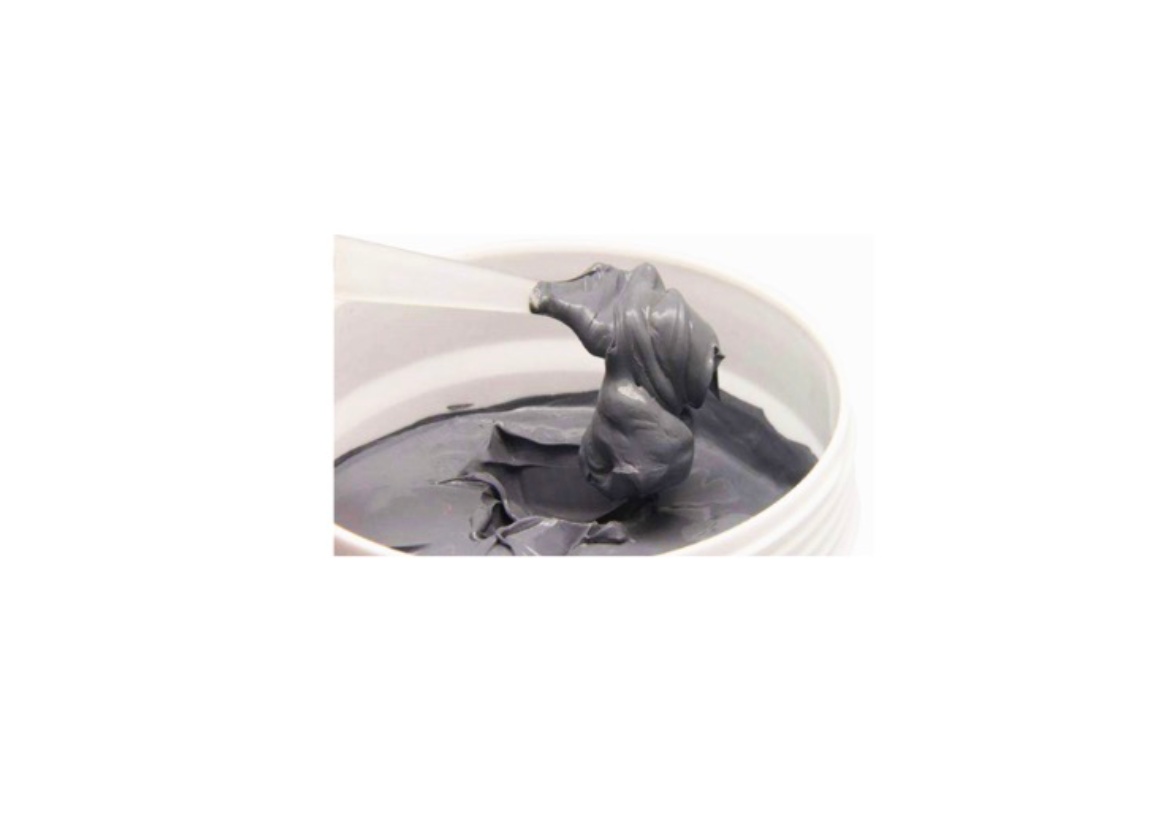
Thermal greases and gels provide excellent surface wetting and low interface resistance, making them effective in low-pressure or uneven surfaces. However, pump-out and long-term stability must be considered.
Phase change materials (PCMs) balance ease of handling with improved contact after melting. They are widely used in electronics where controlled assembly conditions are available.
Graphene-enhanced TIMs tend to add value in specific scenarios, such as thin bond-lines or applications requiring lateral heat spreading. In many standard assemblies, conventional TIMs can achieve similar thermal performance at lower cost and with simpler processing.
How to Evaluate Graphene-Enhanced TIMs for Your Design
A practical evaluation approach focuses on system-level results, not just datasheet specifications. Junction temperature reduction, thermal margin, and reliability under real operating conditions are far more meaningful than standalone thermal conductivity values.
Engineers should request application-based test data, ideally under comparable pressure, surface roughness, and operating temperature. Data showing temperature difference across the full thermal stack is often more informative than isolated material measurements.
Finally, small-scale validation before design freeze is strongly recommended. Even limited testing can reveal assembly sensitivities or performance limitations that are difficult to predict from material properties alone.
Conclusion: Separating Engineering Value from Marketing Noise
Graphene is not a “magic material” when used in thermal interface materials. While it offers unique properties, its real contribution depends on how it is integrated into the TIM and applied within the system.
Effective material selection is driven by mechanical structure, assembly pressure, and thermal path design, rather than by headline conductivity values. A realistic, application-focused approach helps reduce risk, improve thermal reliability, and avoid unnecessary cost.
Engineering-Focused CTA
If you are evaluating thermal interface materials for high power electronics or LED systems, discussing the specific thermal challenges of your application often leads to better outcomes than comparing datasheets alone.
Application-based evaluation and targeted testing can help identify the most suitable solution with confidence.