Welcome to Taxo Tape
Cooling Challenges in Drone ESCs — Where TIMs Make the Difference
Introduction: Why ESC Thermal Management Is a Growing Bottleneck
As drones continue to evolve toward higher payload capacity, longer flight time, and more aggressive maneuverability, electronic speed controllers (ESCs) are being pushed to operate at higher power levels within increasingly compact footprints. Modern drone ESCs are expected to handle higher currents, faster switching speeds, and harsher operating conditions—often without any significant increase in size or weight.
This trend leads directly to higher current density and increased switching losses inside the ESC. While electrical performance has improved significantly thanks to advanced MOSFETs and optimized control algorithms, thermal management has emerged as a key bottleneck. In many cases, the electrical design itself is no longer the limiting factor—temperature is.
Excessive heat affects more than efficiency. It accelerates component aging, increases the risk of thermal runaway, and reduces long-term reliability, especially in demanding applications such as industrial drones, FPV racing drones, and long-endurance UAVs. As ESC designs become more compact, even small thermal inefficiencies at material interfaces can translate into significant temperature rises.
This is where thermal interface materials (TIMs) begin to play a meaningful role. Rather than being a secondary consideration, TIMs increasingly influence whether an ESC design can operate reliably under real-world conditions.
Heat Sources Inside a Drone ESC
The primary heat sources inside a drone ESC are the power MOSFETs. Conduction losses during high-current operation and switching losses at elevated frequencies both contribute to significant heat generation, particularly under rapid acceleration, braking, or high-load flight scenarios.
Beyond the MOSFETs themselves, PCB copper losses are another often underestimated contributor. High current flowing through copper planes and traces leads to localized heating, especially in compact, multi-layer PCB designs where thermal spreading is limited. These losses tend to concentrate heat in specific regions, creating hotspots rather than uniform temperature distribution.
Gate drivers, voltage regulators, and other auxiliary components also generate heat, albeit at lower power levels. However, their proximity to power devices means they are frequently exposed to elevated ambient temperatures within the ESC enclosure, which can affect signal stability and component lifespan.
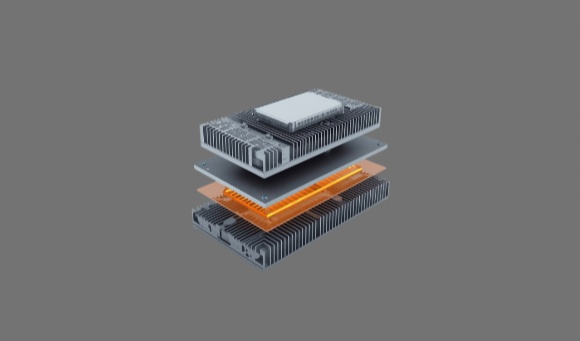
In tightly packed ESC layouts, heat accumulation becomes a systemic issue. Limited airflow, dense component placement, and stacked thermal paths cause heat to build up faster than it can be dissipated, making efficient thermal conduction away from critical components essential.
Typical Cooling Constraints in Drone Applications
Unlike industrial power electronics, drone ESCs face strict constraints that limit conventional cooling solutions. Space and weight restrictions are among the most critical. Every gram matters, and bulky heat sinks or active cooling systems are rarely acceptable.
As a result, passive cooling dominates ESC thermal design. Most drone ESCs rely on conduction-based heat transfer to frames, housings, or external heat spreaders rather than forced airflow. This places even greater importance on minimizing thermal resistance along the heat path.
ESCs are often installed in enclosed or semi-enclosed housings to protect against environmental exposure. While necessary, these enclosures reduce convective heat dissipation and trap heat inside, further increasing internal temperatures.
In addition, drone ESCs are exposed to constant vibration, dust, and moisture. Thermal solutions must maintain performance under mechanical stress and environmental cycling. Ambient temperatures can vary widely depending on altitude, weather, and mission profile, adding another layer of complexity to thermal management.
Why Air Gaps Become a Critical Thermal Problem
In theory, direct contact between a MOSFET package and a heat spreader should provide efficient heat transfer. In practice, this ideal condition is rarely achieved. Surface flatness limitations, PCB warpage, and assembly tolerances all introduce microscopic gaps at the interface.
These gaps are typically filled with air, which has extremely poor thermal conductivity compared to solid materials. Even very thin air layers can dramatically increase thermal resistance, effectively bottlenecking heat flow regardless of how efficient the heat sink itself may be.
Relying on metal-to-metal contact alone is therefore insufficient in most ESC designs. Variations in mounting pressure and long-term mechanical stress further degrade contact quality over time.
As a result, the primary thermal limitation in many ESC systems is not the heat sink or housing, but the interface between components. Addressing this interface effectively is often the fastest way to achieve meaningful temperature reduction.
Where TIMs Actually Make the Difference
Thermal interface materials are designed to eliminate air gaps and create a continuous thermal path between heat-generating components and heat spreaders. In drone ESCs, TIMs improve heat transfer from power MOSFETs to aluminum frames, metal covers, or external cooling structures.
By reducing interface thermal resistance, TIMs lower the junction temperature of critical components. Even modest reductions in junction temperature can significantly improve reliability and extend service life, especially under continuous high-load operation.
TIMs also help distribute heat more evenly across the ESC. Instead of localized hotspots, heat is spread over a larger area, reducing thermal stress on individual components and improving overall thermal stability.
Equally important, a well-selected TIM maintains its performance over time. Resistance to pump-out, vibration-induced degradation, and thermal cycling ensures that thermal performance remains stable throughout the ESC’s operational life.
Common TIM Options for Drone ESC Cooling
Several types of thermal interface materials are commonly used in drone ESC applications, each with distinct advantages and limitations.
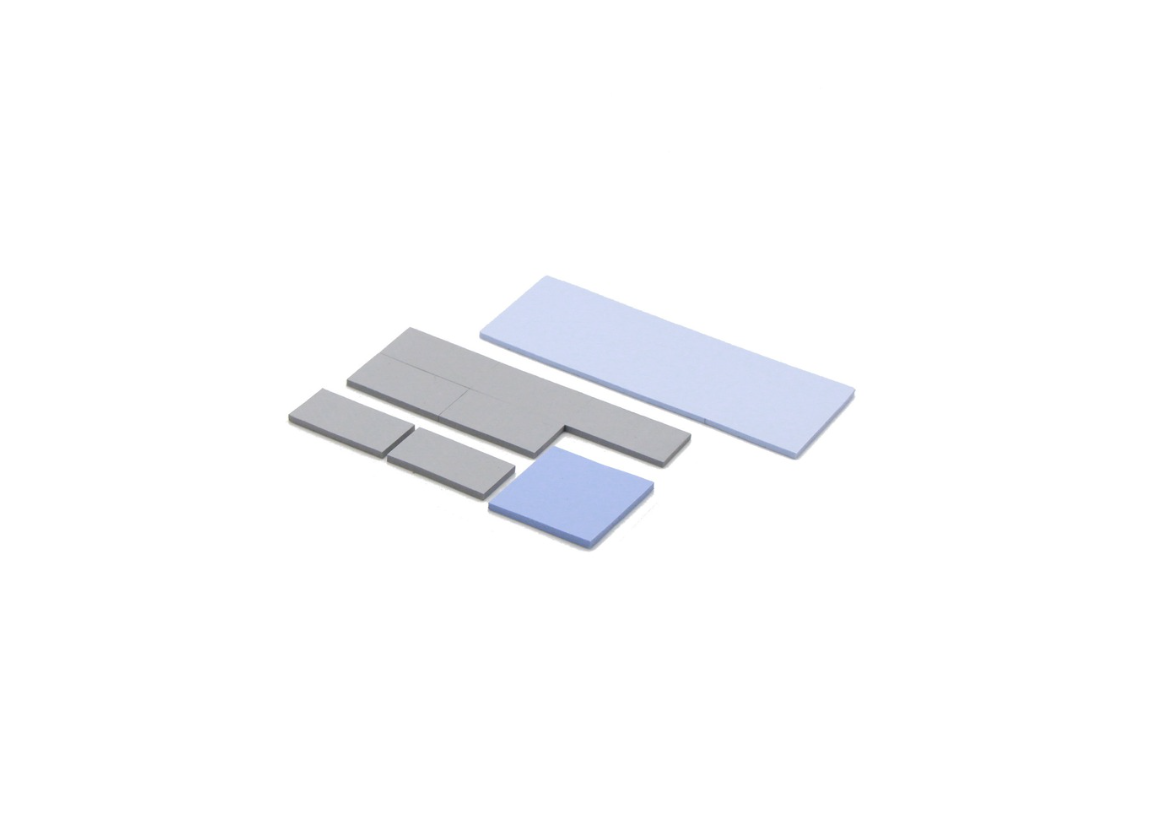
Thermal pads are widely used due to their ease of assembly and consistent thickness. They offer good vibration tolerance and electrical insulation, making them suitable for mass production and mechanically demanding environments.
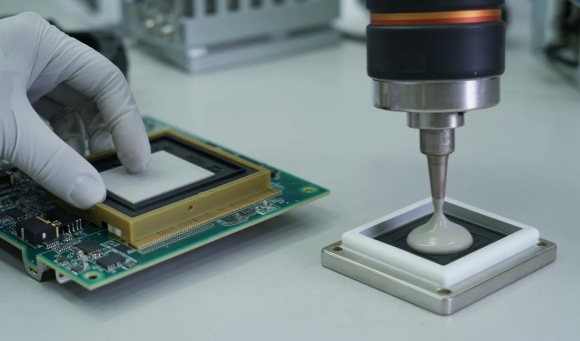
Thermal gap fillers provide higher conformability and are effective in designs with uneven surfaces or larger tolerance variations. Their ability to fill complex gaps makes them useful in compact ESC layouts, though dispensing control is important.
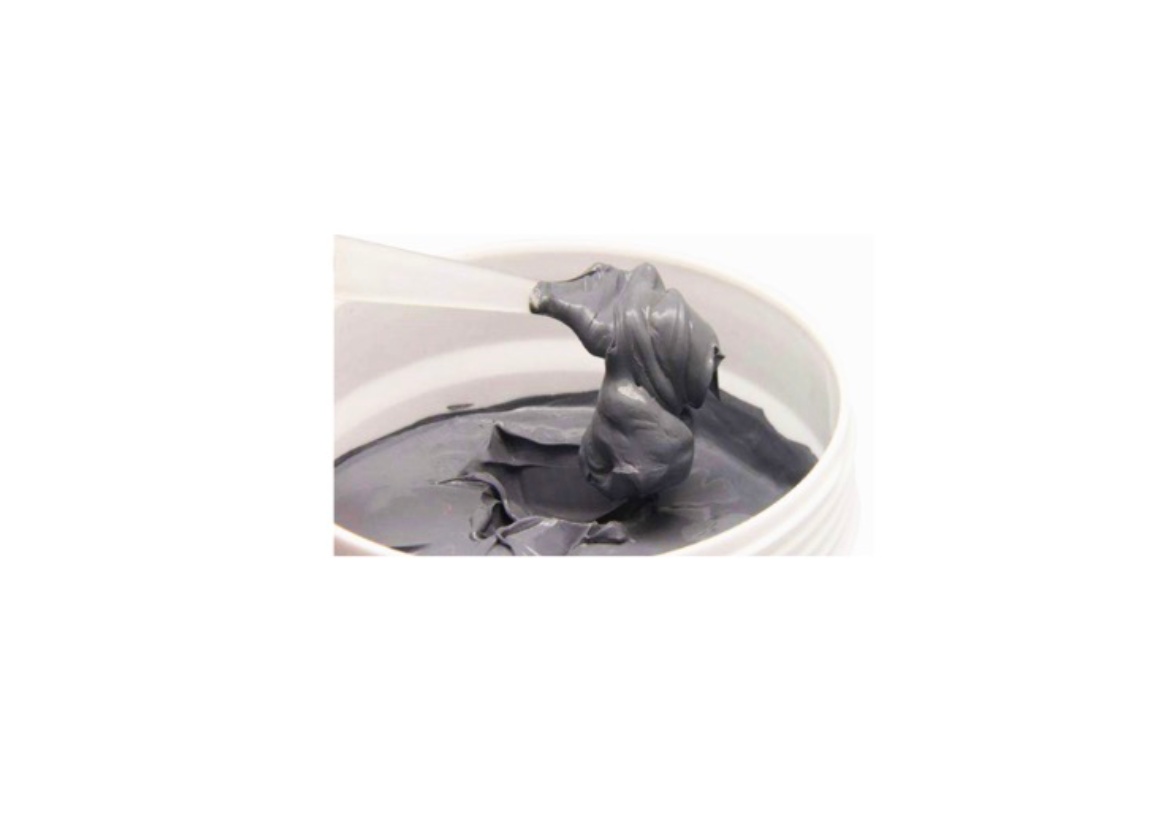
Thermal greases deliver very low thermal resistance but come with potential risks such as pump-out, contamination, and long-term migration. These factors often limit their use in vibration-prone drone environments.
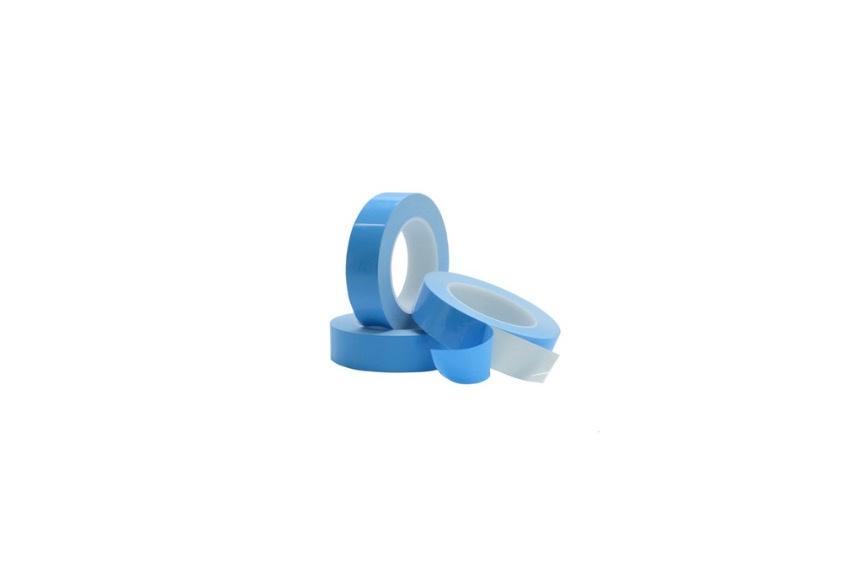
Double-sided thermal tapes combine bonding and thermal conduction, simplifying assembly by eliminating mechanical fasteners. However, their thermal performance and long-term reliability must be carefully evaluated for high-power ESCs.
Selecting the right TIM involves balancing thermal performance, mechanical reliability, manufacturability, and long-term stability—factors that are especially critical in drone applications.
Key Selection Factors Often Overlooked
When selecting a thermal interface material for drone ESCs, thermal conductivity is often treated as the primary criterion. In practice, several less visible factors have a much greater impact on long-term performance.
Interface pressure and pad compression are critical. Many ESC designs apply limited and uneven pressure across the interface. A TIM that performs well only under high compression may fail to deliver its rated performance in real assemblies. Matching material compressibility to actual assembly conditions is essential.
Long-term pump-out and material aging are also frequently underestimated. Continuous vibration and thermal cycling can cause certain greases or soft materials to migrate away from the interface over time, increasing thermal resistance and creating reliability risks.
Electrical insulation requirements must be considered alongside thermal performance. In compact ESC layouts, insufficient dielectric strength can lead to leakage currents or insulation breakdown, particularly under high humidity or elevated temperatures.
Outgassing and contamination risks are especially relevant for enclosed ESC housings. Volatile compounds released from poorly formulated TIMs may condense on sensitive electronics, affecting signal integrity or accelerating corrosion.
Finally, reworkability and production consistency matter in real-world manufacturing. Materials that are difficult to handle, apply, or remove can introduce yield loss and variability between units, even if their lab-measured thermal performance is attractive.
Practical Design Tips for ESC Thermal Interfaces
Effective ESC thermal design starts with aligning TIM properties to mechanical realities rather than chasing headline performance numbers.
One of the most important steps is matching TIM thickness to stack-up tolerance. Using an overly thin material risks incomplete contact, while excessive thickness increases thermal resistance. Understanding PCB flatness, component height variation, and enclosure tolerances allows for more reliable material selection.
Designers should also avoid over-specification of thermal conductivity. Beyond a certain point, higher conductivity offers diminishing returns if interface contact quality is poor. Improving conformity and contact area often delivers greater temperature reduction than switching to a higher-k material.
Designing for vibration and thermal cycling is essential in drone applications. TIMs must maintain elasticity and adhesion under repeated mechanical stress and temperature swings without cracking, pumping out, or hardening.
Equally important is collaboration between electrical and mechanical design teams. Thermal interface decisions affect layout, mounting strategy, and enclosure design. Early cross-functional alignment prevents late-stage compromises that limit thermal performance.
Case-Level Insight: When TIM Choice Changes ESC Lifetime
In many ESC field failures, the root cause is not component selection but poor thermal interfaces. Common failure modes include MOSFET overheating, solder joint fatigue, and accelerated degradation of nearby passive components.
In several evaluated designs, switching to a more suitable TIM reduced peak MOSFET temperatures by only a few degrees Celsius. While this may seem minor, the impact on reliability was substantial. Lower junction temperatures slow down material aging, reduce thermal stress, and improve tolerance to transient overload conditions.
In high-current ESCs, even small thermal gains can extend operational life significantly. Reduced temperature cycling amplitude lowers mechanical fatigue, while improved heat spreading minimizes localized hotspots that often trigger early failures.
These results highlight a key insight: TIM selection influences not just temperature, but the overall durability and stability of the ESC.
Conclusion: TIMs as a Design Enabler, Not a Commodity
Thermal interface materials are often treated as passive fillers added late in the design process. In reality, they are active contributors to ESC performance and reliability.
By reframing TIMs as a thermal solution rather than a commodity, designers can unlock meaningful improvements without increasing size, weight, or system complexity. Early consideration of interface materials allows for better integration with mechanical structures and more predictable thermal behavior.
For drone ESC designers and manufacturers, the takeaway is clear: effective thermal management starts at the interface. Choosing the right TIM early can make the difference between marginal performance and robust, long-term reliability.
FAQ: Thermal Interface Materials for Drone ESC Cooling
What is the best TIM for drone ESCs?
There is no single best option. The optimal TIM depends on power level, assembly pressure, vibration exposure, and insulation requirements. Thermal pads and gap fillers are commonly preferred for their stability and ease of use.
Do thermal pads add too much weight?
In most ESC designs, the added weight is minimal compared to the reliability benefits. Properly selected pads provide a favorable balance between thermal performance and mechanical robustness.
Can TIMs improve ESC efficiency?
Indirectly, yes. Lower operating temperatures reduce conduction losses in MOSFETs and help maintain stable electrical characteristics under load.
How thick should a thermal pad be for ESC cooling?
Thickness should be chosen based on actual mechanical tolerances. Using the thinnest pad that ensures full contact under real assembly conditions typically delivers the best performance.