Welcome to Taxo Tape
Acrylic vs. Silicone Thermal Tapes: Which One to Choose?
Introduction
Most thermal interface materials do one job: transfer heat. Thermal tapes do two — they hold a component in place and conduct heat away from it at the same time. That dual function is exactly why they show up so often in compact assemblies, LED modules, and battery packs where mechanical fasteners aren't practical or space simply doesn't allow for them.
The trade-off is that a tape has to satisfy two sets of requirements simultaneously, and it's easy to evaluate one while overlooking the other. A tape with excellent thermal conductivity but weak adhesion to your specific substrate will fail mechanically before it ever underperforms thermally. This guide walks through the main tape chemistries, how they compare, and the selection criteria that matter beyond the conductivity number on the datasheet.
What Are Thermal Interface Tapes?
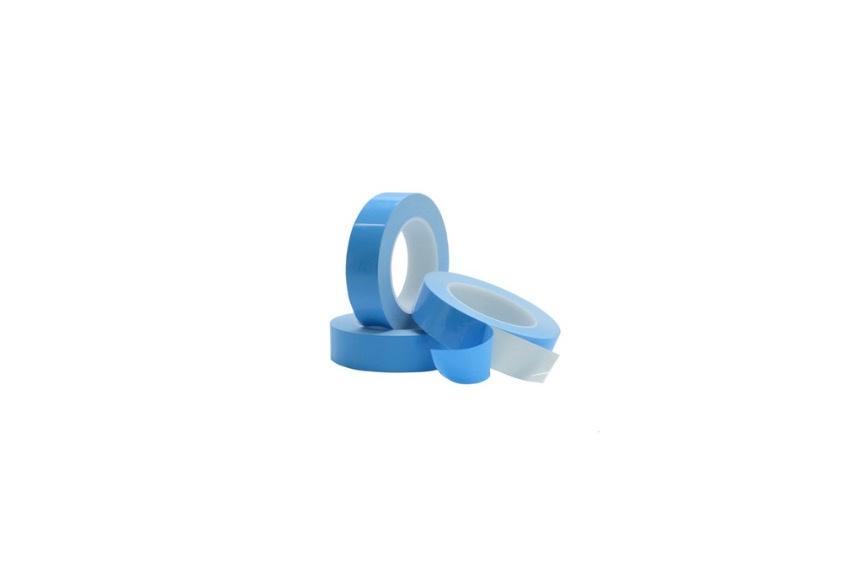
Thermal interface tapes are double-sided adhesive constructions engineered to bond and thermally connect two surfaces — typically a heat-generating component and a heat sink or metal housing. Unlike grease or a standalone pad, a tape handles mechanical fixation and heat transfer in a single material, which simplifies assembly and reduces the part count in a design.
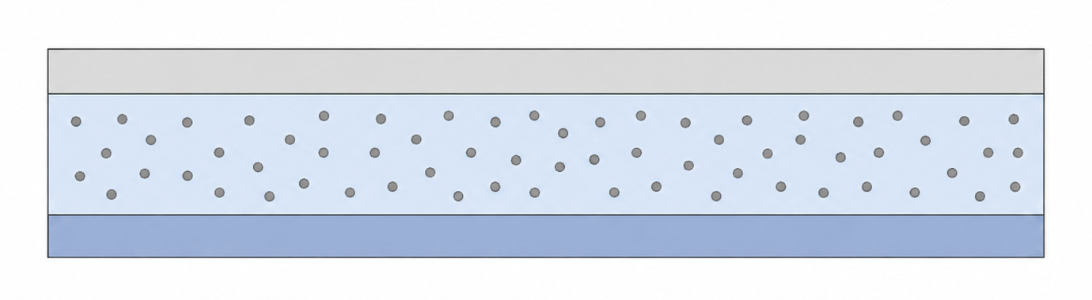
A typical tape construction has three functional layers. The adhesive layer — acrylic or silicone — determines how well the tape bonds to a given substrate and how it holds up under temperature and humidity over time. A thermally conductive filler, dispersed through the adhesive or carrier, is what gives the tape its heat transfer capability; filler type and loading level drive the conductivity range a given tape can achieve. A carrier or reinforcement layer, where present, adds dimensional stability during lamination and handling, and can improve mechanical strength in more demanding applications. How these three layers are engineered together — not just the headline conductivity number — is what determines whether a tape performs reliably in your specific assembly.
Acrylic vs. Silicone: Core Material Comparison
The two dominant adhesive chemistries in thermal tapes bring different strengths to the table, and the right choice depends on which trade-off matters more for your application.
Acrylic-based tapes are known for strong, durable adhesion and reliable performance under prolonged heat and humidity exposure. Their thermal conductivity is moderate — typically in the 0.8–1.5 W/m·K range — which makes them well suited to applications where mechanical bonding strength is the priority, such as attaching metal housings, bonding battery packs to structural surfaces, or securing large heat spreaders where a strong, lasting bond matters as much as heat transfer.
Silicone-based tapes deliver meaningfully higher thermal conductivity, generally in the 1.5–3.0 W/m·K range, along with good thermal stability across a wide operating temperature window. Their soft, conformable nature lets them fill microscopic surface irregularities more effectively than a stiffer acrylic formulation, which improves real interface contact. The trade-off is adhesion to certain plastics and low-surface-energy substrates, where a primer is often needed to achieve reliable bonding.
| Tape Type | Thermal Conductivity | Adhesion Strength | Best Fit |
|---|---|---|---|
| Acrylic-based | 0.8–1.5 W/m·K | Excellent, durable under heat/humidity | Structural bonding, large-area attachment |
| Silicone-based | 1.5–3.0 W/m·K | Good, may need primer on plastics | Higher heat flux, vibration-prone assemblies |
Values reflect general industry ranges and vary by specific formulation — confirm against a supplier's tested datasheet for the exact grade under consideration.
Phase-Change or Reinforced Variants
Beyond standard acrylic and silicone formulations, some thermal tapes incorporate phase-change materials or fiberglass reinforcement to address more demanding requirements. Phase-change enhanced tapes soften slightly at operating temperature, improving surface wetting similar to standalone PCM materials, while reinforced variants add mechanical strength for applications with higher stress or vibration exposure — power modules and automotive inverters being common examples. These variants typically carry a cost premium over standard tapes and are worth evaluating specifically when standard acrylic or silicone formulations don't meet the mechanical or thermal demands of a particular application.
How to Select the Right Thermal Tape
Four factors consistently drive a sound tape selection, beyond the conductivity number alone.
Define thermal requirements first. Establish the target thermal conductivity and the maximum allowable temperature rise for your system before comparing products — this keeps the evaluation grounded in your actual thermal budget rather than chasing the highest conductivity spec available.
Evaluate surface compatibility. Adhesion performance depends heavily on the specific substrate — aluminum, plastic, ceramic — and low-surface-energy materials in particular often need a primer to achieve reliable long-term bonding. Skipping this check is one of the more common ways a tape that tests well initially fails in the field.
Consider assembly efficiency. Tapes are frequently die-cut into custom shapes, which reduces labor and improves production throughput compared to dispensed materials. Whether reworkability matters — and how well the tape fits your existing automation — is worth evaluating alongside thermal performance.
Validate reliability under representative conditions. Datasheet values reflect controlled test conditions, not necessarily your specific application. Thermal cycling and humidity aging testing confirm that both adhesion and conductivity hold up over the product's actual service life, not just at initial assembly.
Application Examples
Battery modules commonly use thermal tape to bond cells to cooling plates while conducting heat away from the cell surface — acrylic formulations are often favored here where structural bonding strength across the pack matters as much as thermal performance, though this should be weighed against reworkability requirements for the pack's expected service life.
LED lighting applications use thermal tape to attach PCBs to aluminum substrates while keeping thermal resistance low at the board-to-heatsink interface — silicone-based tapes tend to be the better fit where junction temperature control is the priority over raw bonding strength.
Power electronics applications — mounting IGBT modules, inverters, or DC/DC converters — generally call for consistent, reliable heat transfer under sustained load, which favors silicone tapes for their higher conductivity, though acrylic remains a reasonable choice where the mounting interface is large and bonding strength carries more weight than peak thermal performance.
Common Selection Mistakes
Prioritizing conductivity over adhesion. A tape with excellent thermal conductivity but poor bonding to your specific substrate will fail mechanically — peeling, lifting at the edges — well before it ever underperforms thermally. Adhesion strength on your actual substrate deserves the same scrutiny as the conductivity spec.
Skipping the primer question on low-surface-energy substrates. Certain plastics and coated surfaces don't bond reliably to standard adhesive formulations without a primer step. Confirming this early avoids a late-stage adhesion failure that forces a process change after tooling and assembly are already committed.
Overlooking long-term adhesion degradation. A tape that bonds well at initial assembly can lose adhesion strength gradually under sustained heat and humidity exposure — a failure mode that's easy to miss without aging test data, since it doesn't show up in initial thermal resistance measurements.
Testing and Validation
Confirming tape performance under representative conditions goes beyond a single initial adhesion or thermal resistance check. Thermal cycling testing — commonly across a range such as −40°C to +125°C for several hundred cycles — reveals whether both the adhesive bond and the thermal interface hold up under the differential expansion stress that repeated temperature swings produce. Humidity aging testing, typically involving extended exposure to elevated temperature and humidity, evaluates whether adhesion strength and thermal performance remain stable over time rather than degrading as moisture interacts with the adhesive layer.
Request this data from suppliers rather than relying solely on initial datasheet values — a tape that performs well in a single-point measurement can still degrade meaningfully over a product's actual service life, particularly in applications with sustained heat or humidity exposure.
Working with a Supplier
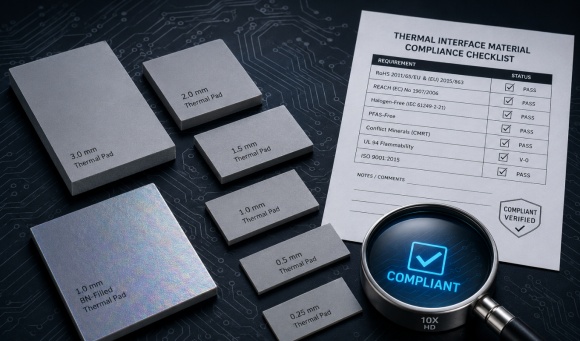
Before finalizing a tape selection, it helps to request the technical documentation that confirms performance beyond the headline conductivity number: peel adhesion strength on your specific substrate, thermal cycling and humidity aging test data, and — where relevant — dielectric strength if the application requires electrical isolation. A supplier with robust testing behind their product line should be able to provide this readily. For a broader framework on evaluating and qualifying TIM suppliers before committing to production volume, see How to Validate a TIM Supplier.
FAQ
Q: Is acrylic or silicone thermal tape better for high-temperature applications?
Silicone tapes generally offer better thermal stability across a wider operating temperature range and higher thermal conductivity, making them the stronger choice for higher heat flux applications. Acrylic tapes still perform reliably under sustained heat exposure and often provide better long-term adhesion durability — the right choice depends on whether thermal performance or bonding strength is the higher priority for your specific application.
Q: Can thermal tape replace a thermal pad or thermal grease?
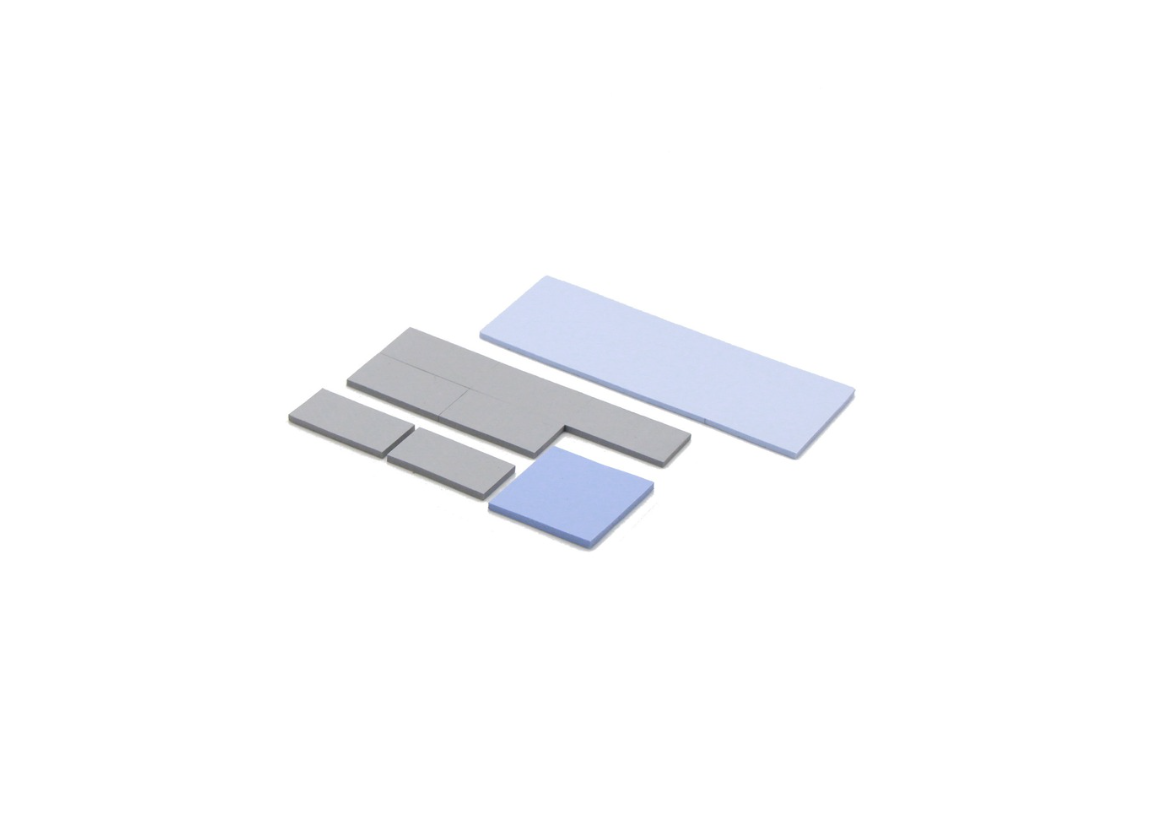
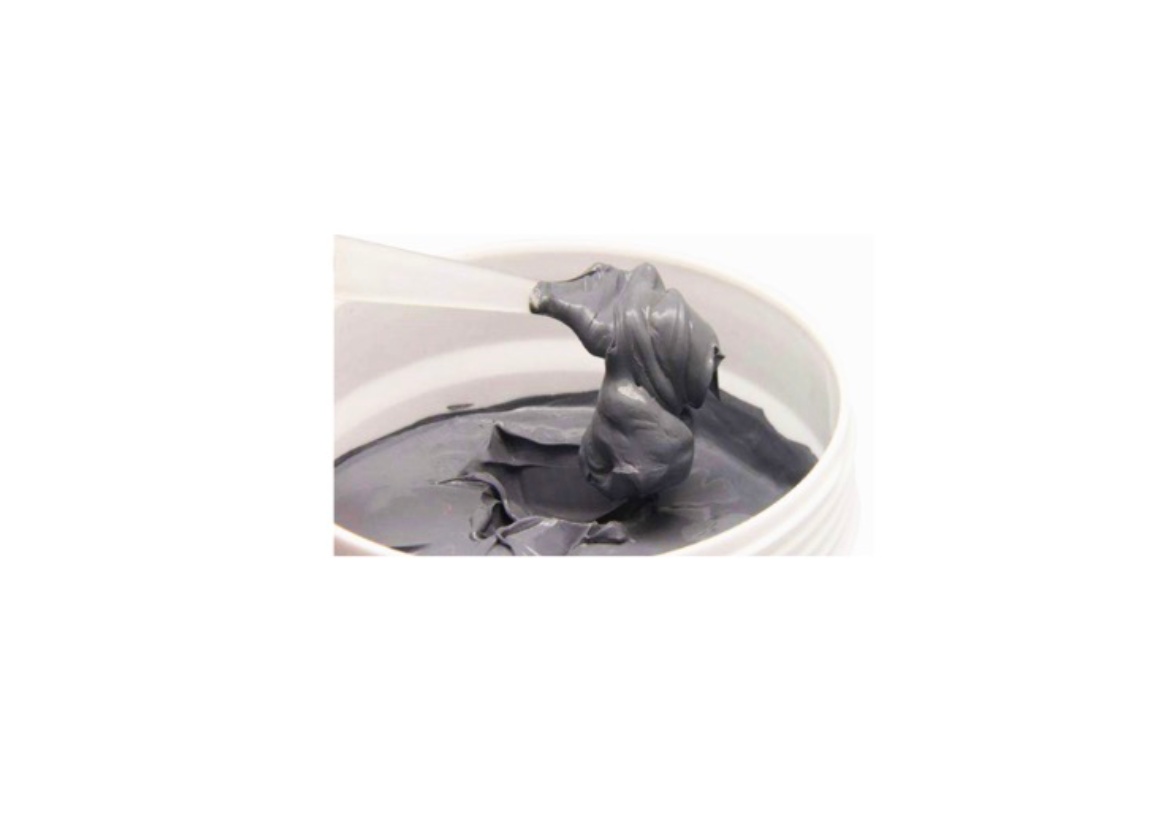
In many applications, yes — particularly where the tape's dual bonding-and-conducting function simplifies assembly compared to a separate pad plus mechanical fastener, or grease plus a separate bonding method. However, tapes typically offer lower thermal conductivity than grease and less gap-filling capability than a thicker compressible pad, so the substitution depends on your specific gap size and thermal budget.
Q: Do thermal tapes need a primer to work properly?
Not always — it depends on the substrate. Metals and many plastics bond reliably without additional surface preparation. Low-surface-energy plastics and certain coated surfaces often require a primer to achieve durable, long-term adhesion. Confirm compatibility with your specific substrate before committing to a tape without a primer step.
Conclusion
Choosing between acrylic and silicone thermal tape comes down to which trade-off matters more for your application — acrylic's stronger, more durable adhesion or silicone's higher thermal conductivity and better surface conformity. Beyond that core decision, surface compatibility, assembly process fit, and validated long-term performance under representative thermal and humidity conditions are what separate a tape that works in initial testing from one that holds up in production.
Contact TaxoTape® for sample evaluation or technical recommendations tailored to your application →