Welcome to Taxo Tape
Choosing the Right TIM for Compact Consumer Power Adapters
Introduction: Why TIM Matters in Small Power Adapters
Today’s consumer power adapters are getting smaller while output power keeps going up. A few years ago, 18–20 W was typical for a phone charger. Now, 30–100 W GaN and fast chargers are common, often in housings not much larger than the old ones.
This size–power combination creates clear thermal pain points. Hot case surfaces, derating in high ambient, and early failure during burn-in or field use are all familiar issues. Even if the adapter passes basic safety tests, a noticeably hot device in the user’s hand quickly hurts brand perception.
Thermal interface materials (TIMs) sit in the middle of this problem. They are not visible to the end user, but they strongly influence how heat moves from hot components to the enclosure or internal shields. Choosing the right TIM can be the difference between a design that just “passes the test” and a design that stays cool, safe, and comfortable in real daily use.
Thermal Challenges Unique to Compact Power Adapters
Compact consumer adapters are not just small power supplies; they are thermally constrained systems:
Limited space and sealed plastic enclosures
The internal volume is tight, and most adapters use closed plastic housings. There is no active airflow and little room for large heat sinks. Once the unit is glued or ultrasonically welded, the heat has to be managed by conduction and a small amount of natural convection.High power density around critical components
Primary and secondary MOSFETs, synchronous rectifiers, controller ICs, and rectifier diodes concentrate losses in small areas. Transformers and inductors add copper and core losses in the same neighborhood. This creates local hot spots that can easily exceed safe operating limits if the thermal path is not carefully designed.Touch temperature and regulatory constraints
In addition to keeping components within their rated temperature, designers must respect touch temperature limits and safety standards. The outer case cannot become uncomfortably hot in normal use, across different mains voltages, ambient conditions, and load profiles. This makes the internal thermal budget even tighter.
Where TIM Is Used Inside a Power Adapter
Inside a typical compact adapter, TIMs are used at a few key interfaces to guide heat away from hot spots:
Between power devices and heat spreaders or shields
MOSFETs, rectifiers, power controllers, and sometimes driver ICs are coupled to internal metal shields or spreader plates. Soft thermal pads, gels, or thin insulators fill the gaps between the device surfaces and these metal parts to reduce interface resistance.Between hot components and the plastic case
In many designs, part of the thermal path uses the external housing as a large radiator. TIMs are placed between hot zones on the PCB and the inner side of the plastic shell to spread heat over a larger area and lower local case temperature.Thermal coupling of magnetics and high-loss components
Transformers, inductors, and other high-loss parts may be tied thermally to metal frames, brackets, or shields. Gap fillers or tape-style TIMs help transfer heat from these bulky components to cooler structural parts without compromising electrical insulation.
A well-planned TIM layout connects these paths into a continuous route for heat to escape the core of the design.
Key Requirements for TIMs in Consumer Power Adapters
TIM selection in consumer adapters is not only about thermal conductivity; it has to satisfy multiple engineering and manufacturing constraints:
Thermal performance vs. thickness and pressure
The material must deliver low thermal resistance at the actual thickness and compression available in the design. A high W/m·K value on paper is not enough if there is not enough pressure or if the gap varies due to tolerances.Electrical insulation and safety approvals
In adapters, safety isolation is critical. TIMs used between primary circuits and shields, or near reinforced insulation barriers, must offer sufficient dielectric strength and, where required, relevant approvals such as UL insulation or specified breakdown voltage levels.Flammability rating and safety margins
Materials are expected to comply with flammability standards such as UL 94 (often V-0 for internal parts). The chosen TIM should support the overall safety concept of the adapter and maintain its properties under fault and overload conditions.Assembly friendliness for mass production
Power adapters are built in high volumes. TIMs must be easy to place, align, and process with consistent quality. Pre-cut pads, dispensable gels, or tapes need to work well with the existing assembly line, allow for reasonable rework, and not contaminate other parts of the unit.Long-term reliability under real conditions
Over the life of the product, the adapter sees many on/off cycles, temperature swings, possible drops, and different storage environments. TIMs should resist pump-out, drying, excessive compression set, and mechanical shock so that thermal performance stays stable from the first hour of operation to the end of the product’s service life.
Comparing TIM Options for Compact Adapters
Different thermal interface materials behave very differently in a small, sealed power adapter. Knowing the strengths and limits of each type helps avoid trial-and-error later.
Silicone-based thermal pads
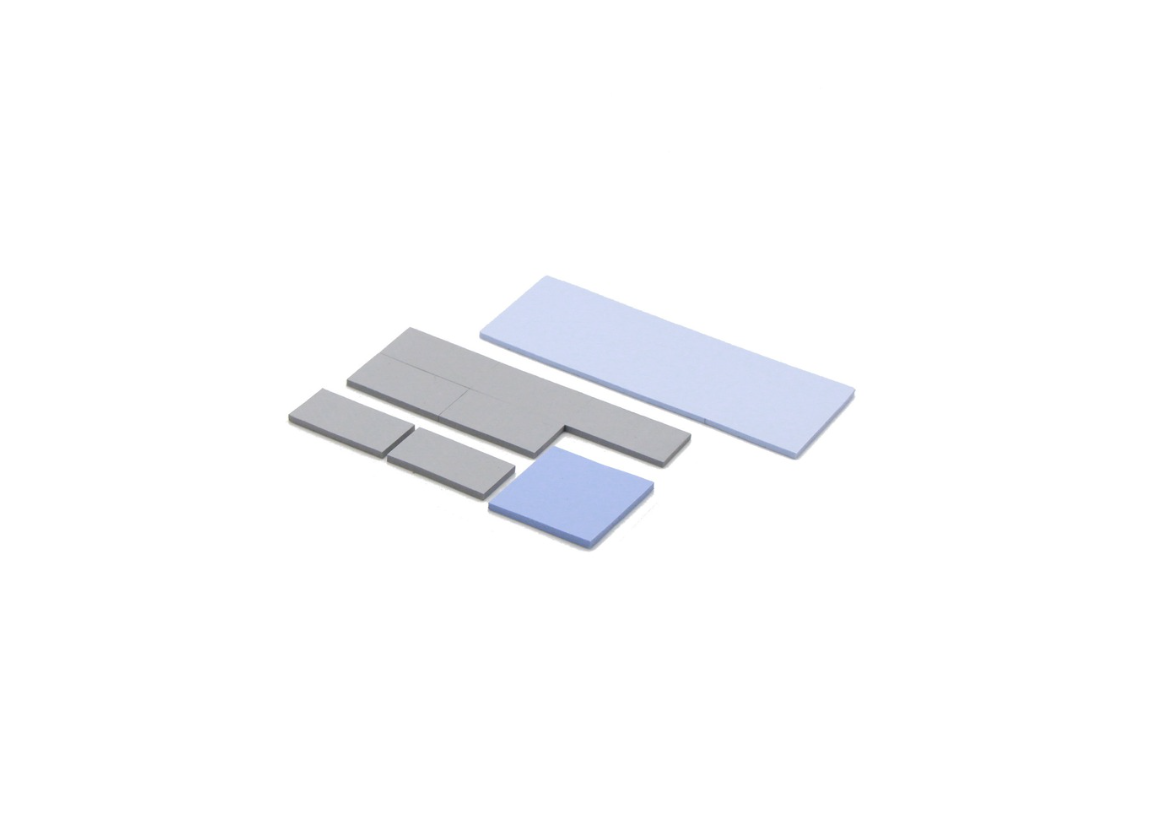
Pros: Easy to handle, pre-cut shapes, clean assembly, stable in mass production. They can bridge moderate gaps and tolerate some mechanical stress.
Cons: Thermal resistance can be higher if the pad is thick or not well compressed. Very hard pads can create mechanical stress; very soft ones may creep if not supported.
Typical use cases: Between power devices and internal shields; between PCB hot spots and the inner plastic wall; under transformers or inductors where a defined gap must be filled.Thermal gel / dispensable materials
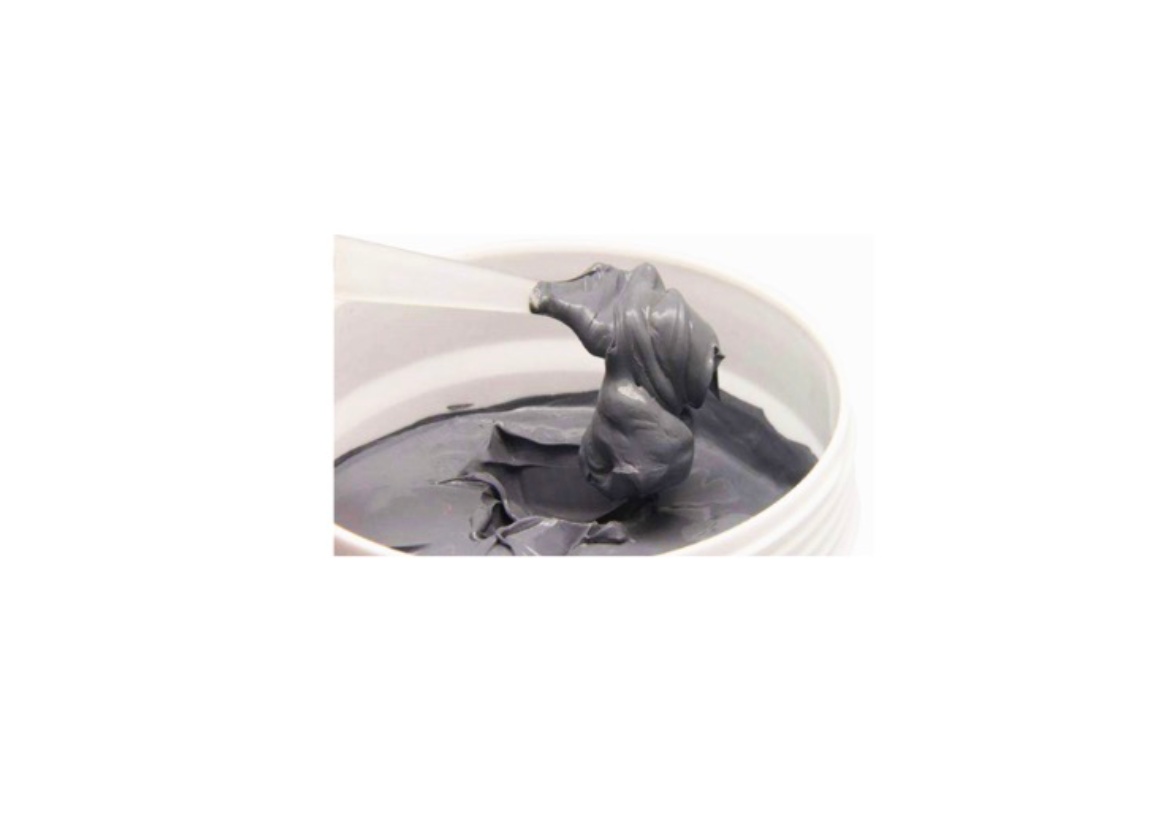
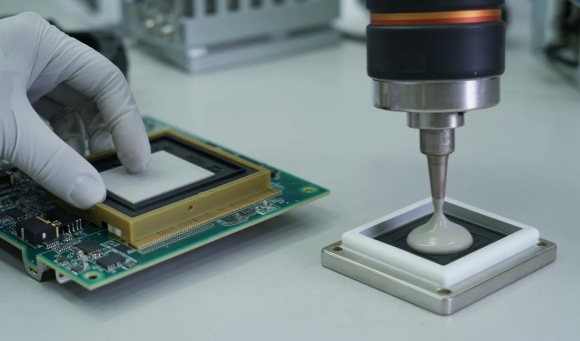
These materials are dispensed directly onto the part or surface.
Pros: Excellent conformity to complex shapes and varying gaps; can achieve low interface resistance in high power density zones; suitable for automation.
Cons: Requires controlled dispensing process and curing (if applicable); risk of contamination if the process is not well set; rework can be more difficult than with pads.
Typical use cases: Around crowded power stages, on top of power ICs or modules with uneven surfaces, or between stacked boards and metal frames.Thermal tapes
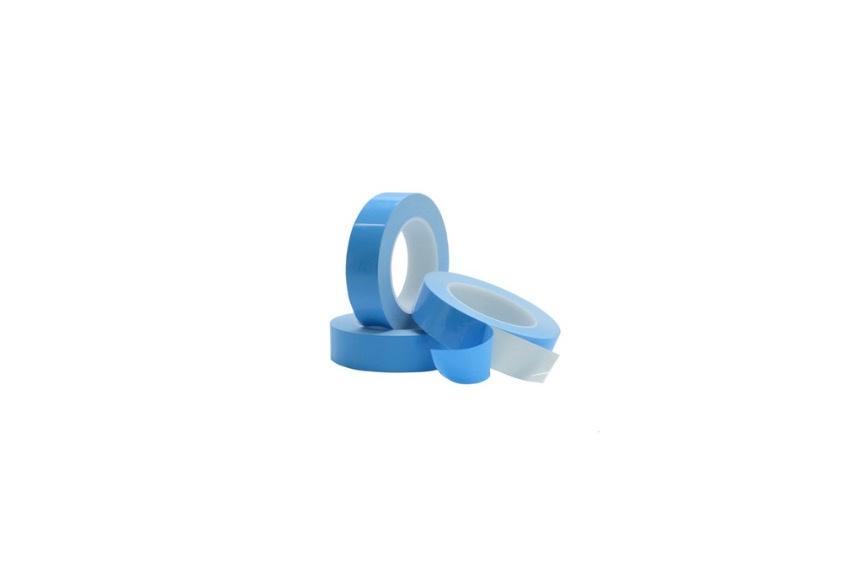
Double-sided thermally conductive tapes combine adhesion and heat transfer.
Pros: Provide mechanical fixation and thermal conduction in one step; neat, no mess, suitable for high-volume assembly.
Cons: Generally higher thermal resistance than optimized pads or gels; once bonded, rework is more limited; thickness options can be more restricted.
Typical use cases: Fixing small heat spreaders to components, attaching shields or thin metal plates over hot areas, securing small magnetics while improving their thermal path.Graphite sheets / thin gap fillers
Graphite has very high in-plane thermal conductivity and is extremely thin.
Pros: Excellent for spreading heat from a small hot spot over a larger area; minimal impact on internal space; can guide heat toward the enclosure.
Cons: Needs careful design to maintain electrical insulation where required; edges are fragile if not supported; usually used together with other insulating TIMs.
Typical use cases: Spreading heat to a wider area of the plastic case, equalizing temperature under shields, or coupling hot zones to metal frames via a thin path.
In many compact adapters, the best solution is not a single TIM type, but a combination: for example, a soft insulating pad between power devices and shield, plus a graphite layer to spread heat toward the case, and a small piece of thermal tape where a spreader has to be fixed mechanically. The key is to build a continuous, controlled path for heat, using each material where it works best.
Design Trade-offs: Performance, Cost, and Manufacturability
Every adapter design has to balance thermal performance with cost and process simplicity.
Balancing W/m·K with real thermal resistance and BOM cost
A higher thermal conductivity value on the datasheet is helpful but not the only factor. Overall thermal resistance depends on thickness, contact pressure, and interface quality. Often, a moderately conductive material applied correctly performs better than an “extreme” material used in a less optimal way – and at a lower cost.Choosing hardness and compliance for tolerances and drop tests
The TIM must handle mechanical tolerance stack-ups and real-life drop tests. A very hard material may not conform to uneven surfaces; a very soft one may shift or pump-out over time. Finding the right hardness/compression balance is essential for stable contact and reliability.Impact on assembly yield and process time
Complex dispensing or many small pad pieces can slow down the line and increase variability. A simpler TIM solution that slightly compromises on maximum performance but boosts yield and consistency may be a better overall choice for a high-volume adapter program.
Practical Selection Guidelines (Engineer’s Checklist)
A simple, structured approach helps bring order into TIM selection:
Start from the heat map
Identify the top hot spots: which components drive junction temperature and which areas cause high case temperature. Define realistic target junction and case temperatures.Define insulation and safety requirements first
Clarify creepage, clearance, and dielectric strength needs before choosing material families. This avoids late redesigns because a chosen TIM does not meet safety margins.Select pad vs. gel vs. tape based on mechanics and process
Use pads where gaps are known and compression can be controlled.
Use gels/dispensables for complex geometries and variable gaps.
Use tapes where bonding and heat transfer must be combined.
Factor in the current assembly method: manual, semi-automatic, or fully automated.Validate with real tests
Confirm decisions with temperature measurements under worst-case conditions:IR images of PCB and case
Touch temperature in different ambient conditions
Long burn-in tests to see how temperatures evolve over time
Case-style Example (Short, Non-Branded)
A 65 W compact adapter shows high case temperature during full-load testing, especially at high mains and elevated ambient. The design uses relatively hard thermal pads between the primary MOSFET area and an internal shield, and only limited contact to the plastic housing.
After reviewing the thermal path, the team replaces the hard pad with a softer, more conformable gap filler and adds a thin graphite spreader linking the shield area to a larger region of the inner case. No major mechanical changes are made.
In follow-up tests, junction temperatures drop by several degrees, and the case surface temperature in the critical touch area is reduced enough to stay comfortably within internal limits. Burn-in stability improves, and the adapter passes extended thermal testing without further derating.
Conclusion: Turning TIM Choice into a Competitive Advantage
For compact consumer power adapters, thermal interface materials are not just accessories; they are core design elements. The right combination of pads, gels, tapes, and spreaders can support higher power density, cooler touch temperatures, and longer product life – all within the same form factor.
Treating TIM selection as part of the thermal strategy from the beginning, instead of a last-minute patch, helps avoid redesigns and field issues. It is worth taking a fresh look at current adapter designs, reviewing the thermal path component-by-component, and evaluating whether optimized TIM combinations could unlock extra margin, smaller size, or better user comfort.