Welcome to Taxo Tape
Choosing the Right Thermal Grease: The Hidden Enemy Behind LED Overheating
LED lighting has become the mainstream choice for modern illumination thanks to its energy efficiency, long lifespan, and environmental benefits. Yet, many users encounter the same frustrating issue: after only a short period of use, LEDs may lose brightness, shift in color, or even fail completely.
Studies across the industry reveal that over 50% of LED failures are directly linked to poor thermal management—the invisible factor that quietly undermines performance.

Why Heat Is a Critical Challenge in LEDs
When an LED chip operates, around 70% of the input power is converted into heat rather than light. If this heat is not effectively dissipated, the junction temperature rises, leading to:
Accelerated lumen depreciation: Higher temperatures reduce phosphor activity, causing more than a 30% drop in luminous efficiency.
Shortened lifespan: Every 10°C rise in junction temperature can cut LED service life by nearly half.
Color instability: At extreme temperatures (above 150°C), phosphor carbonization can cause visible shifts in color.
Safety risks: Overheating may damage capacitors or trigger electrical failures.
At the microscopic level, the contact surface between the LED chip and heat sink is never perfectly smooth. Microscopic gaps ranging from 10–50 μm are often filled with air, which has a thermal conductivity of just 0.024 W/m·K—acting as a true insulator that blocks heat transfer.

Why the Right Thermal Grease Matters
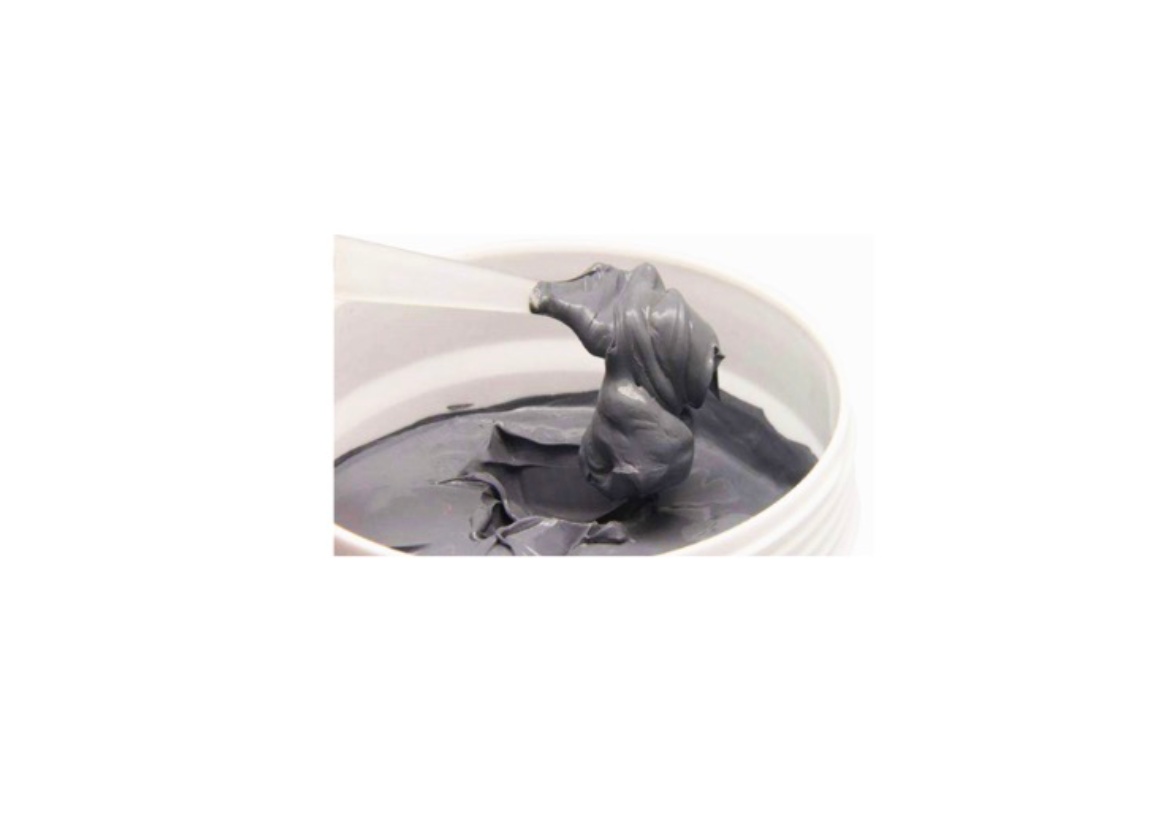
A common misconception is that thermal grease (thermal interface material, TIM) is merely an accessory, and that any product will do. In reality, low-quality thermal grease can fail within months, leading to cracking, oil separation, or powdering—ultimately worsening the overheating problem.
An effective LED thermal grease should meet four essential requirements:
1. High Thermal Conductivity
The key performance indicator of any thermal grease is its thermal conductivity (W/m·K). A higher value indicates better heat transfer efficiency. Different LED power levels require matching TIMs with appropriate conductivity grades.
2. Long-Term Stability
LED luminaires often operate under continuous high temperatures. A reliable grease must resist drying, hardening, or oil bleeding, ensuring stable thermal performance over years of use.
3. Electrical Insulation
In addition to heat transfer, the material must provide a high volume resistivity to minimize the risk of short circuits from unintended electrical contact.
4. Ease of Application
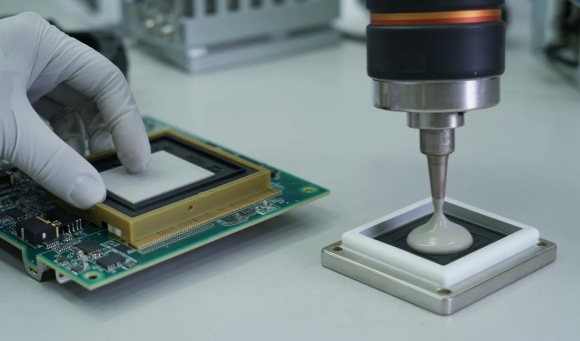
Thermal grease should have a fine, uniform texture and the right viscosity. Poor-quality products with coarse particles or uneven consistency can trap air and create insulating layers, reducing thermal efficiency. A good formulation ensures smooth application, whether by automated dispensing or manual spreading, while maintaining close contact between surfaces.
Conclusion
Effective thermal management is the key to unlocking the full potential of LED lighting. By selecting the right thermal grease—designed for high conductivity, durability, electrical safety, and easy application—manufacturers can significantly extend product life, improve lighting stability, and reduce failure rates.
Investing in the right thermal interface material is not just about cost—it is about ensuring reliability and performance over the long run.