Welcome to Taxo Tape
How to Choose Thermal Interface Materials for LED Drivers?
Introduction: Why Thermal Management Matters in LED Drivers
Thermal management is a key performance factor in modern LED driver design. As power density increases and designs get more compact, the ability to effectively remove heat becomes critical. Without proper heat dissipation, even the most efficient LED driver can suffer from overheating, leading to reduced performance, premature aging of components, and color shift in LEDs.
Excess heat doesn’t just shorten the lifespan of the driver—it affects current regulation, power conversion efficiency, and reliability in harsh environments. This is especially true for LED drivers used in sealed luminaires, outdoor fixtures, or high-output industrial lighting, where airflow is limited.
The thermal interface material (TIM) you choose directly impacts how well heat transfers from the components to the housing or heatsink. A mismatch between the TIM and the application can lead to hotspots, delamination, or early failure. That’s why selecting the right TIM is not just a material decision—it’s an engineering one.
What Are Thermal Interface Materials (TIMs)?
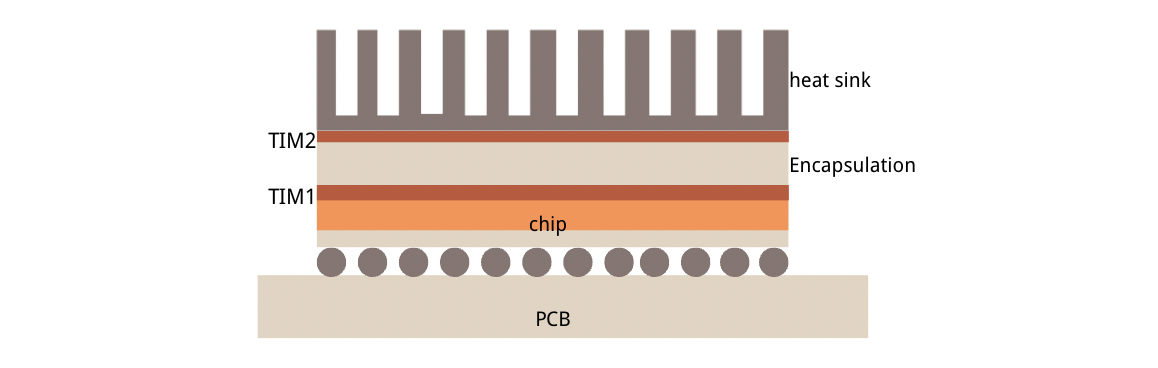
Thermal interface materials (TIMs) are specialized compounds or materials used to fill microscopic air gaps between heat-generating components—like power ICs or driver boards—and the thermal spreading surface, such as an aluminum housing or heatsink. These gaps, though invisible to the eye, trap air, which is a poor thermal conductor. TIMs eliminate this barrier by providing a more efficient thermal path.
In LED driver applications, several types of TIMs are commonly used, including:
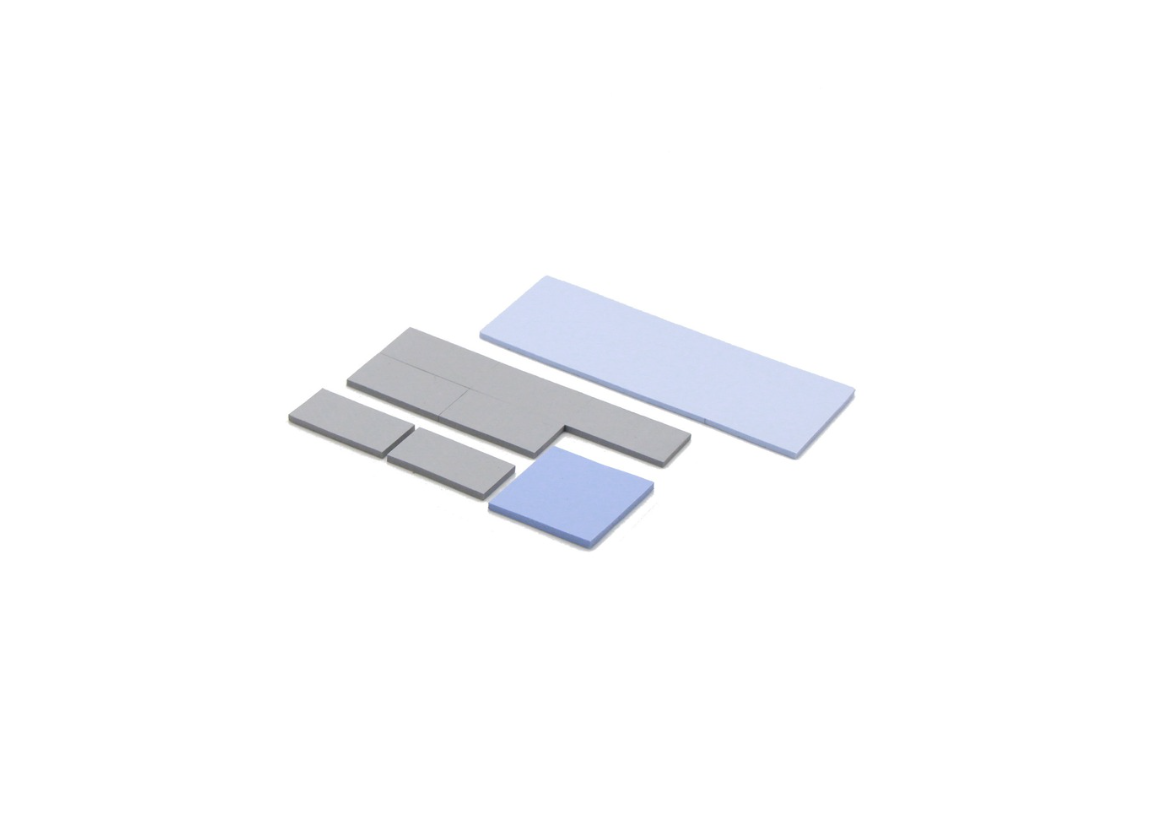
Thermal Pads – easy to handle and ideal for consistent gap thickness
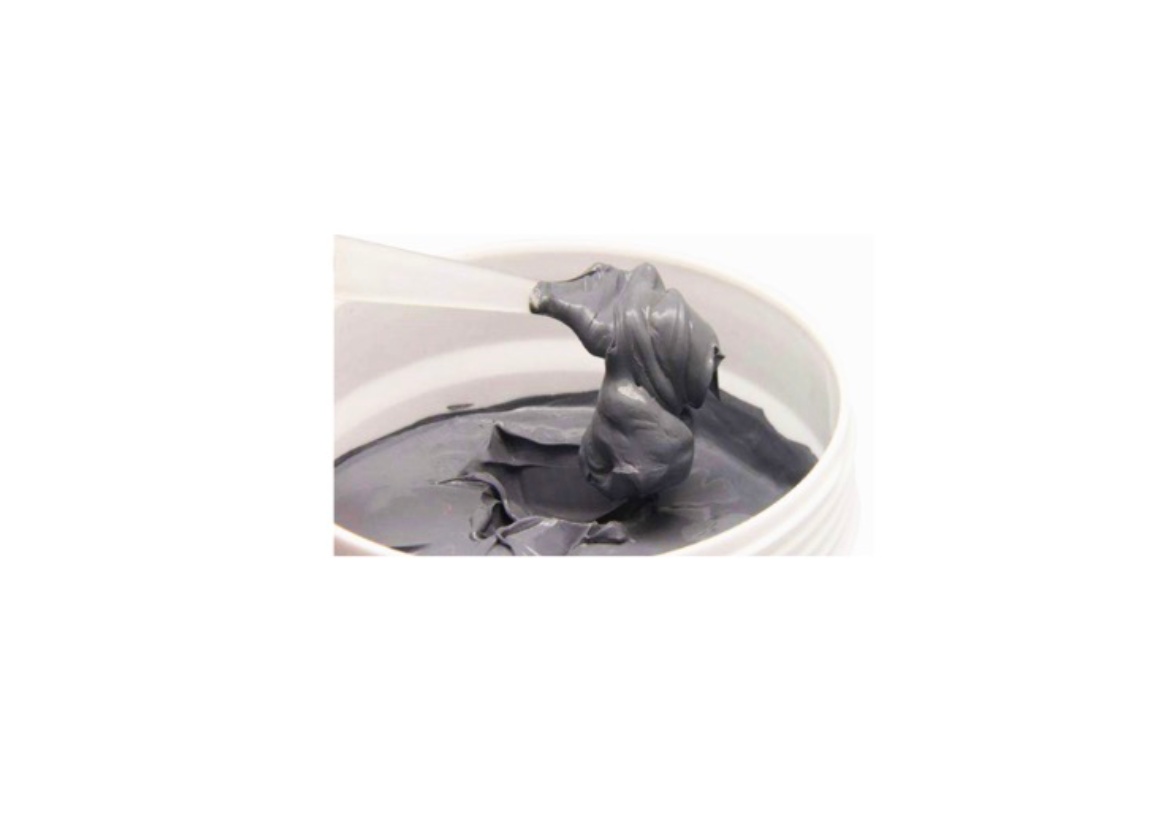
Thermal Greases and Pastes – good contact wetting and low thermal resistance
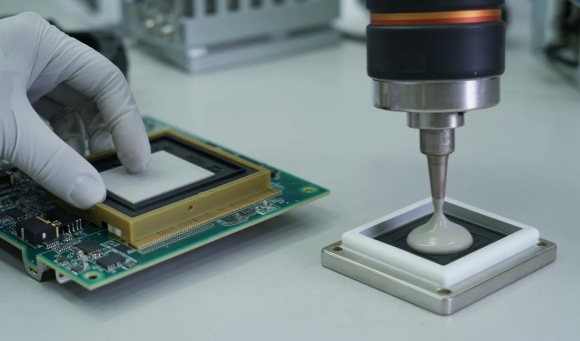
Thermal Gels – designed for automation and rework-friendly setups
Phase Change Materials (PCMs) – solid at room temp, melt during operation for conformal coverage
Graphite Sheets – for lateral heat spreading in linear or edge-lit designs
Each type serves the same purpose: to enhance heat transfer, reduce thermal resistance, and improve the reliability of the LED driver system. The choice depends on the specific power rating, package design, and thermal budget of your product.
Thermal Challenges Unique to LED Drivers
LED driver applications present a set of unique thermal challenges. Unlike open systems with natural airflow, LED drivers are often housed in compact, enclosed fixtures where ventilation is minimal or completely absent. This leads to a build-up of heat over time, especially in high-wattage lighting systems or IP-rated enclosures.
In addition, LED drivers are becoming smaller and more powerful. This increase in power density means more heat is generated in less space, making efficient heat transfer essential. Long operating hours—often 8 to 16 hours per day, or even continuous use—introduce thermal cycling, which causes materials to expand and contract repeatedly. Over time, this can lead to PCB delamination, cracked solder joints, and even component failure.
Real-world symptoms of poor thermal management include:
Flickering or unstable current output
Gradual dimming or brightness decay
Color shift in LEDs due to excessive junction temperatures
Reduced driver lifetime or early failure
This is why selecting the right thermal interface material is critical—it helps maintain stable operating temperatures, extends driver life, and prevents costly field returns.
TIM Selection Criteria for LED Driver Applications
Choosing the correct TIM (thermal interface material) for an LED driver depends on several engineering and manufacturing factors:
Power Output & Thermal Load: Higher wattage drivers require materials with higher thermal conductivity and better contact performance.
Mounting Method & Assembly Process: For drivers assembled with pressure-sensitive bonding, a compressible thermal pad or gel may be more suitable than a paste.
Contact Pressure & Surface Roughness: Materials like thermal grease or phase change material conform better to uneven surfaces, improving heat transfer.
Electrical Insulation Requirements: If components are in contact with conductive surfaces (e.g., metal housings), use TIMs with built-in dielectric properties to avoid short circuits.
Ease of Rework / Repair: For drivers requiring field maintenance or rework, thermal gels or clean-removal PCMs are preferred over messy greases.
At Taxo, we support OEMs with customized thermal pad thicknesses, gel dispensables, and phase change solutions—tested specifically for LED driver configurations.
Pros and Cons of Different TIM Types for LED Drivers
Here’s a breakdown of the common thermal interface materials used in LED drivers, along with their advantages and limitations:
Thermal Pads
Pros: Easy to handle, ideal for consistent gap filling, pre-cut to size
Cons: Slower thermal response to rapid cycling, may not fully conform to microvoids
→ We offer soft silicone thermal pads with excellent electrical insulation and long-term stability, ideal for PCB-to-housing interfaces in linear or power-dense LED drivers.
Thermal Grease
Pros: Superior surface wetting, very low thermal resistance
Cons: Application can be messy, requires careful dosing and curing control
→ Our low-bleed silicone-based thermal grease is designed for LED modules with limited mounting pressure, where maximum thermal performance is critical.
Thermal Gels
Pros: Ideal for automation, reworkable, handles large gaps or irregular geometries
Cons: Slightly higher cost, needs controlled dispensing
→ We supply one-part and two-part dispensable thermal gels, perfect for large-scale driver production lines.
PCM (Phase Change Material)
Pros: Clean, self-adjusts under heat, ensures good contact with minimal mess
Cons: Requires thermal cycling to reach optimal flow and contact
→ Our custom-engineered PCM sheets activate at 55–65°C, matching typical LED driver operating temperatures, especially in enclosed housing designs.
Graphite Sheets
Pros: Excellent lateral heat spreading, ultra-thin, lightweight
Cons: Requires additional insulation if surfaces are conductive
→ We offer flexible graphite sheets for LED strips, edge-lit signage, and linear luminaires where spreading heat across the housing is more critical than vertical conduction.
Real-World Case: Choosing the Right TIM for an Enclosed LED Driver
Let’s look at a practical example from an LED lighting manufacturer that supplies high-bay fixtures for warehouse use.
Scenario:
Product: 50W constant-current LED driver
Housing: Fully enclosed, IP67-rated aluminum casing
Issue: After 6–12 months, lights showed early lumen degradation and inconsistent brightness
Initial setup:
The manufacturer originally used a generic 0.5mm silicone thermal pad between the driver PCB and the housing wall. While the pad was easy to apply, it couldn’t fully conform to the fine surface gaps and the low-pressure assembly method. As a result, there was incomplete heat transfer, leading to thermal buildup near key ICs and electrolytic capacitors.
Thermal Impact:
Internal case temperatures reached 95°C+
Electrolytic capacitors aged prematurely
LED modules showed noticeable lumen drop and slight color shift
Solution:
After thermal imaging and gap measurement tests, the customer switched to a phase change material (PCM) that activated at ~60°C and flowed under pressure. The PCM filled micro-gaps more effectively than the pad and maintained clean interfaces. In another model, a low-viscosity thermal gel was used where the gap varied across the housing.
Result:
Reduced internal temperature by 12–15°C
Improved lumen maintenance over time
Fewer returns and longer product warranty confidence
Mistakes to Avoid When Selecting TIMs for LED Drivers
Even well-intentioned engineers can make critical mistakes when choosing thermal interface materials for LED applications. Here are some of the most common issues we’ve seen:
Using CPU-Grade Thermal Paste for LED Power Modules
Thermal grease made for PCs isn’t designed for long-term outdoor or industrial use. These materials can dry out, migrate, or break down under high humidity and thermal cycling, especially in sealed enclosures.
Ignoring Long-Term Pump-Out or Dry-Out Effects
Materials that perform well in lab tests may degrade quickly in real-world applications. Greases and low-grade pads can pump out due to repeated thermal expansion, leaving gaps that increase thermal resistance over time.
Not Testing for Actual Gap Tolerance
Guessing or relying on nominal housing specs without measuring the real assembly gap often leads to under- or over-compression. This directly affects the TIM’s contact and heat transfer efficiency.
Underestimating How Assembly Pressure Affects Contact
Some TIMs (like PCM or certain gels) require a minimum pressure to activate or spread effectively. Inconsistent or low mounting force means the TIM won’t perform as expected, even if it’s thermally conductive on paper.
Final Thoughts: Work with an Experienced Thermal Partner
No two LED drivers are exactly the same — different designs, power levels, and enclosures all create unique thermal demands. That’s why choosing the right thermal interface material (TIM) isn’t just about datasheets — it’s about application-specific matching.
An experienced thermal solution provider can help you:
Select custom-cut pads for faster assembly and better fit
Recommend optimized thickness based on real gap measurements
Suggest the best material types for your power, pressure, and mounting needs
Offer consultation on thermal simulation, surface finishes, and mechanical constraints
Investing in tailored thermal design up front reduces the risk of overheating, improves product longevity, and saves cost in the long run through fewer failures and returns.
Call to Action
If you're designing or upgrading LED driver systems, let's talk.
We offer:
Free technical consultations for LED lighting manufacturers
Material samples for testing: thermal pads, gels, greases, and phase change sheets
Full support across design stages — from thermal simulation to mass production matching
👉 Contact us today to find the ideal thermal interface solution for your LED application.